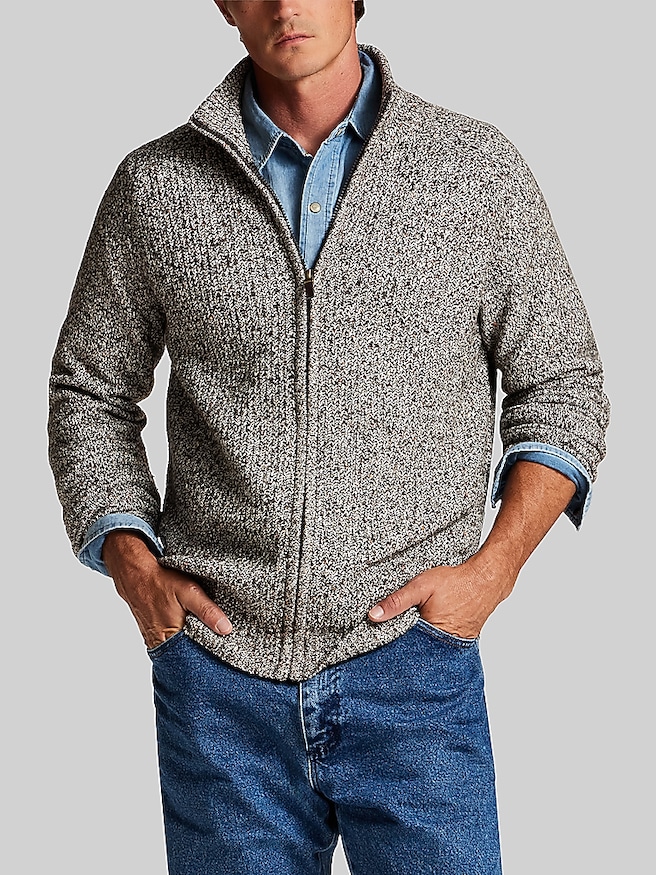
Men's large sweaters combine the texture and versatility of knitwear with proportions intended for shoppers whose measurements align with a large, often labeled L. The category includes familiar silhouettes such as crewnecks, V-necks, cardigans, and quarter-zips, each with a distinct neckline and approach to layering. A standard large is not automatically an oversized, big, or tall fit: those terms describe different proportions, and sizing can vary by maker and construction. Chest measurements, shoulder placement, body length, and sleeve length provide a more useful picture than the letter on the label alone. A well-proportioned sweater has enough room through the chest and upper arms for comfortable movement without excess fabric gathering at the sides. On a style with set-in sleeves, the shoulder seam generally sits near the edge of the shoulder; dropped shoulders and raglan sleeves create a different shape by design. The hem should rest comfortably at the hips without needing constant adjustment, while the cuffs should finish near the wrists rather than covering the hands. Fit also depends on what goes underneath. A sweater worn over a T-shirt needs less layering room than one paired with a button-down, particularly across the shoulders and around the armholes. Fine-gauge knits tend to create a smoother outline beneath a jacket, while substantial ribs and textured stitches bring more dimension to an outfit. Neither construction needs to fit tightly to look polished. Fabric that pulls across the chest, a neckline that sits unevenly, or a hem that rides up when sitting can indicate that the proportions are not a good match. For men who need additional torso or sleeve length, a tall designation may address that need more directly than simply moving up a standard size. Men's large sweaters work best when the garment's shape supports the wearer's build and intended use, whether that means a clean profile for the office or a more relaxed drape for everyday plans.
Material gives a large sweater much of its character, from the way it falls over the body to how it feels against a shirt collar or bare forearm. Cotton knits often have a familiar, breathable feel and enough substance to make a simple crewneck look intentional with chinos or denim. Merino wool can provide a finer, softer texture than coarser wool, with a smooth appearance that suits dressier combinations. Cashmere is valued for its soft hand and light feel, although softness alone does not determine durability. Blends combine fibers to balance qualities such as drape, strength, stretch, and ease of care; the fiber percentages and care label give a clearer picture than the word “blend” by itself. Stitch construction matters, too. A compact knit can look neat beneath a sport coat, while cable patterns, ribbing, and other raised textures make the sweater a stronger visual element. Areas that see repeated friction, including the underarms and sides, may develop pilling even on well-made knitwear. Careful removal with a tool appropriate for the fabric can refresh the surface without pulling at individual fibers. Good care preserves both appearance and fit. Some sweaters are machine washable, while others require hand washing or professional cleaning, so the garment's own instructions take priority over assumptions about the fiber. Excess heat and agitation can alter dimensions or damage delicate yarns. For sweaters suitable for washing, gently reshaping and drying flat as directed helps maintain the intended silhouette. Folding is generally preferable to hanging, especially for heavier knits that can stretch at the shoulders. Consistent, gentle handling also protects practical details: cuffs retain their shape, button bands lie more evenly, and necklines are less likely to become distorted. Those details make a difference when a sweater becomes a regular part of a workweek rotation rather than something worn only occasionally.
The appeal of men's large sweaters is their ability to move between settings without requiring an entirely different wardrobe. A fine-knit crewneck over a plain T-shirt has an easy, finished look for a casual office, a coffee meeting, or an afternoon with friends. The same silhouette over a collared shirt feels more structured, especially when the collar sits neatly inside or just above the neckline. A V-neck leaves more space for a shirt collar and tie, allowing the knit to complement rather than crowd the layers underneath. Cardigans offer an adjustable front and can frame a shirt in much the same way a lightweight jacket does, while quarter-zips create a clean vertical line and a more relaxed alternative to a fully buttoned layer. Proportion keeps these combinations balanced: a sweater with noticeable texture often works well with smoother trousers, and a streamlined knit can sit comfortably alongside more substantial denim. Solid navy, charcoal, gray, and earth tones are easy to coordinate, while a richer color or restrained pattern can bring personality to otherwise simple clothing. The most useful choice reflects actual habits. Someone who spends the day at a desk may appreciate comfortable sleeves and an unobtrusive hem; someone who frequently wears a jacket may prefer less bulk through the arms and chest. Sweaters can also be thoughtful birthday or milestone gifts for a husband, father, brother, partner, or friend, particularly when the recipient's preferred neckline and usual measurements are known. A familiar size label is a starting point, but comparing measurements with a sweater that already fits well makes the choice more informed. For a recipient whose proportions fall into a smaller standard size range, Men's Small Sweaters is a related category to explore. Whether chosen as a gift or for everyday wear, a sweater earns its place through comfortable proportions, a pleasing texture, and care requirements that suit the person wearing it.