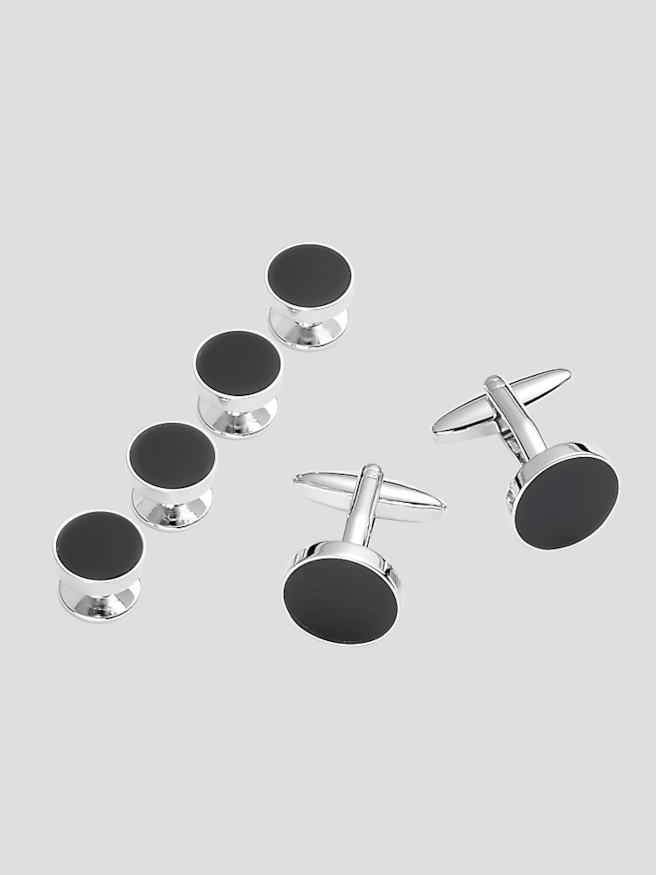
Men’s jewelry sets bring together complementary accessories through a shared metal tone, finish, shape, or decorative detail. Common combinations include cufflinks with matching shirt studs for formalwear, or a necklace and bracelet with a consistent link pattern for everyday dressing. The appeal is coordination: separate pieces feel connected without requiring every accessory in an outfit to look identical. A cufflink-and-stud set can create a clean line of detail across a tuxedo shirt, while a chain-and-bracelet pairing adds continuity to an open-collar shirt and tailored trousers. These combinations serve distinct purposes, so the right set depends as much on the clothing it accompanies as on personal taste. Formal jewelry tends to emphasize proportion and restraint, with details that remain noticeable against a crisp shirt without dominating the outfit. Everyday jewelry may place more emphasis on texture, movement, and how comfortably the pieces sit against the skin. Materials influence both appearance and upkeep. Stainless steel generally resists corrosion and stands up well to routine wear, although its finish can still develop scratches. Sterling silver has a characteristic luster and can develop tarnish over time, making occasional cleaning part of its care. Gold-tone and silver-tone describe appearance rather than a guaranteed metal composition; plated jewelry has a surface layer over a base metal, and that layer can gradually wear at points of friction. For anyone with metal sensitivities, the stated composition matters more than color alone, since clasps, posts, and other components may contain alloys that affect comfort. Polished surfaces catch the light sharply, while brushed finishes produce a softer reflection. Neither is automatically more formal or more durable; the overall design and construction matter. A coordinated set works best when its details suit the wearer’s routine, whether that means understated jewelry for regular use or a more defined finishing touch reserved for dress occasions.
Fit becomes especially important when jewelry interacts with a shirt, jacket, or watch. Cufflinks require compatible cuffs with openings on both sides, rather than a standard button closure alone. French cuffs fold back before fastening, while some convertible cuffs also accommodate cufflinks; the shirt’s construction determines what will work. Shirt studs likewise need a formal shirt designed to accept them, and the number used depends on the shirt front and how much of it remains visible above a vest or other waist covering. A well-proportioned cufflink sits neatly against the cuff, with a fastening that holds securely without forcing the fabric into an awkward fold. Oversized faces can feel cumbersome beneath a close jacket sleeve, while an especially small design may disappear against a substantial cuff. Necklaces and bracelets have their own practical considerations. Necklace length determines whether a chain stays beneath the collar, rests near the neckline, or becomes a visible part of the outfit. The same length can sit differently depending on neck size, build, and link thickness. A bracelet needs enough room for comfortable wrist movement without sliding excessively over the hand or catching beneath a shirt cuff. When worn beside a watch, its width, edges, and movement also matter, because repeated contact can mark either accessory. Link construction and clasps deserve attention alongside appearance: smooth edges, clean connections, and a fastening that closes properly contribute to comfortable wear. Styling does not require matching every visible metal exactly. A consistent tone across cufflinks and shirt studs establishes a clear foundation, while a watch or wedding band can retain its own character. With a patterned tie or a textured jacket, quieter jewelry gives the outfit breathing room. Against a plain white shirt and a dark tuxedo, a small polished detail can carry more visual weight than expected. The most convincing combinations look deliberate at conversational distance and remain comfortable through dinner, photographs, and hours of sitting or standing.
Occasion helps determine how much jewelry feels appropriate. Weddings, black-tie gatherings, milestone celebrations, and school dances each offer a reason to bring coordinated details into an outfit, but the invitation and clothing remain the starting points. A look built around Men's Homecoming Formal Jewelry might keep the emphasis on matching cufflinks and shirt studs, allowing the shirt front and cuffs to provide the main points of contrast. A wedding guest may prefer similarly restrained details, while a groom or wedding party can use a shared finish to create a connection without making every accessory identical. For everyday settings, a necklace-and-bracelet pairing can feel more natural with an open neckline than with a buttoned formal shirt, where the necklace may remain concealed. Jewelry sets can also make thoughtful gifts for graduations, anniversaries, weddings, and professional milestones. The most useful choice reflects what the recipient actually wears: formal accessories suit someone with compatible dress shirts and occasions to use them, while simpler coordinated pieces may fit a more casual routine. Knowing a preferred metal tone, wrist measurement, or necklace length makes the gift more personal and reduces uncertainty about comfort. Long-term care depends on the material and finish, but gentle handling benefits most jewelry. A soft cloth can remove fingerprints and surface residue after wear; material-specific cleaning instructions take priority over household remedies or abrasive polishing. Plated finishes, decorative inlays, and delicate settings may need particular caution, and not every piece is suitable for immersion or an ultrasonic cleaner. Fragrance, grooming products, moisture, and repeated rubbing can affect surfaces, so putting jewelry on after grooming and removing it before swimming or strenuous activity helps limit unnecessary exposure. Separate compartments or soft pouches reduce scratches and keep chains from tangling. Checking clasps and cufflink fastenings before dressing also helps prevent an overlooked loose connection from interrupting an important occasion. With suitable proportions, compatible clothing, and considerate care, coordinated jewelry can remain a dependable finishing detail across many occasions.