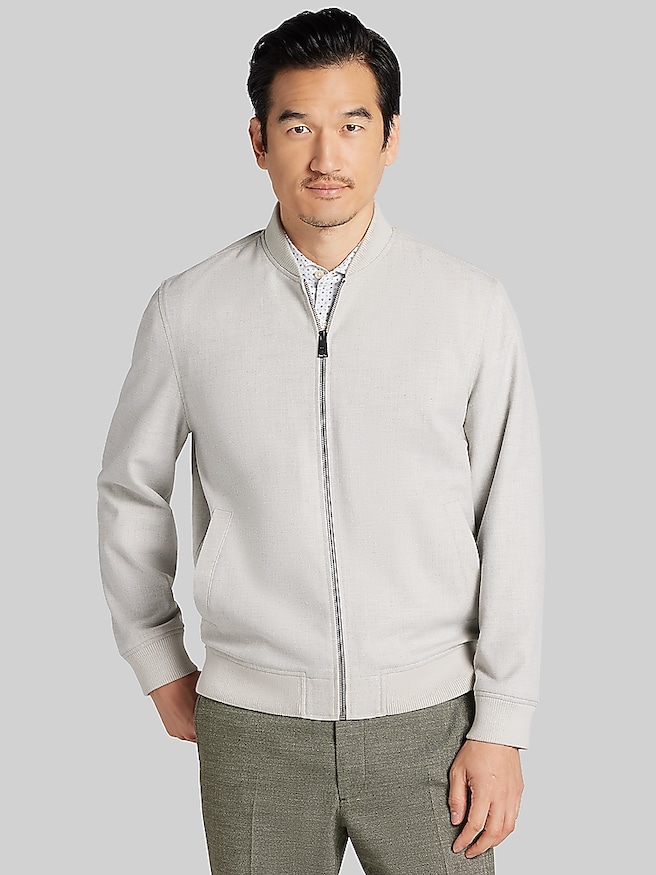
Men's hooded bomber jackets combine the compact shape of a classic bomber with the casual feel and head coverage of a hood. A typical design has a zip front, a waist-length or high-hip silhouette, and ribbed cuffs and hem that help define the shape. The hood adds a sportswear element to a jacket style rooted in flight clothing, creating an easy match for everyday outfits without the length of a coat or the structure of a blazer. Depending on the design, the hood may be attached, removable, or built into a contrasting sweatshirt-style insert. Each construction creates a slightly different look: a matching hood keeps the outline cohesive, while a knit hood against a woven body gives the appearance of layered pieces. These jackets work especially well with straight-leg jeans, chinos, and clean sneakers because the shorter body leaves the proportions of the pants visible. A plain crewneck T-shirt underneath keeps the outfit simple; a fine-gauge sweater or casual button-down adds texture without making the combination feel dressed up beyond its purpose. Black, navy, olive, and gray are versatile choices for building outfits around familiar wardrobe staples. Tonal combinations create a more understated effect, while contrasting a dark jacket with lighter pants gives the bomber's shape greater definition. The ribbed hem deserves attention here: it should frame the waist rather than bunch heavily over the waistband. For a relaxed office with a casual dress code, a smooth-faced hooded bomber can pair naturally with chinos and minimal leather sneakers. For a concert, a weekend lunch, or a train ride across town, denim and a soft knit shirt suit its easygoing character. The result is a casual outer layer with a recognizable silhouette, useful for people who like the comfort of hooded clothing but prefer a more defined jacket shape. Its appeal comes from that balance, rather than from elaborate styling or a long list of decorative details.
Fabric and construction make a noticeable difference in how a hooded bomber looks, feels, and holds its shape. Nylon and polyester shells can provide a smooth, lightweight surface with a sporty finish, although texture and sheen vary by fabric. Cotton-rich twills tend to have a more matte appearance and a familiar hand, while knit constructions give the silhouette a softer, sweatshirt-like character. Leather and suede versions bring their own texture and care requirements, with weight, flexibility, and surface finish influencing how casually or neatly the jacket sits. A lining can help the jacket slide over shirts and sweaters; insulation or padding adds volume and changes the fit, so a streamlined shell and a padded bomber should not be expected to drape the same way. The hood matters just as much as the body fabric. A substantial knit hood creates a fuller shape behind the neck, while a thinner woven hood may lie flatter. Smooth seams around the neckline help keep that area comfortable, especially when the jacket is worn over a collared shirt. A comfortable fit allows the front zipper to close without pulling across the chest or drawing the hem upward. Shoulder seams should sit naturally, and the sleeves should allow reaching forward without excessive tension through the upper back. Ribbed cuffs generally sit close to the wrists, but they should not pinch or leave the sleeves riding too high. Enough room for a usual underlayer is more useful than extra space that causes the body to balloon above the waistband. For someone who spends time seated while commuting or driving, the shorter length can be practical, provided the hem does not feel restrictive across the lap. Pocket placement also affects everyday comfort: angled hand pockets are easy to reach, while secure closures can help keep small essentials contained. Even stitching, firmly attached pocket edges, resilient ribbing, and a zipper that moves cleanly are worthwhile construction details. Durability depends on the combination of fabric, assembly, wear, and care, not simply on how heavy a jacket feels when first picked up.
Care requirements are worth understanding because a hooded bomber often combines several materials in one garment. The shell, hood, lining, ribbing, and trim may respond differently to cleaning, making the sewn-in care label the most reliable reference. Some fabric jackets can be machine washed, while others require professional cleaning; leather and suede generally call for material-specific treatment rather than a standard laundry cycle. When washing is permitted, following the recommended cycle and drying method helps preserve the jacket's proportions and surface finish. Excessive heat can affect elastic fibers, coatings, and certain trims, so drying instructions matter as much as washing instructions. A removable hood should be handled according to its own care directions when those differ from the jacket's. Between cleanings, emptying pockets and addressing marks promptly with a suitable method can help keep the garment presentable. A broad hanger supports the shoulders during storage, while giving the jacket space helps avoid crushed hoods and deep folds. With regular wear, cuffs, pocket openings, and the lower front are natural places to check for abrasion or loose stitching. Small repairs made early can prevent an otherwise useful jacket from becoming difficult to wear. For shoppers comparing silhouettes and fabric weights, Mens Lightweight Bomber Jackets offers a related category to consider alongside hooded designs. A hooded bomber can also be a thoughtful gift for a partner, father, brother, friend, or graduate whose wardrobe leans casual. Familiar colors, a comfortable fit, and manageable care requirements are usually more meaningful than decorative extras. Someone who regularly wears hoodies may appreciate the added structure, while someone drawn to traditional bomber jackets may enjoy the more relaxed neckline. For everyday use, the strongest choice is a jacket whose length, hood shape, fabric, and pocket layout fit naturally into the recipient's routine. Those details make it easy to reach for, whether the day's plans involve a commute, a meal with friends, or a few hours exploring a new neighborhood.