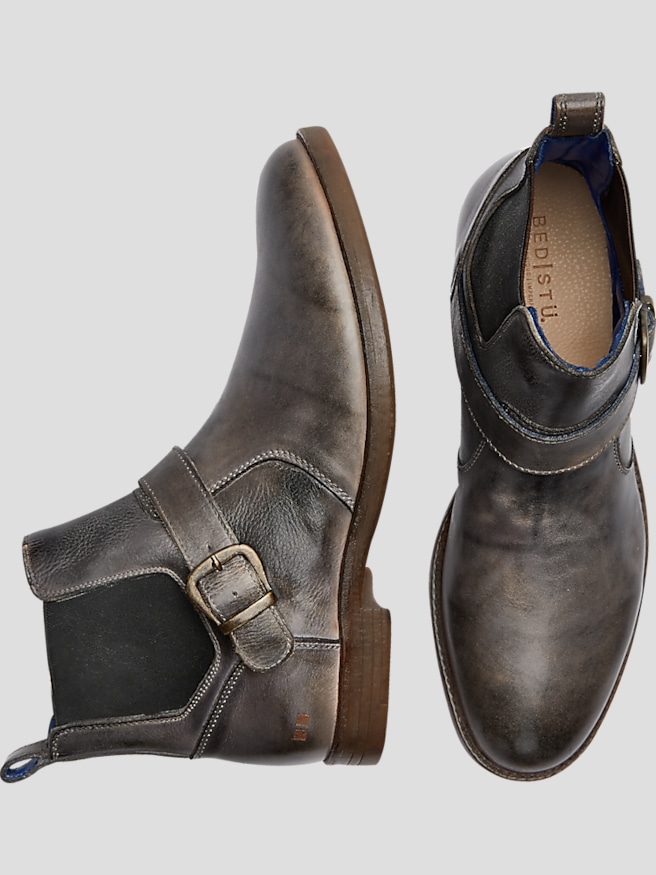
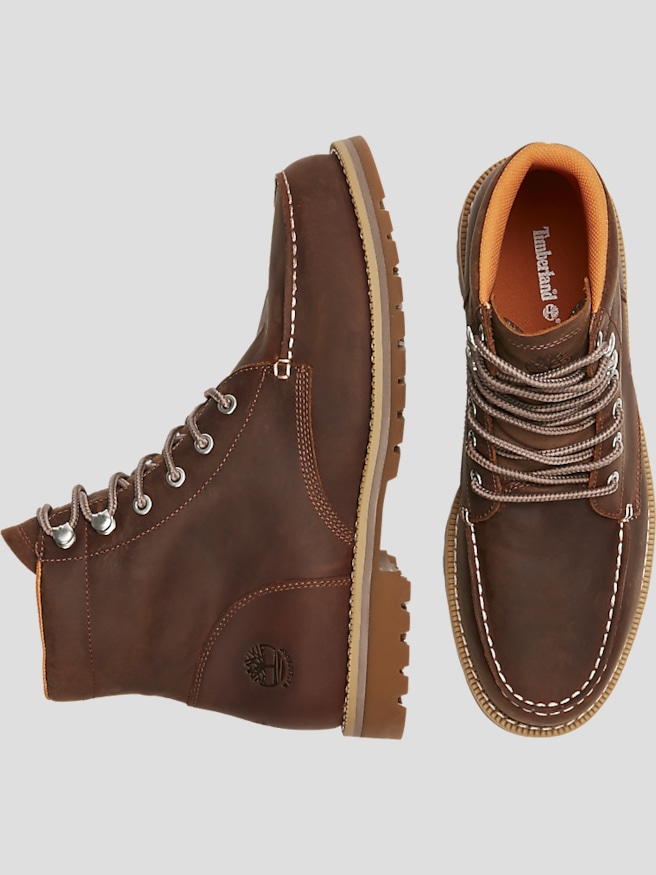
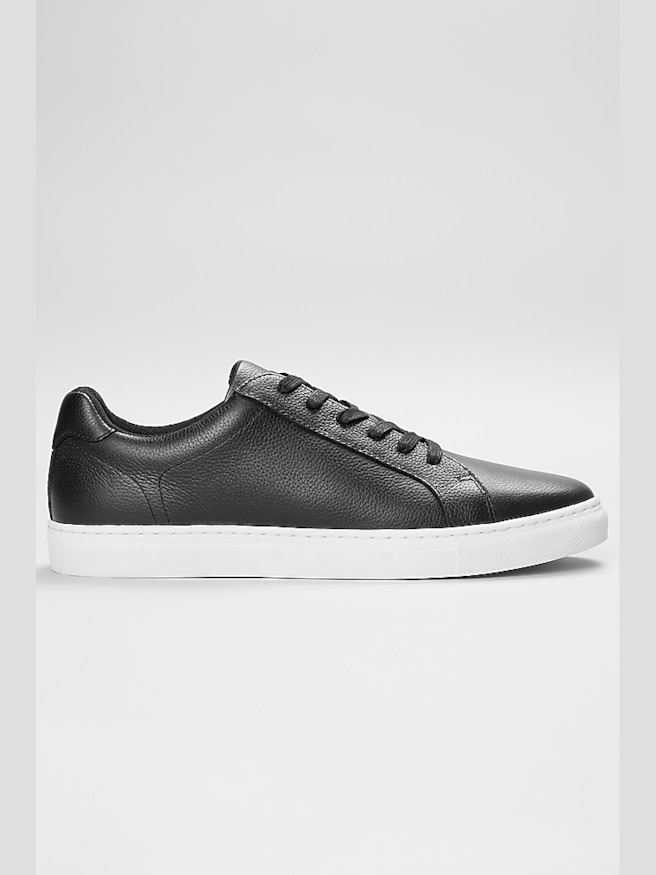
Men's gray casual boots include Chelsea, chukka, and lace-up styles in leather, suede, and synthetic materials, with shades ranging from light ash to deep charcoal. That variety gives gray boots a useful place between rugged footwear and more polished everyday shoes. A charcoal leather pair can sit comfortably beneath dark jeans and an untucked button-down, while a lighter suede silhouette brings soft texture to navy chinos and a knit polo. Gray is a neutral, but its undertone matters: a warmer, stone-colored gray pairs naturally with tan and olive, while a cooler slate shade works well with blue, black, and crisp white. The shape of the boot makes just as much difference as its color. Chelsea boots have elastic side panels and a clean profile that keeps an outfit streamlined. Chukkas typically have an ankle-height shaft and a short, open lacing area, giving them a relaxed appearance without the bulk of a taller boot. Lace-up designs offer more adjustment across the instep and can lean either understated or rugged depending on the toe shape, stitching, and sole. Smooth leather emphasizes clean lines and develops creases with wear, making the surface part of the boot's character. Suede has a brushed nap that gives gray more visual depth, especially where the fibers catch the light. Nubuck offers a similarly velvety effect but is made by buffing the outer surface of leather rather than its underside. Synthetic uppers vary in texture, flexibility, and care requirements, so the material description matters more than appearance alone. For everyday outfits, the most versatile combination is often a balanced one: enough structure to hold a neat shape, a toe that leaves room without looking oversized, and detailing that suits the clothes already in regular rotation. A plain toe feels quiet and adaptable; prominent seams, substantial eyelets, or a heavier outsole give the same gray palette a more workwear-inspired attitude.
Fit determines whether casual boots become an everyday staple or remain an occasional choice. Length is only one part of that fit. The ball of the foot should sit near the boot's natural flex point, the toes should have room to move, and the instep should feel secure without pressure from the upper or laces. A boot that pinches across the forefoot is not a good match simply because there is space ahead of the toes. Leather may soften and conform with use, but it should not need a painful break-in to become wearable. Chelsea styles rely on the shape of the upper and the elasticity of the side panels to hold the foot, while lace-up boots allow finer adjustment when one foot has more volume than the other. Trying boots with the socks intended for everyday wear gives a more useful sense of fit than judging them with an unusually thin or thick pair. Anyone who uses an orthotic also benefits from checking interior depth and whether the footbed is removable. Underfoot construction shapes the experience over a full day. Cushioning can soften each step, while a stable sole and supportive fit help keep the foot from shifting inside the boot. Rubber outsoles vary widely: a low-profile sole looks cleaner with tapered chinos, while a more pronounced tread adds visual weight and may provide better grip on some surfaces. Tread alone does not establish that footwear meets workplace safety requirements, and casual boots are not substitutes for protective footwear where it is required. For an office with a relaxed dress code, a modest sole and minimal hardware usually feel more appropriate than an oversized lug design. For errands, travel days, or a casual dinner, comfort and easy outfit coordination may matter most. Durability comes from the whole construction, including upper quality, stitching, lining, heel reinforcement, and how securely the sole is attached. Some stitched constructions can be resoled, but repair options depend on the individual design rather than the presence of visible stitching alone.
Gray casual boots stay looking their best when care matches the material. Smooth leather benefits from removing surface dust with a soft brush or cloth, followed by a suitable leather-care product used according to its directions. A conditioner can help maintain suppleness, but too much product may darken the leather or leave residue. Color-matched cream can help refresh some finishes, although pale gray and specialty finishes deserve particular caution; testing an inconspicuous area helps reveal unwanted color changes before treating the whole upper. Suede and nubuck need products intended for their textured surfaces rather than ordinary leather polish. A dedicated brush can lift the nap and loosen dry dirt, while stubborn marks may call for a material-specific cleaner. Synthetic materials should be cared for according to their own instructions, since treatments designed to soak into leather may not behave the same way on a coated surface. Letting boots rest between wears gives interior moisture time to dissipate, and suitable shoe trees can help preserve their shape. Storage away from direct heat and prolonged sunlight also helps protect the finish. These practical details matter when boots are expected to move from a desk to a neighborhood restaurant without looking neglected. Styling is similarly straightforward: straight or gently tapered pants usually fall neatly over the shaft, while an overly narrow opening can catch on the top of the boot. A small cuff can show a clean ankle line without a heavy stack of fabric. For someone who prefers a lower profile with the same easy-to-coordinate color, Men's Gray Casual Shoes offer another direction for everyday dressing. Gray boots can also make a thoughtful gift for a partner, father, brother, or friend whose wardrobe centers on denim and chinos. Knowing the recipient's usual size, width, preferred fastening, and comfort needs makes the choice more personal than choosing by color alone. The strongest match feels natural with both the wearer's routine and the clothes already in the closet.