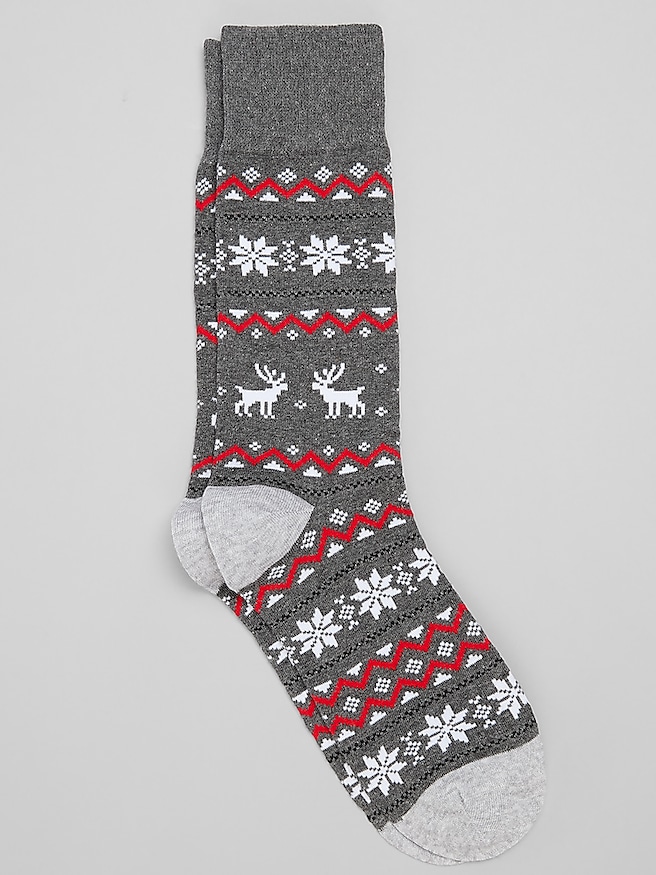
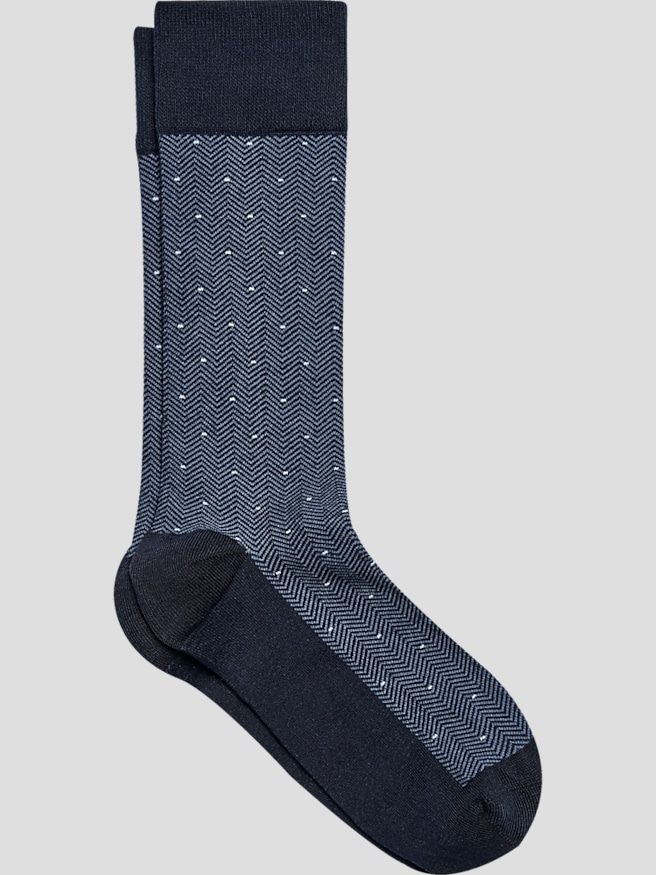
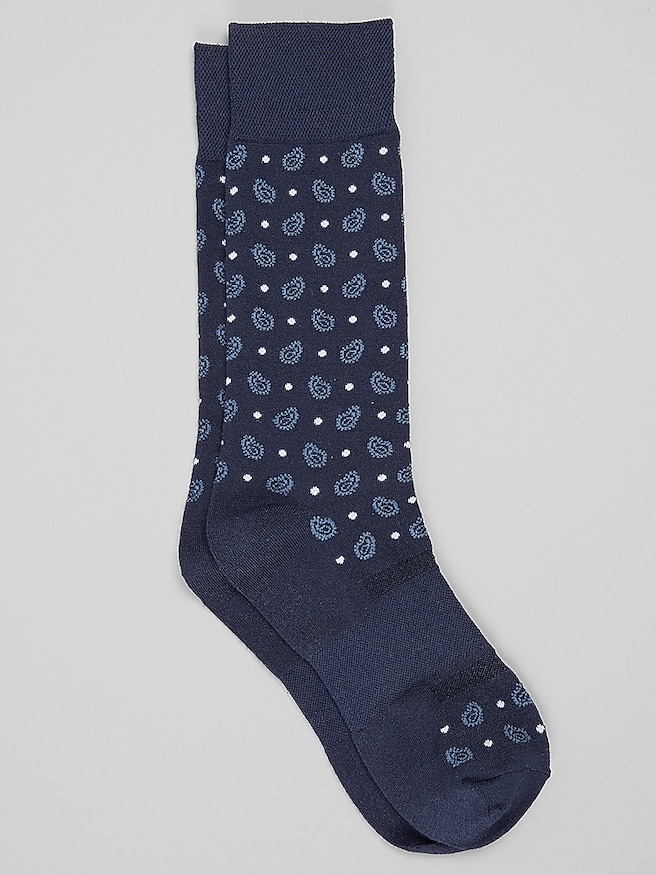
Men's graphic socks add personality to an outfit without taking over the whole look. A small motif peeking out beneath a trouser cuff can feel understated, while a bold, allover design makes socks a more noticeable part of casual dressing. The category spans playful illustrations, geometric artwork, hobby-inspired patterns, and expressive color combinations, giving an everyday essential a little more character. Unlike a plain solid sock, a graphic pair introduces a recognizable detail: a favorite animal, a musical reference, a food-inspired illustration, or an abstract shape repeated around the leg. That detail can be visible with every step or appear only when the wearer sits down. For an office outfit, a navy or charcoal background with a compact repeating motif can complement tailored pants without competing with a patterned shirt or tie. With jeans and sneakers, larger graphics and stronger contrasts can feel more relaxed and intentional. A useful connection between socks and clothing is color rather than an exact pattern match. Picking up a small accent from a shirt, sweater, or pocket square helps the combination feel considered without making every element identical. Graphic designs also work alongside men's dress socks in a wardrobe, offering a more expressive alternative when the setting allows it. The right degree of contrast depends on the occasion and the rest of the outfit. A quiet pattern might suit a client meeting in a creative workplace, while a larger illustrated design can bring character to a casual dinner or weekend gathering. For settings with a strict dress code, restrained colors and smaller motifs generally draw less attention. Men's novelty socks can be humorous, but graphic socks do not have to be a punch line; clean artwork and thoughtful color placement can look polished, too. Their appeal comes from that flexibility, allowing something as practical as a sock to reflect a personal interest while still serving a familiar purpose.
Materials and construction matter just as much as the artwork, especially for socks worn through a full day of commuting, desk work, and walking between appointments. Cotton is common in everyday sock blends because it offers a soft, familiar feel against the skin. Combed cotton uses fibers processed to remove shorter strands, which can create a smoother yarn and a cleaner surface for a detailed pattern. Nylon or polyester may be blended in to support durability and help the fabric hold its structure through repeated wear. Elastane, sometimes labeled spandex, provides stretch so the sock can move over the heel and recover around the foot and leg. Fiber percentages tell more than a single material name: a cotton-rich blend can feel different from a sock with a larger proportion of synthetic fibers, even when both feature similar graphics. Fine wool blends are another possibility, with softness and moisture management depending on the fiber quality and overall construction. Thickness deserves equal attention. A thin, smooth sock generally takes up less room inside a close-fitting dress shoe, while a more cushioned knit changes the feel and space around the foot. Too much bulk can make a normally comfortable loafer or oxford feel tight across the toes. Cushioning at the sole may add comfort, but it is not a substitute for a shoe that fits properly. Crew-length graphic socks usually extend above the ankle and provide space for a visible design, while taller lengths offer more leg coverage beneath trousers. A well-positioned heel pocket, a toe seam that does not feel bulky, and a cuff that stays in place without digging in all contribute to everyday comfort. Shoe-size ranges provide a starting point, though foot width, calf shape, and fabric stretch also affect fit. When a graphic stretches noticeably out of shape across the foot or the heel sits in the wrong place, the size or construction may not be the right match.
The way a graphic is made can influence both its appearance and its feel. Designs knitted into the fabric often have a textured character, with the pattern formed by colored yarns rather than applied only to the surface. Printed designs can allow finer illustration and more complex color changes, although sharpness and longevity depend on the fabric, printing method, and care. Neither approach automatically makes a sock more comfortable or durable; the quality of the knit, finishing, and fit matters throughout. Reinforced heels and toes can help address areas that experience repeated friction, while neatly finished seams reduce unnecessary bulk inside the shoe. A little attention during laundering can help preserve those details. The care label is the best reference for washing and drying because fiber blends and decorative treatments differ. Turning graphic socks inside out can reduce surface abrasion, and washing them with similar colors helps limit unwanted color transfer. When the label permits it, a gentle wash and lower drying heat can reduce stress on elastic fibers and printed surfaces. Rough fasteners and hook-and-loop closures are worth keeping away from sock knits because they can catch yarns and leave pulls. Socks also benefit from enough room in the shoe: constant rubbing at a cramped toe or slipping heel can wear down fabric regardless of how carefully it is washed. Beyond everyday dressing, graphic socks make a personal, practical gift when the design reflects the recipient rather than a generic joke. A subtle music motif for someone who plays an instrument or an animal illustration tied to a favorite pet can show thought without requiring a complete outfit. Shoe size, preferred sock height, and any sensitivity to certain fibers are useful details to know before choosing a gift. Whether worn with tailored trousers or casual denim, the strongest combination is straightforward: artwork that feels personal, a fit that stays comfortable, and construction suited to regular wear.