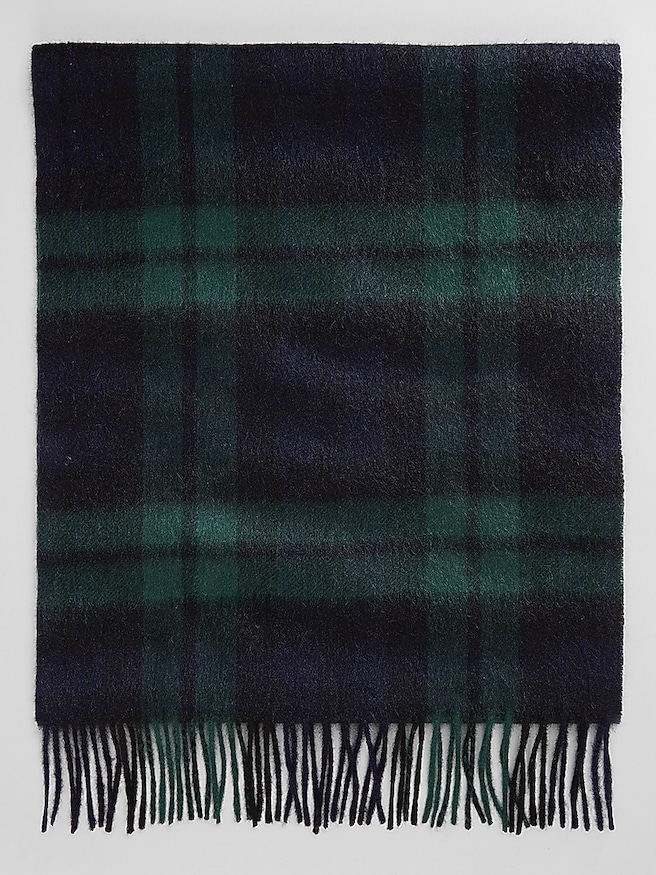
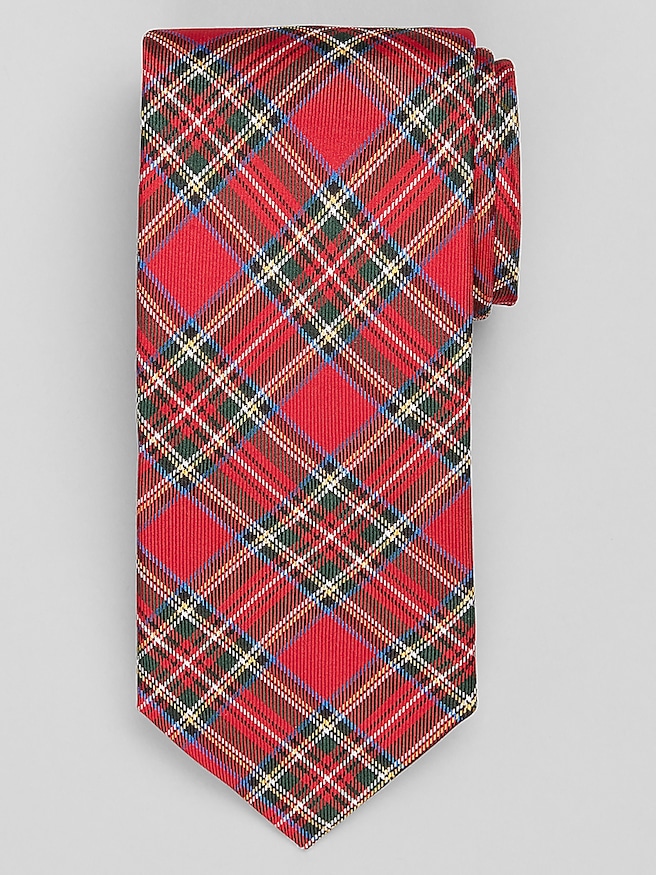
Men's glen plaid scarves bring the precision of a tailored check to an accessory that can feel relaxed, refined, or somewhere between the two. Glen plaid is recognized by its arrangement of small broken checks into a larger repeating pattern, giving the fabric detail up close and a more unified appearance from across a room. Some interpretations stay close in tone, while others use a contrasting line to emphasize the larger grid. That balance makes the pattern especially adaptable: it adds interest to a plain coat without needing a bold color, yet still has enough definition to stand beside textured tailoring. Charcoal, gray, brown, and navy combinations are easy to connect with familiar wardrobe pieces, while a restrained accent can pick up the color of a sweater, shirt, or tie. A gray glen plaid scarf against a navy overcoat creates a crisp outline around the face; a brown-based check beside a camel coat produces a softer, more tonal effect. Neither combination requires every shade to match exactly. Repeating one color is usually enough to make the outfit feel considered. The scale of the check matters as much as its color. A compact pattern reads quietly with a solid suit, while a more open grid becomes a visible part of the outfit even when the scarf is tucked inside a coat. When the jacket already has a pronounced check, a subtler scarf keeps the patterns from blurring together. For those drawn to patterned accessories, Mens Tartan Ties offer another way to bring checks into a tailored wardrobe; when both accessories are worn together, a clear contrast in scale helps the combination feel composed. Away from suiting, a glen plaid scarf can sit naturally over a fine-gauge crewneck, a button-down shirt, or a simple knit polo. Its appeal lies in that movement between dressed-up and everyday settings, from a business meeting to dinner with friends, without looking tied to a single dress code.
Material and construction shape how a scarf feels against the neck, how clearly its pattern appears, and how neatly it settles over clothing. Wool can provide body and resilience, helping a check retain its definition while giving folds a substantial appearance. Cashmere is associated with a soft hand and a supple drape, although fine fibers benefit from gentle handling, especially where they rub against rough collars or shoulder straps. Silk brings a smoother surface and a subtle sheen that can make the same geometric pattern look more polished. Blended fabrics combine fiber characteristics, so the full composition matters more than any single material named on the label. The finish is important, too: a brushed surface softens the edges of the plaid, while a smoother weave presents its lines more distinctly. For direct contact with the neck, softness deserves as much attention as appearance, particularly for someone who finds textured fabrics uncomfortable. Length and width determine much of the fit. A scarf intended for a loose loop needs enough length for the ends to fall comfortably after wrapping, while a simple drape can make good use of a shorter shape without creating extra volume at the collar. Broader dimensions reveal more of the check when the fabric lies open; a narrower profile may sit more neatly beneath close-fitting lapels. With a tailored coat, the most comfortable result leaves room to fasten the front without bunching fabric under the chin. With a casual jacket, an easy fold can let the pattern remain visible without a tightly arranged knot. Fringe adds movement and a softer edge, while a clean hem gives the outline a more contained finish. These details influence everyday use, whether the scarf is worn on the commute, carried on a work trip, or folded into a bag before an evening out. A well-suited scarf should feel natural in motion rather than require repeated adjustment whenever the wearer sits down or turns his head.
Thoughtful care helps preserve both the fabric and the geometry that gives glen plaid its character. The care label is the starting point, since fiber blends, dyes, and finishing methods can call for distinct cleaning approaches. Some scarves require professional cleaning, while others permit gentle hand washing; neither method should be assumed from appearance alone. When washing is permitted, minimal agitation and careful reshaping help protect the original proportions, so the checks remain square rather than stretched along one edge. Twisting or wringing can distort delicate fibers, and an unsuitable heat setting can affect texture as well as dimensions. Between cleanings, allowing a scarf to air in a clean, dry space can help freshen it without unnecessary handling. Smooth coat hardware and covered zipper edges also reduce opportunities for pulls, especially in loosely woven or softly brushed fabrics. Small pills can develop where fibers repeatedly rub together, and any removal method should be appropriate for the material rather than aggressive enough to thin the surface. For storage, a loose fold in a dry drawer or on a smooth shelf avoids the tension that can come from leaving delicate fabric draped over a narrow hook. Fringe benefits from being straightened before folding instead of compressed into a tight knot. These habits support lasting wear without making an everyday accessory feel difficult to maintain. Men's glen plaid scarves also make thoughtful gifts because the choice can reflect someone's established style without requiring the precise measurements of a jacket or shirt. A father who favors navy tailoring may appreciate a quiet gray check, while a brother or partner who wears earth tones may gravitate toward brown, cream, or muted green accents. The most useful choice considers his usual coat, preferred fabric feel, and willingness to follow the care requirements. A familiar palette with just enough pattern often becomes an accessory he reaches for repeatedly, adding texture and definition to clothing he already enjoys wearing.