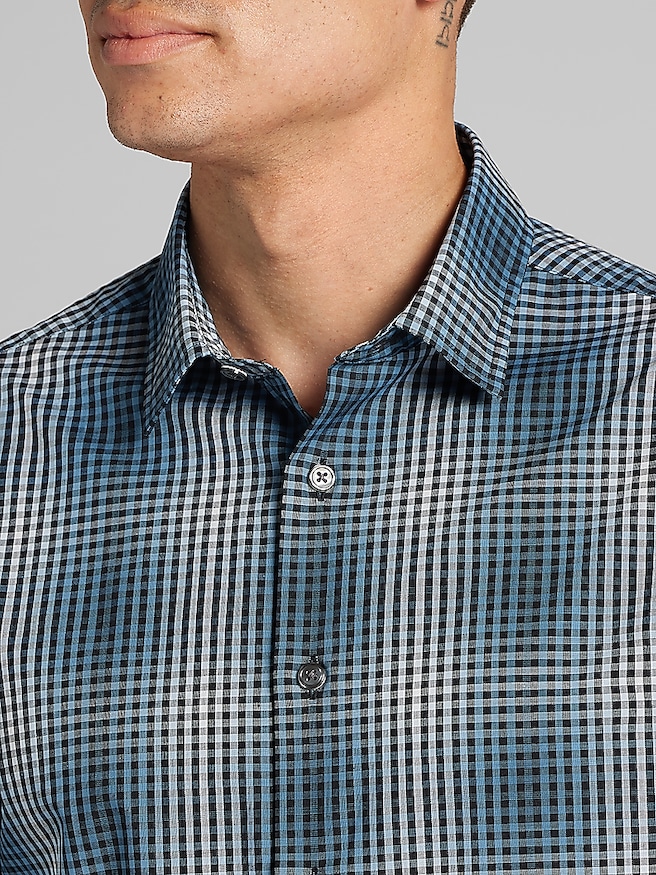
Men’s gingham clothing brings a crisp, balanced check to everyday dressing, most recognizably in shirts that work with tailored trousers, chinos, and denim. The pattern is formed by evenly spaced horizontal and vertical bands, traditionally woven with white and a contrasting color. Where those colored bands overlap, the squares appear deeper, creating the familiar light, medium, and dark rhythm of a gingham check. Unlike many plaids, which combine stripes of varying widths, gingham has a regular grid that feels orderly without looking plain. Blue and white is a familiar pairing, while black, red, and softer neutral combinations give the same pattern a distinct personality. Check size also shapes the overall impression: a small-scale check can look almost like a textured solid from across a room, while a larger check makes the pattern more noticeable. That balance between structure and character helps explain gingham’s lasting place in men’s wardrobes. It adds visual interest beneath a solid jacket, gives a simple pair of trousers a focal point, and looks comfortably at home with well-kept jeans. For an office with a business-casual dress code, a neatly pressed gingham shirt can provide polish without the formality of a full suit. For a family gathering or dinner out, the same pattern can feel relaxed with an open collar and straightforward accessories. The broader appeal of Gingham Clothing comes from this flexibility: the check is recognizable, but its effect depends on the fabric, scale, color, and cut. Someone building a practical wardrobe may appreciate how easily it pairs with solid separates, while someone who already wears patterned clothing can use gingham as a restrained foundation. It is a pattern with enough definition to stand on its own and enough regularity to sit comfortably alongside subtle texture, from a finely woven jacket to a pair of twill pants.
Fabric and construction determine how men’s gingham feels through a full day of wear. Traditional gingham is yarn-dyed, meaning the threads receive their color before weaving, although a checked appearance can also be created through printing. The pattern alone does not establish fiber content, weight, or finish, so the fabric description matters as much as the look. Cotton is valued for its soft feel and breathability, with the final texture influenced by the yarn and weave. A smooth, tightly woven cotton shirt tends to look crisp beneath a jacket, while a fabric with more surface texture can give the check a less formal appearance. Cotton blends may offer easier maintenance or improved wrinkle resistance, depending on their composition and treatment. A small amount of stretch can make reaching, sitting, and moving more comfortable, but it does not replace a suitable fit. Across the shoulders, the garment should sit cleanly without pulling toward the neck or dropping excessively down the upper arm. The chest and waist need enough ease for movement without excess fabric bunching beneath a jacket or around a tucked waistband. Buttons that strain when seated, horizontal tension lines across the torso, or cuffs that restrict the wrist are signs that the proportions may not suit the wearer. Slim, tailored, and classic fit labels offer a starting point, though their measurements can vary. Length deserves equal attention: a shirt intended to stay tucked needs enough coverage to remain secure during ordinary movement, while an untucked style generally benefits from a shorter, balanced hem. Collar shape affects the finish, too. A button-down collar keeps its points anchored for a relaxed, tidy look; other collar shapes may create a cleaner frame for a tie. Even stitching, secure buttons, and neatly finished seams contribute to durability, especially at cuffs, collars, and other areas that receive frequent handling. Together, these details make the distinction between a check that simply looks appealing on a hanger and a garment that earns repeated wear.
Styling men’s gingham is often most successful when the surrounding pieces give the pattern room to register. A blue-and-white check with navy trousers creates a coordinated combination without matching every element, while a black-and-white check can look sharp against charcoal or dark denim. With larger checks, solid pants and a quiet jacket help keep the outfit visually balanced. Smaller checks are often easier to combine with a tie, particularly when the tie is solid or uses a pattern noticeably larger than the shirt’s grid. Two patterns at nearly the same scale can compete, so a clear contrast in size usually produces a more deliberate result. Texture offers another way to build depth: a matte knit tie, a subtly textured jacket, or smooth leather shoes can add distinction without introducing another busy print. The occasion should still set the level of formality. Gingham fits naturally into many offices, casual celebrations, restaurant dinners, and daytime gatherings, but a relaxed check does not automatically suit an event with a strict formal dress code. For a gift, a familiar color and the recipient’s usual fit are often more useful than an unusually bold pattern; checking a well-fitting shirt’s size and care label can make the choice more thoughtful. Good care helps preserve both the fabric and the clarity of the checks. Follow the garment’s care instructions rather than assuming that all cotton or blended shirts need the same treatment. When machine washing is permitted, sorting compatible colors, avoiding overloaded loads, and using the recommended cycle can reduce unnecessary friction and creasing. Treat marks promptly with a method suitable for the fabric, and check heat settings before drying or ironing. Excessive heat may cause shrinkage or affect stretch fibers and finishes. Removing a shirt promptly after its cycle, smoothing the collar and placket, and hanging it neatly can simplify the next wear. With sound construction, comfortable proportions, and consistent care, gingham can remain a dependable part of a wardrobe, bringing recognizable pattern to outfits that still feel easy and personal.