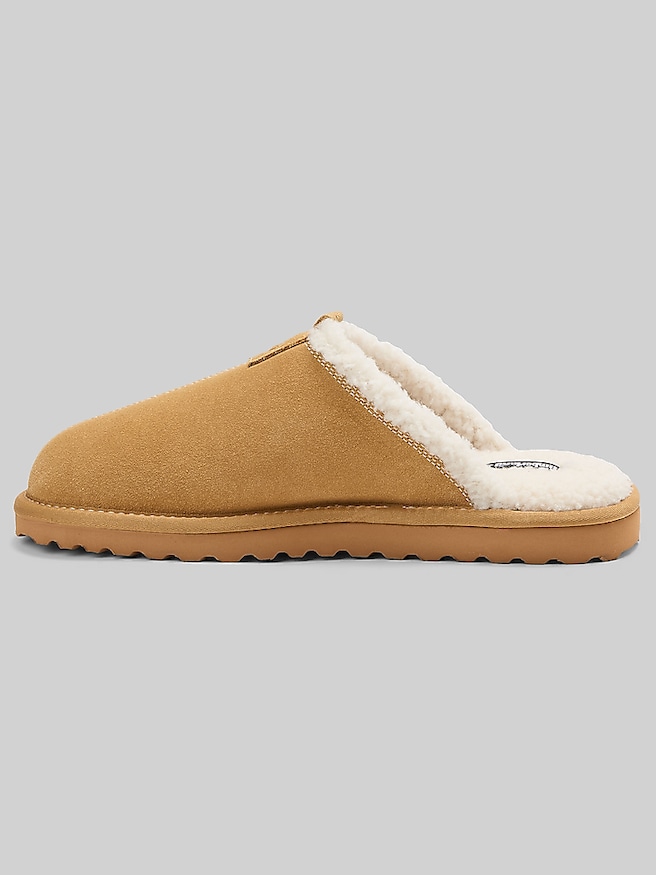
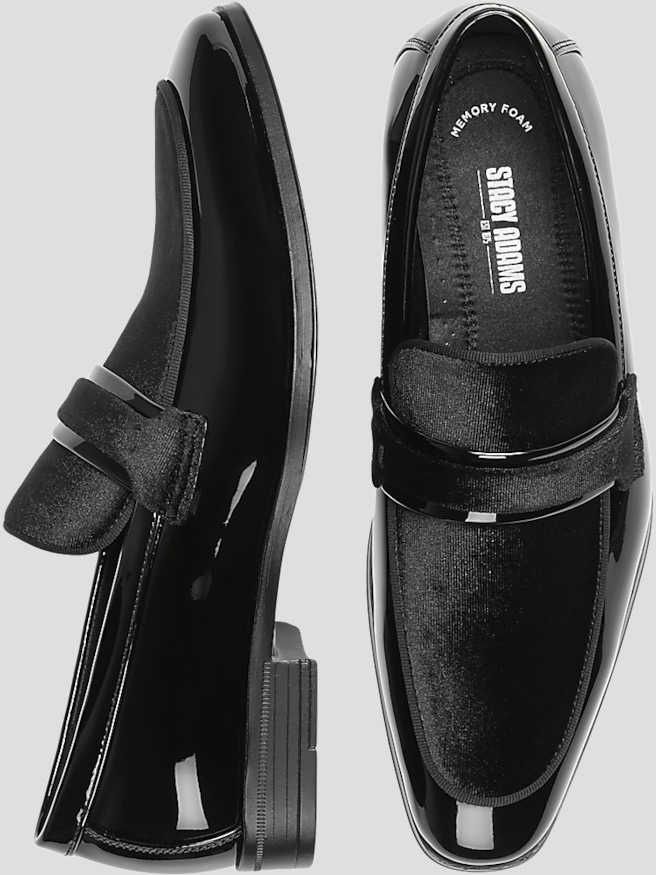
Men’s formal slippers are low-profile, slip-on dress shoes designed to complement tuxedos, dinner jackets, and other occasion-ready tailoring. Traditionally associated with Albert slippers and smoking slippers, they bring a softer, more distinctive look to formal dressing than a lace-up shoe. A closed toe, a shaped upper, and a modest heel help distinguish these dress styles from slippers intended for relaxing at home. Velvet is especially closely associated with the silhouette, while patent leather and smooth leather offer other interpretations with their own texture and shine. The appeal lies in the contrast: a simple shape can make a strong impression through the richness of its material, the curve of its opening, or a carefully placed embroidered detail. Black velvet can sit quietly beneath black tuxedo trousers, allowing the satin stripe and clean trouser line to remain prominent. A glossy finish creates a sharper reflection and a more conspicuous accent, while a plain upper keeps attention on the overall outfit. For weddings, evening receptions, formal dinners, and creative black-tie celebrations, the right pair can feel expressive without overwhelming the tailoring. Suitability still depends on the invitation and the expectations of the host; a conservative event may call for traditional formal footwear, while a more flexible dress code can leave room for velvet, embroidery, or a richer color. Dark burgundy or deep navy, for example, can connect with a dinner jacket or a restrained accessory without requiring every detail to match. A patterned jacket often benefits from simpler footwear, whereas an otherwise understated ensemble can give a decorative slipper space to stand out. Trouser length matters as well: excessive fabric pooling around the ankle can hide the shoe’s shape and make the outfit look less deliberate. A clean hem with little or no break generally allows the slipper’s low profile to read clearly. The result is occasion footwear with an individual character, suited to someone who appreciates formal dressing but prefers an alternative to the familiar lace-up silhouette.
Materials and construction influence how formal slippers look, feel, and hold up through repeated wear. Velvet has a directional pile that catches light unevenly, giving even a solid black upper depth rather than a flat finish. That surface also requires thoughtful handling, since rubbing and crushing can alter its appearance. Patent leather offers a glossy surface that emphasizes the outline of the shoe, while smooth leather can provide a more subdued finish and develop creasing where the foot naturally bends. Embroidery, piping, and contrasting trim add visual interest, but their placement should work with the rest of the outfit rather than compete with it. Inside the shoe, lining, seams, and cushioning deserve as much attention as the exterior. A smooth interior can reduce friction, and cushioning beneath the heel or forefoot may make a difference during a reception that includes standing, walking between rooms, and spending time on the dance floor. Sole construction affects the experience, too. Leather soles have a traditional dress-shoe appearance and can feel sleek underfoot; rubber components may provide additional grip, depending on their design and the floor surface. Neither material eliminates the need for care on polished stairs or smooth flooring. Because formal slippers have no laces to adjust, the relationship between the heel, instep, and toe box is particularly important. The heel should feel secure rather than lift noticeably with each step, and the upper should hold the foot without pressing painfully across the instep. Toes need room to rest naturally instead of being squeezed toward the front. An elongated or tapered shape may look elegant, but its appearance should not take priority over comfortable width. Trying the shoes with the hosiery intended for the event gives a more useful sense of fit than trying them barefoot. Fine dress socks can maintain a continuous line beneath formal trousers, while a discreet liner may suit less traditional styling. A secure fit from the start is preferable to relying on substantial stretching, especially with structured uppers or decorative stitching that may limit flexibility.
Formal slippers are best understood as occasion shoes rather than all-purpose footwear, and their longevity often reflects how thoughtfully they are worn and stored. A pair used for dinners, ceremonies, and indoor celebrations faces different demands from shoes worn for lengthy walks or everyday commuting. Changing into formal footwear at the venue can help protect delicate uppers and preserve a cleaner appearance for the event itself. After wear, allowing the shoes to air out before putting them away helps moisture dissipate. Appropriately sized shoe trees can support the shape, provided they do not stretch the upper, and separate cloth bags can reduce rubbing during storage or travel. Velvet generally benefits from gentle brushing with a suitable soft brush, following the direction of the pile rather than scrubbing back and forth. Conventional leather polish is not appropriate for velvet, and any cleaning method should follow the footwear’s care instructions. Patent finishes call for products intended for that surface, while smooth leather may benefit from suitable conditioning and polishing according to the maker’s recommendations. Decorative stitching and trim need a light touch, especially near areas where cleaning products could collect or affect color. Persistent marks, damaged embellishments, or loose components are better assessed by a shoe-care professional than treated aggressively at home. Regular attention to heel wear and sole condition can also help keep the shoes comfortable and presentable over time. As a gift, formal slippers can be a thoughtful choice for a groom, a frequent gala attendee, or someone who enjoys distinctive evening attire. Knowing the recipient’s usual size, foot width, and preference for understated or decorative footwear makes the choice more personal; fit remains more important than selecting the most elaborate design. For additional occasion-ready silhouettes, explore Mens Winter Formal Shoes alongside formal slippers, keeping the dress code and venue in mind. Whether the setting is an intimate dinner or a ballroom reception, the strongest choice combines an appropriate level of formality, a secure fit, and materials that reward careful upkeep.