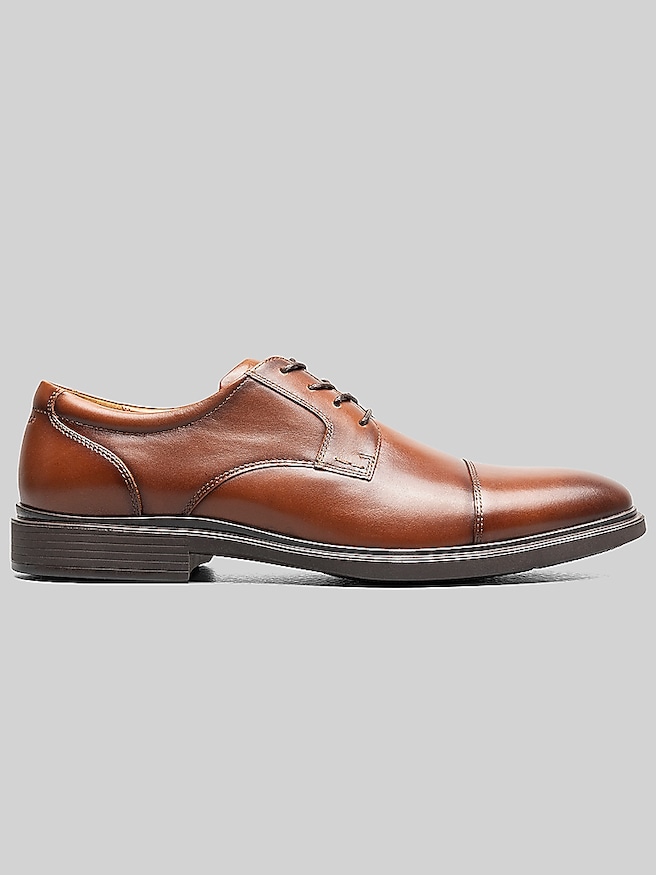
Men’s winter formal shoes pair the clean lines of dress footwear with practical features such as smooth leather uppers, textured rubber outsoles, and, in ankle-height styles, added coverage against slush. The right balance depends on the dress code and the trip to the door. A slim rubber sole on a black cap-toe Oxford can look at home under a charcoal suit while offering more grip on damp pavement than a smooth leather sole usually does. Deeper lugs can help on uneven, slushy sidewalks, but they give the shoe a heavier profile, and no dress outsole makes a sheet of ice safe to cross. For a winter wedding or an evening reception, the details that read most clearly indoors are the shape of the toe, the finish of the leather, and the thickness of the sole. A polished black Oxford is a classic choice with a dark suit, while a plain-toe patent leather Oxford suits a black-tie dress code. When getting to a black-tie event means crossing a snowy parking lot or walking several blocks on salted pavement, it can make more sense to wear weather-ready footwear in transit and change into formal shoes indoors. An ankle-high dress boot can strike a useful balance for office days, holiday dinners, and events where the dress code allows more flexibility. A sleek Chelsea boot with a low-profile sole works with tailored wool trousers, especially when the hem falls cleanly over the shaft without catching on it. Dark brown leather lends itself to navy suits and textured wool separates, while black keeps the look more formal. For plans that call for a sport coat or dark denim instead of a suit, the Mens Winter Fashion Shoes collection takes cold-weather footwear in a more relaxed direction.
Smooth leather is generally easier to wipe clean after a splash from the curb than suede or fabric. Full-grain leather can be durable with regular care, but the grain alone does not make a shoe waterproof. A suitable wax polish can help light moisture bead on smooth leather, and a water-resistant finish can help with brief exposure. Neither necessarily keeps water out where the upper meets the sole or around the tongue and laces. Waterproof construction matters more when a regular commute includes standing water or sustained rain. Ankle height helps keep shallow slush away from the sock opening, though it is no substitute for a weather boot in deep snow. Suede brings a softer texture to wool flannel and looks right at a dressy indoor gathering, but it is better suited to dry routes than to streets coated in wet salt. Fit matters just as much as the upper, especially when a pair has to carry someone from a walk to the train through a full workday or an evening on the dance floor. Trying on both shoes with the socks intended for wear gives a better sense of how much room there is across the ball of the foot and at the toes. The heel should feel secure without rubbing, and the forefoot should not feel pinched when standing or walking. A derby’s open lacing offers more room for adjustment over the instep than the closed lacing of an Oxford, which can be useful with a thicker dress sock. With a pull-on boot, the instep helps hold the foot in place, so a shaft that feels comfortable does not make up for a loose fit below the ankle. Leather may soften with wear, but a toe box that feels cramped at the start is unlikely to become long enough. For a long event, enough room to move the toes and a heel that stays comfortably in place are more useful than extra sock thickness.
Winter wear tends to show first along the sole edge and across the toe, where road spray dries into a pale ring and grit dulls the finish. A soft brush can lift loose dirt, and a slightly damp cloth can remove fresh salt residue from smooth leather before it has time to settle. Wet shoes should dry at room temperature away from a radiator or heat vent, which can dry leather unevenly. If the lining is soaked, blotting up excess moisture and giving the pair time to air out is better than trying to rush it dry. Once the shoes are dry, shoe trees can help smooth creases and hold the shape of the uppers between wears. A light coat of polish made for the finish can restore the look of smooth leather, while suede calls for a suede brush and care suited to its nap. Alternating pairs is especially useful for anyone who walks to work regularly: a day off gives the lining and upper time to dry before the next outing. Outsole wear deserves a look, too. A heel worn unevenly or a tread worn flat in spots can change how a shoe feels on slick floors. Depending on the construction, a cobbler may be able to replace a worn heel or sole while the upper still has years of wear left. A winter-ready dress pair can also make a thoughtful gift for someone starting a job with a suit dress code or preparing for a winter wedding, particularly when the recipient’s size, width, and usual sock thickness are known. For someone who dresses up only a few times a year, a simple black lace-up with discreet tread can serve for ceremonies and evening events without looking out of place with a suit. For a daily commuter, a durable sole and a smooth upper that wipes clean may matter more than a mirror shine.