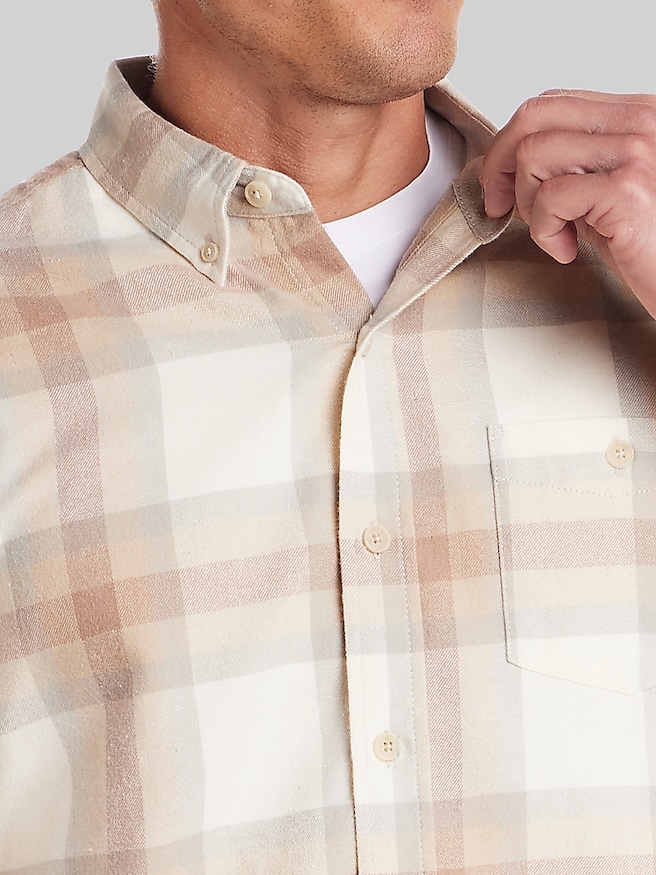
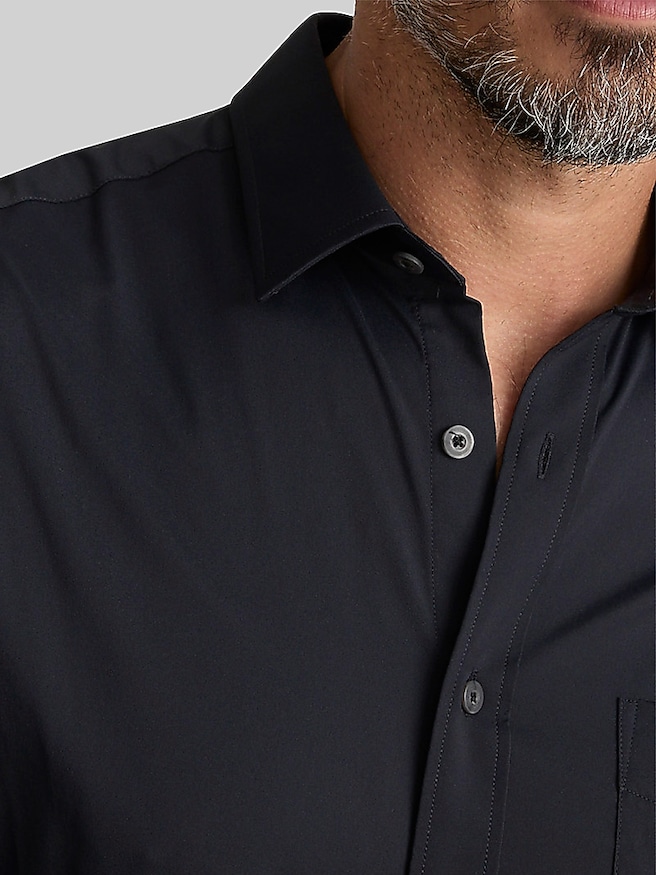
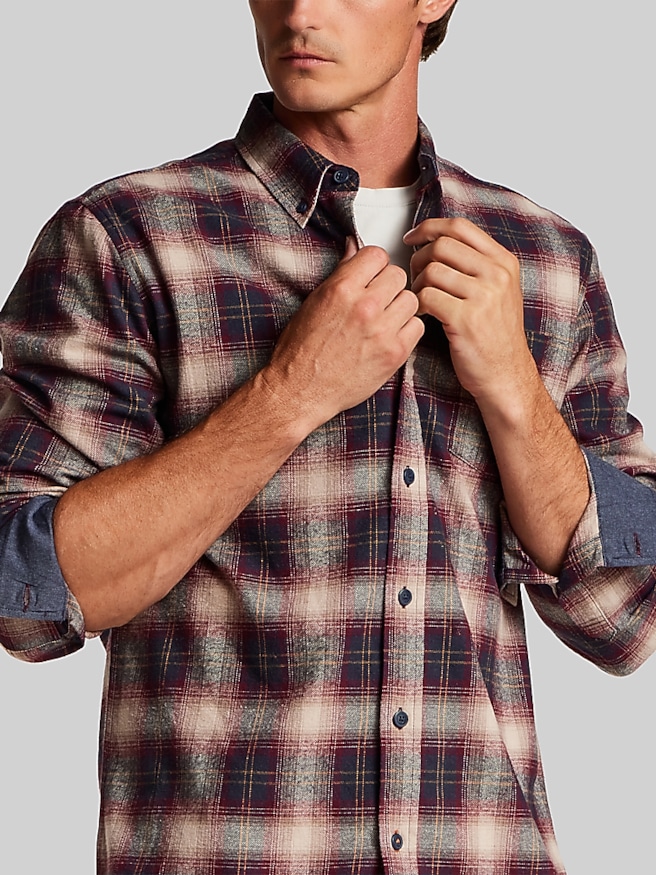
Men’s flannel overshirts and trucker jackets bring workwear character to everyday dressing, with enough structure to give a simple T-shirt and jeans a more finished look. Both occupy the space between a shirt and a jacket, but each has a distinct personality. A flannel overshirt typically borrows the button front, collar, and chest pockets of a casual shirt, then adds a more substantial fabric or a roomier cut for layering. Flannel describes a fabric with a softly brushed surface, not a particular pattern, so its appeal extends beyond familiar plaids to understated solids and subtle checks. Cotton flannel offers a soft hand and breathable feel, while blends can introduce other qualities, such as added resilience or easier maintenance, depending on their composition. Wool-blend flannel can have a loftier texture and a more substantial drape. A trucker jacket, by comparison, is recognizable for its defined seams, chest pockets, and relatively short, squared-off shape. Denim and canvas emphasize that practical heritage, while softer woven fabrics give the same silhouette a less rigid feel. Neither style needs an elaborate outfit underneath: the texture of an overshirt or the panel construction of a trucker jacket provides visual interest on its own. An unbuttoned flannel layer over a plain crewneck feels relaxed enough for a coffee stop or a casual afternoon with friends. A trucker jacket worn with chinos and a knit polo looks intentional without taking on the formality of a blazer. Fabric weight, lining, and construction matter as much as the category name. An unlined layer generally feels less bulky, while a lined design can have a fuller shape and a smoother interior over sleeves. These differences help explain why two jackets with similar outlines may feel quite distinct when worn. The right choice depends on the desired texture, the layers underneath, and whether the overall outfit calls for a soft, easy drape or a more defined silhouette.
Fit determines how naturally a flannel overshirt or trucker jacket works with the rest of a wardrobe. An overshirt needs enough space through the chest and upper arms to sit comfortably over another shirt, without pulling across the buttons or bunching beneath the sleeves. A relaxed cut can look purposeful rather than oversized when its length and proportions suit the wearer. On a conventionally cut shoulder, the seam generally sits near the shoulder’s edge; a deliberately dropped shoulder creates a looser outline. Trucker jackets often finish around the hip, a length that keeps the shape compact and leaves room for the proportions of the pants to show. An overshirt may extend farther, creating a longer line over straight-leg jeans or chinos. Sleeve room becomes especially noticeable when reaching for a steering wheel, carrying a bag, or sitting at a table, so comfortable movement is as important as how the garment looks while standing still. A layer that will be worn over a sweatshirt needs more room than one intended for a thin T-shirt. That extra ease should come from the cut rather than simply assuming a larger size will fit everywhere. Color and pattern also influence how easily these pieces work in everyday outfits. A solid flannel overshirt lets the brushed texture take the lead, while plaid introduces a stronger focal point. Keeping the shirt beneath it simple gives the pattern room to stand out. With a denim trucker jacket, jeans in a noticeably lighter or darker wash create separation between the two pieces; chinos offer another way to vary the texture. Leather sneakers keep the result casual, while sturdy boots reinforce the workwear influence. These are approachable layers for men who prefer uncomplicated outfits, whether dressing for a relaxed workplace, a weekend lunch, or an informal evening out. For a softer, shirt-weight expression of the same textured style, men's fall flannel shirts offer another way to build an outfit around flannel without the more pronounced structure of a jacket.
Lasting appeal comes from the relationship between fabric, construction, and care, not just a substantial feel in the hand. Even stitching, securely attached buttons, neatly finished seams, and well-supported pocket openings all contribute to a garment’s ability to handle repeated wear. Areas that see regular movement or handling, including cuffs, elbows, and closures, deserve particular attention. Dense fabric can feel reassuringly sturdy, but weight alone does not determine quality or comfort. A softer overshirt may be better suited to long stretches at a desk, while a firmer trucker jacket can hold its shape more distinctly when worn open. Care requirements vary with fiber content, lining, trim, and finish, making the garment’s care label the best starting point. Washable cotton flannel may need gentle laundering and controlled drying to limit shrinkage and preserve its brushed surface. Wool blends, structured linings, and certain finishes may call for a different approach, including professional cleaning when specified. Turning a washable garment inside out and fastening closures can help reduce rubbing and snagging, while avoiding excessive heat helps protect fit and fabric. Denim can transfer color, especially when new or deeply dyed, so label directions about washing and contact with lighter fabrics are worth following. Between wears, allowing a layer to air and addressing small marks promptly can reduce unnecessary cleaning. Proper storage matters, too: a supportive hanger helps a structured jacket retain its shape, while an overshirt can be hung or neatly folded according to its fabric and construction. These practical qualities also make flannel overshirts and trucker jackets thoughtful gifts for a partner, father, brother, or friend who appreciates clothes with a clear everyday purpose. Familiar colors, a known fit preference, and compatibility with the recipient’s usual shirts and pants make the choice more personal. Whether the appeal lies in soft flannel, substantial denim, or a clean workwear outline, the strongest addition is a layer that feels comfortable, pairs easily with familiar clothes, and earns its place through regular wear.