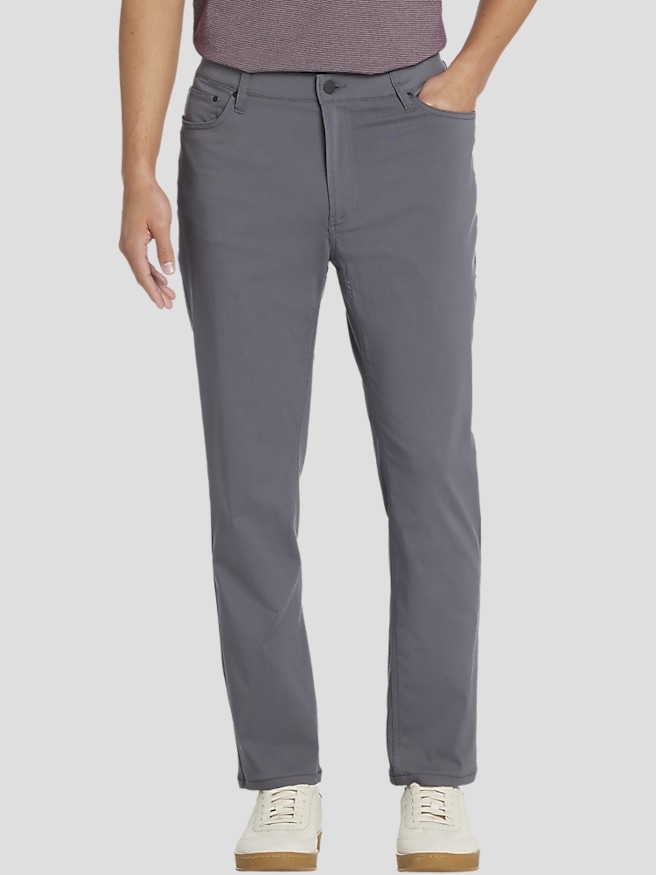
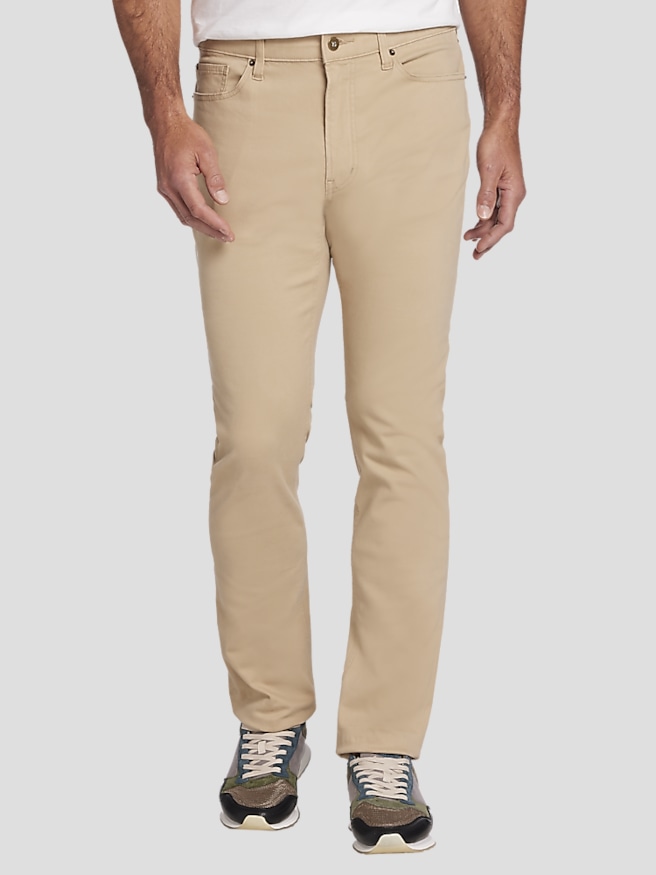
Men's five-pocket pants bring the familiar pocket layout of jeans to a broader range of fabrics, making them a practical option for everyday wear and many business-casual settings. The defining arrangement includes two front scoop pockets, two back patch pockets, and a smaller fifth pocket, traditionally a coin pocket set inside one of the front pockets. Five-pocket refers to that construction rather than a particular material, color, or fit. Although the design is associated with denim, it also works in cotton twill, stretch blends, corduroy, and other woven fabrics. Compared with chinos that have angled front pockets and welt back pockets, five-pocket pants often have a more relaxed, denim-inspired appearance, even when the fabric looks smooth and polished. Cotton twill gives the surface a subtle diagonal texture and a substantial feel that suits repeated everyday wear. Cotton blended with a small amount of elastane or spandex can provide extra give when sitting at a desk, stepping into a car, or bending to tie a shoe. The amount of stretch and how well a fabric returns to shape depend on its composition and construction, not simply whether the label mentions stretch. Synthetic blends may offer lighter weight, quicker drying, or improved wrinkle resistance, though those qualities vary by fabric. Corduroy adds visible ribs and a softer texture, while brushed cotton fabrics can have a smooth, velvety surface. Fabric weight also affects how the pants hang: a more substantial weave can create a structured outline, while a lighter cloth may feel less bulky through the leg. Clean finishing, secure pocket stitching, and reinforcement at areas that receive frequent strain are useful details for pants worn regularly. Rivets can strengthen pocket corners, but they are not essential to the five-pocket design. The result is a category that sits comfortably between traditional jeans and dressier trousers, especially for days that include both practical errands and a setting where a neat appearance matters.
Fit makes a noticeable difference in how men's five-pocket pants look and feel throughout the day. Slim fits generally sit closer through the thigh and narrow toward the ankle, while straight fits maintain a more consistent line from the knee to the hem. Athletic fits typically provide additional space through the seat and thigh with a narrower lower leg, although the exact proportions differ among designs. These descriptions are starting points rather than guarantees; the waist, rise, seat, and thigh all contribute to comfort. A waistband should sit securely without digging in when seated, and the fabric across the hips should lie reasonably smooth rather than pulling into pronounced horizontal creases. Front pockets that flare open can signal insufficient room through the hips or an unsuitable rise. Stretch can make movement easier, but it cannot fully compensate for a cut that is too tight. Length matters as well. A hem that meets the shoe with little or no break creates a clean outline, while a modest break offers a more traditional finish; excess fabric pooling around the ankle can make otherwise well-fitting pants appear untidy. The right balance depends on the leg opening and the footwear worn most often. With loafers or understated leather lace-ups, smooth five-pocket pants can work with a tucked-in button-down shirt and a belt for an office that allows business-casual clothing. A knit polo offers a less formal alternative for a lunch meeting or dinner out. With a plain T-shirt and clean sneakers, the same pocket construction feels at home on a casual day. Navy, charcoal, khaki, and olive are useful foundations because they coordinate with a wide range of shirt colors without demanding a matching jacket. A textured sport coat can add structure without making the outfit feel like a suit. Pocket contents influence the silhouette, too: a thick wallet or a crowded front pocket can interrupt the line of a slimmer fit. Five pockets provide convenient storage for small essentials, but they are best treated as everyday pockets rather than cargo compartments.
Care and construction help determine how five-pocket pants hold up to regular use. The garment's care label is the best reference because cotton, stretch fibers, textured fabrics, and performance blends do not always respond well to the same treatment. For machine-washable pairs, washing with similar colors and avoiding unnecessary heat can help protect both appearance and fit. Turning pants inside out may reduce surface abrasion, particularly on darker fabrics, and emptying pockets before washing prevents forgotten receipts or small objects from damaging the cloth. High dryer heat can contribute to shrinkage in some cotton fabrics and may affect stretch fibers, so the recommended drying method deserves attention. Some pants benefit from reshaping while damp and drying on a hanger or flat surface, while others permit tumble drying according to the label. Pressing requirements also differ: a smooth twill may need occasional ironing, whereas corduroy requires care to avoid flattening its raised texture. Everyday durability comes from more than fabric thickness. Even stitching, secure belt loops, a dependable zipper, and neatly finished seams all support repeated wear. Pocket edges and the inner thighs often experience friction, making those areas worth checking as pants age. A quick repair to a loose seam or fastening can prevent a small issue from becoming a larger one. Rotating between pairs and putting pants away clean and dry can also help maintain their appearance. For someone who moves between a desk, a commute, and casual plans afterward, five-pocket pants offer a familiar shape without limiting an outfit to denim. They can also make a practical gift for a partner, father, brother, or friend when waist size, inseam, and preferred fit are already known. A favorite pair can provide a useful reference for those measurements, especially since a labeled size does not describe every aspect of the cut. For a shorter silhouette with the same recognizable pocket arrangement, men's five-pocket shorts offer another expression of the design. In either form, the appeal is straightforward: accessible pockets, comfortable movement, and a shape that works naturally with the shirts and shoes already in an everyday wardrobe.