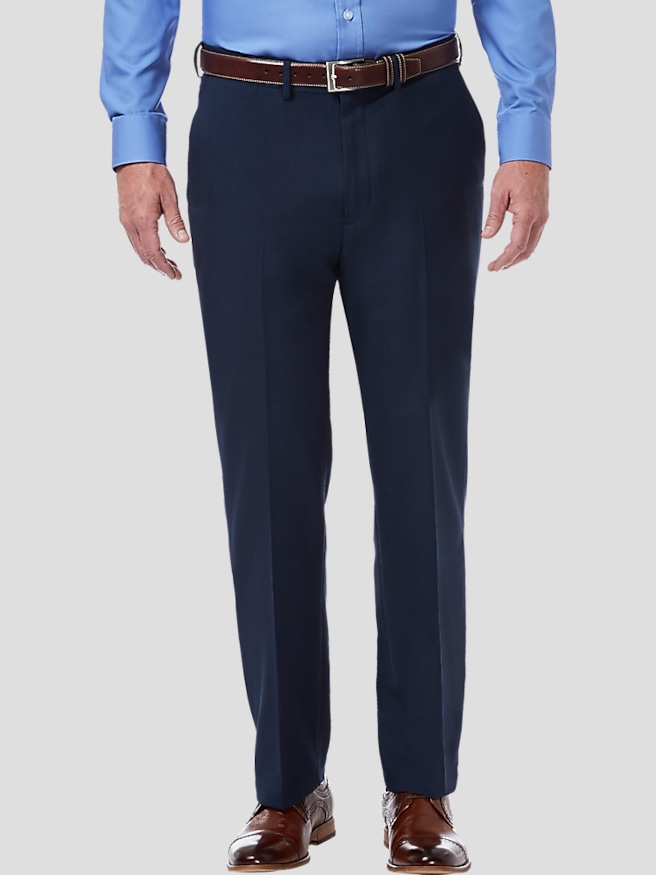
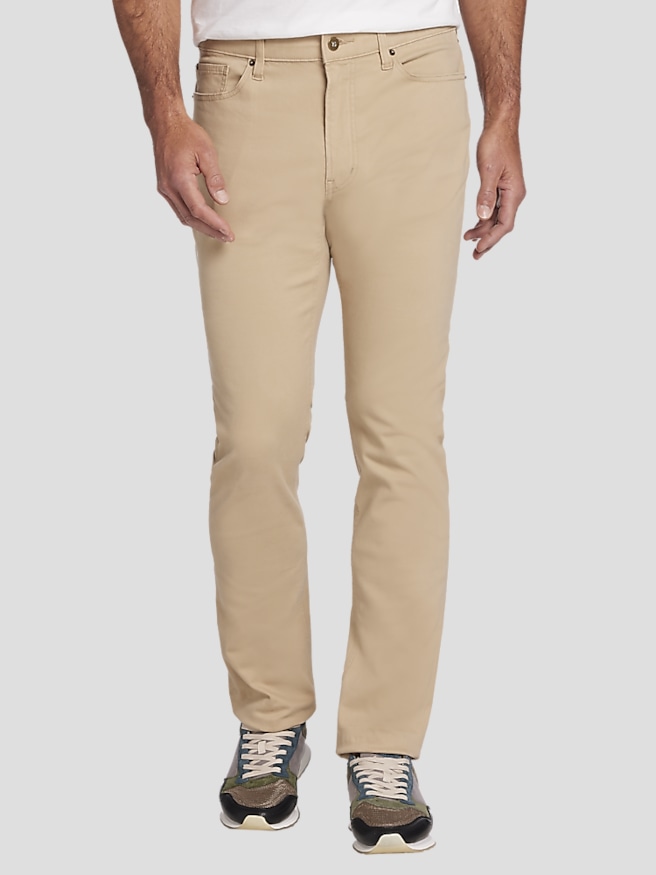
Men’s slim-fit 5-pocket pants combine the familiar pocket layout of jeans with a close, streamlined shape and, in non-denim fabrics, the clean finish associated with chinos. The classic construction includes two front pockets, a small coin pocket set inside one front pocket, and two back pockets, giving these pants an easygoing character without the bulk of cargo styling. A slim fit generally sits close through the seat and thighs, with a narrower leg opening that creates a tidy line over sneakers, loafers, or boots. The result is a versatile option for casual offices, dinner plans, weekend outings, and travel days when a full pair of dress trousers would feel too formal. Cotton twill brings a smooth surface and a recognizable diagonal weave, while brushed cotton can have a softer hand that feels especially comfortable during the cooler months. Fabrics blended with a small amount of elastane or spandex may add stretch for sitting, walking, and climbing stairs; blends containing synthetic fibers may also offer shape retention or quicker drying, depending on their construction. Fabric weight matters as much as fiber content. A lighter cloth tends to feel less substantial and layers easily under a long coat, while a heavier twill offers more body and can help the legs hang neatly. Neither the five-pocket layout nor the slim silhouette guarantees a particular level of stretch, so fabric composition remains an important part of how a pair will feel throughout the day. For a denim version of this same familiar construction, Five Pocket Slim Fit Jeans offer a closely related look with the texture and character of denim. Non-denim five-pocket pants occupy useful middle ground: more relaxed than sharply pressed dress pants, yet often easier to pair with a collared shirt than heavily faded jeans. Their appeal lies in that balance, especially for someone whose day moves from a desk to an informal meal without time for a complete change of clothes.
A good slim fit follows the body without gripping it, leaving enough room to sit comfortably and move naturally. The waistband should rest securely without needing a belt pulled tight, and the front pockets should lie reasonably flat rather than pulling open at the hips. Across the thighs, strong horizontal tension lines can signal that the cut is too close; excess fabric gathering below the seat can suggest that the shape is not the best match. Slim is a silhouette, not a reason to choose a smaller waist size. Someone with more developed thighs may prefer a slim cut with additional room at the top and a gradual taper below the knee, while a leaner build may suit a consistently narrow leg. Rise also influences comfort: the distance between the crotch seam and waistband affects where the pants sit and how they feel when seated. Length completes the shape. A hem that lightly meets the shoe gives the leg a clean finish, while heavy stacking at the ankle can interrupt an otherwise streamlined look. With low-profile leather sneakers, a minimal break keeps the outfit relaxed and neat; with lace-up boots, enough length to meet the boot shaft helps the proportions feel balanced. Color makes these pants easy to work into an existing wardrobe. Navy, charcoal, and black create a quiet foundation for patterned shirts or textured knitwear, while tan, stone, and olive work well with denim shirts, cream sweaters, and brown leather footwear. A tucked-in button-down and an unstructured jacket can suit a business-casual setting where dress expectations allow, while a heavyweight T-shirt and overshirt feel at home on a weekend coffee run. During cooler weather, a fine-gauge sweater adds warmth without overwhelming the narrow silhouette. The same understated shape can anchor an outfit for a family gathering, a casual date, or a day of errands, with the shirt, shoes, and outer layer setting the overall level of polish.
Everyday usefulness also depends on how the pants hold up between wears. Pocket edges, belt loops, the seat, and the inner thighs are common points of friction, so secure stitching and fabric with enough substance for the intended use are worthwhile considerations. Reinforcement around high-stress areas can support durability, although no single detail determines how long a pair will last. Stretch can improve ease of movement, but more stretch does not automatically mean better recovery; a fabric should also return toward its original shape rather than remain loose at the knees. For days that involve a long commute or hours at a desk, comfort while seated matters just as much as appearance in front of a mirror. Keeping bulky objects out of the front pockets helps preserve the clean line, and removing a thick wallet from a back pocket before a long drive can make sitting more comfortable. Care should follow the garment label, since cotton content, dyes, finishes, and stretch fibers may call for distinct washing and drying methods. When machine washing is permitted, turning pants inside out and washing with similar colors can help limit surface abrasion and visible color transfer. Excessive dryer heat can contribute to shrinkage and may affect elastic fibers, so the recommended drying temperature deserves attention. Promptly removing pants after drying, smoothing the seams, and hanging or folding them neatly can reduce deep creases. An iron or steamer may help restore a tidy finish when the care label allows it, without imposing the sharp center crease associated with formal trousers. Rotating pairs and treating small stains promptly can also reduce unnecessary wear from repeated heavy cleaning. As a gift, men’s slim-fit five-pocket pants are most straightforward when the recipient’s preferred waist, inseam, and fit are already known. For someone building a practical wardrobe for workdays and weekends, their value is in repeat use: comfortable enough for ordinary routines, polished enough for casual plans, and simple to combine with shirts, knitwear, and shoes already in regular rotation.