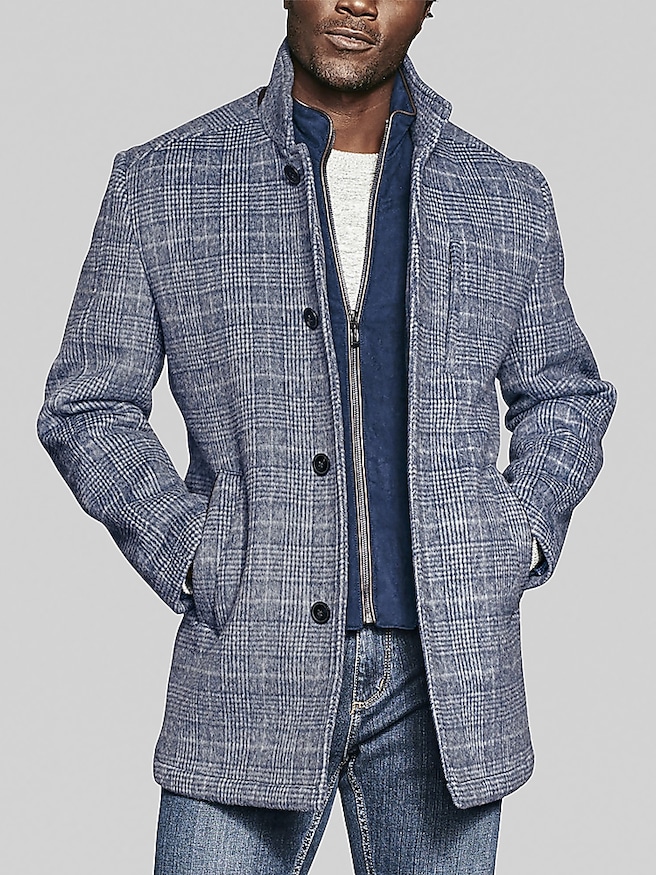
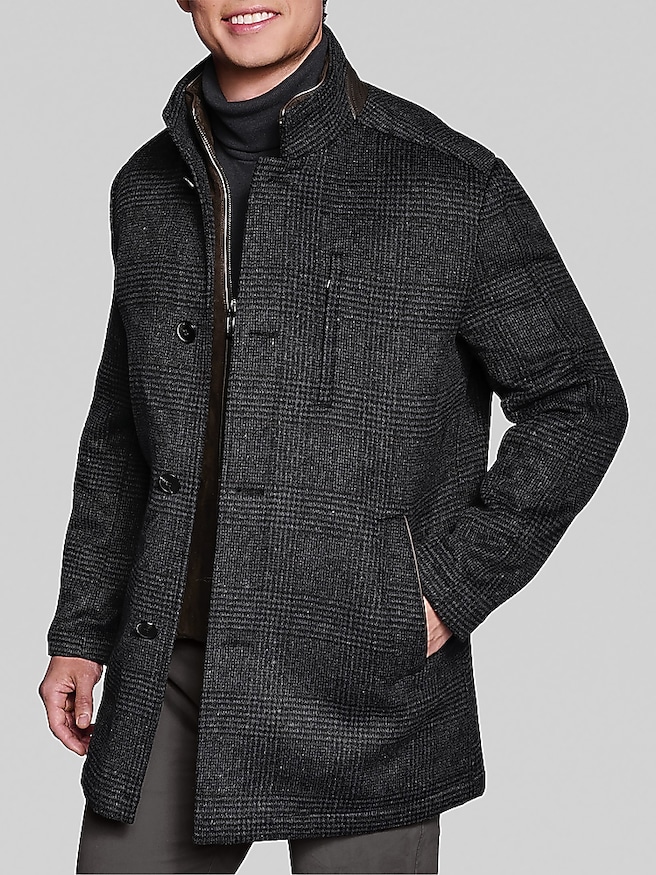
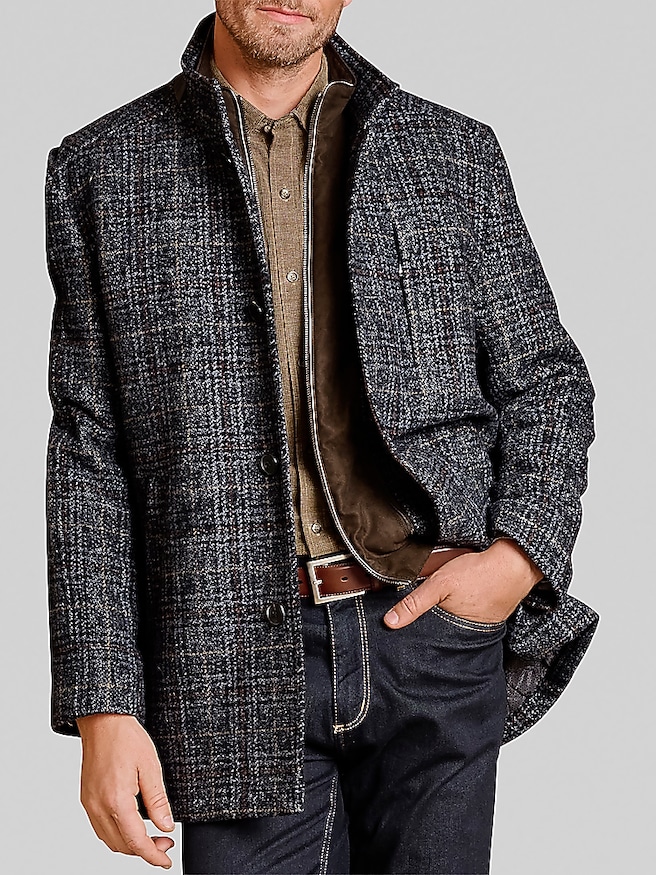
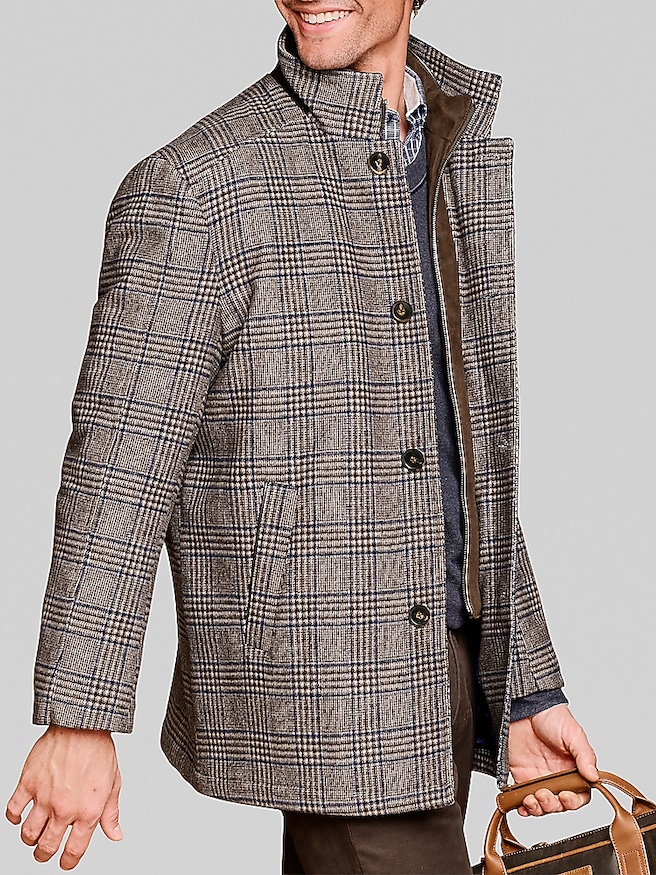
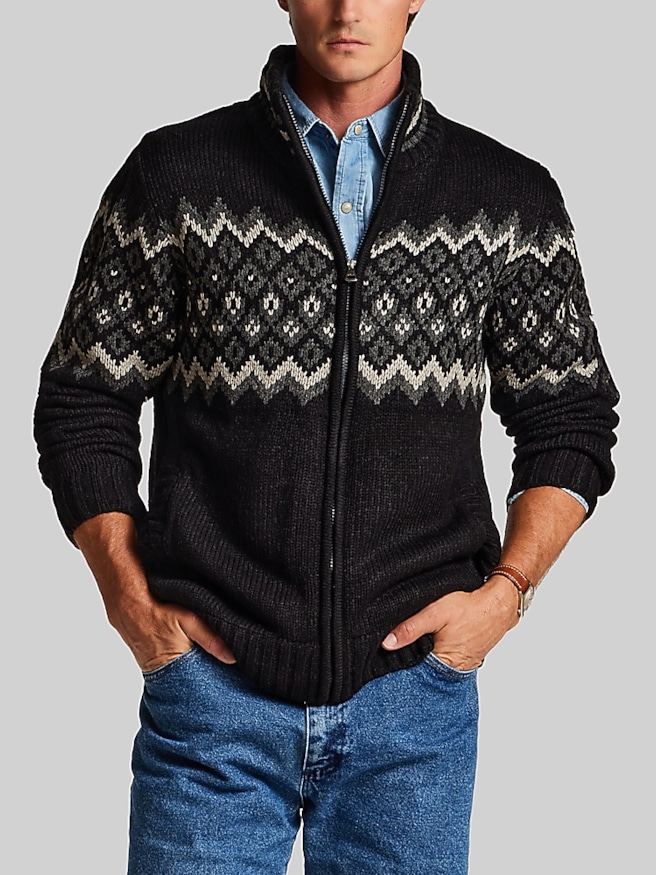
Men's faux shearling jackets and coats pair a plush, fleece-like texture with the substantial look of classic cold-weather outerwear. Their appeal comes from contrast: a smooth or softly brushed exterior, a textured collar, and a lining that makes everyday layers feel more comfortable. Faux shearling recreates the appearance of sheepskin fleece with manufactured fibers, often polyester or acrylic, although the exact composition varies by garment. The outer shell may have a suede-like finish, a leather-like surface, or a woven construction, and each gives the same general silhouette a distinct character. A matte, brushed finish feels understated with denim and boots, while a smoother shell creates a sharper outline over tailored trousers. Some designs feature plush lining throughout the body; others concentrate that texture at the collar, cuffs, or interior panels. That distinction matters as much as appearance, since lining coverage, shell weight, and construction all influence how a coat feels in use. A short jacket offers an easygoing shape for daily errands, casual dinners, and time behind the wheel. A longer coat provides more coverage over the hips and can sit comfortably over a sweater or sport coat when the proportions allow. Zip fronts tend to look streamlined, while button closures and broad collars give the category a more traditional outerwear character. Neutral shades such as black, brown, tan, and cream make the texture the focal point without requiring an elaborate outfit. Darker tones create a clean frame around lighter knitwear; lighter shades bring definition to dark jeans and simple layers. For everyday cold-weather wear, the most useful choice is one that suits the wearer's routine rather than appearance alone. A substantial collar can feel especially welcome on a chilly walk, but a plush lining should not be taken as a promise of wind protection or waterproof performance. Those qualities depend on the shell, closures, and stated construction.
Fit gives faux shearling outerwear much of its character, particularly because a thick lining takes up space inside the garment. A jacket that looks roomy on a hanger may feel close through the chest and upper arms once it is layered over a sweatshirt. The right balance leaves enough room for an ordinary day's clothing without making the shoulders, sleeves, or body look unnecessarily oversized. For a traditionally structured cut, shoulder seams generally sit close to the natural shoulder line; relaxed silhouettes may place them lower by design. The more telling details are how the front closes, whether the upper back feels restricted, and whether the sleeves allow comfortable movement. Reaching forward, sitting down, and bending the elbows reveal more about everyday comfort than standing still in front of a mirror. A hem that rides up sharply or a closure that pulls across the chest can signal a mismatch between the cut and the layers underneath. Sleeve length deserves equal attention: a thick cuff should finish neatly around the wrist without swallowing the hand. Shorter shapes work particularly well with straight-leg jeans, sturdy chinos, and uncomplicated sweaters, keeping the outfit balanced rather than top-heavy. Longer coats can accommodate a more dressed-up combination, though the coat should cover the layer beneath it cleanly instead of leaving a jacket hem exposed. A fine-gauge crewneck keeps bulk down, while a heavier cable-knit sweater calls for more room through the body and arms. Collars also change the effect. An open collar frames a knit shirt for a relaxed dinner, while a higher fastening can create a more enclosed feel outdoors. For someone who spends much of the day moving between a car, an office, and indoor stops, ease of movement may matter more than maximum coverage. As a gift, this category suits someone who enjoys tactile fabrics and practical statement pieces, especially when the giver knows the recipient's usual outerwear size, preferred fit, and layering habits.
Care has a noticeable effect on how faux shearling jackets and coats look over time. The plush surface can flatten with repeated pressure, and suede-like or leather-like shells may need treatment that differs from the lining beneath them. The garment's care label is the starting point, not a general rule borrowed from another coat. Some constructions permit gentle washing, while others call for spot cleaning or professional care; bonded layers, trim, and surface finishes can limit what is appropriate. High heat can damage synthetic fibers or affect coated materials, so hot dryers, radiators, and direct heat are poor shortcuts for drying a damp garment. When permitted by the care instructions, a gentle touch with a suitable soft brush can help lift flattened pile after the fabric is dry. Vigorous scrubbing can roughen the surface, and an unfamiliar cleaning solution should be tested in an inconspicuous area before broader use. Everyday storage matters, too. A sturdy hanger that supports the shoulders helps preserve the shape, while enough closet space keeps the collar and lining from being crushed. Letting the coat dry fully before putting it away helps protect both its appearance and freshness. Durability also comes down to construction and habits: secure seams, neatly finished edges, and closures that operate smoothly are useful details to consider, particularly around pockets and cuffs that see frequent handling. Heavy bags carried repeatedly against the same area may compress the pile or rub the exterior, making occasional changes in how the coat is carried worthwhile. For a related texture with the character of knitwear, Men's Faux Sherpa-Lined Sweater Jackets offer another approach to casual layering. Across these textured outer layers, comfort comes from matching the garment's weight, cut, and care requirements to actual use. A well-chosen faux shearling coat brings visual depth to familiar clothing without needing complicated styling: a clean shirt, reliable trousers, and footwear suited to the day's plans leave plenty of room for the fabric itself to stand out.