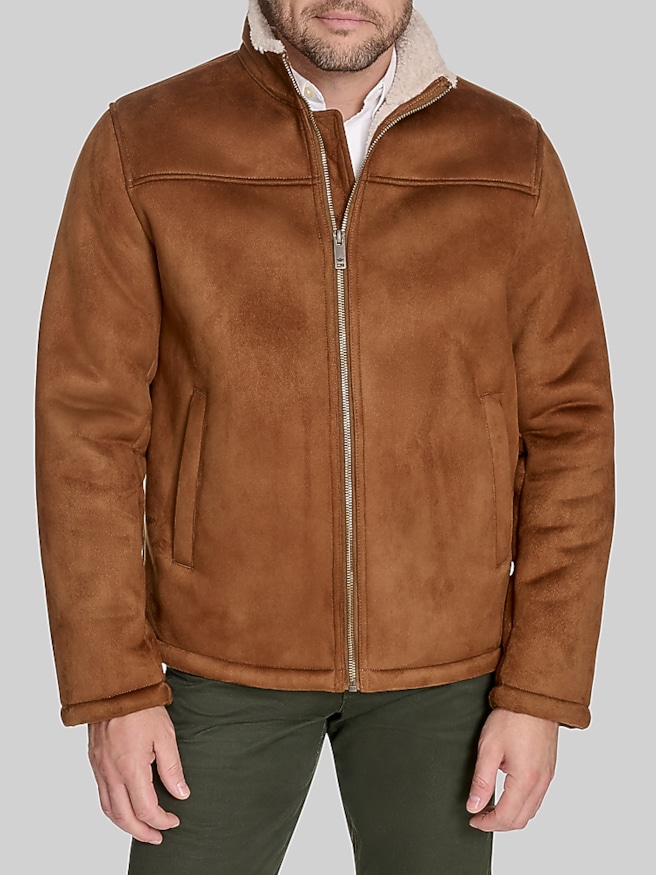
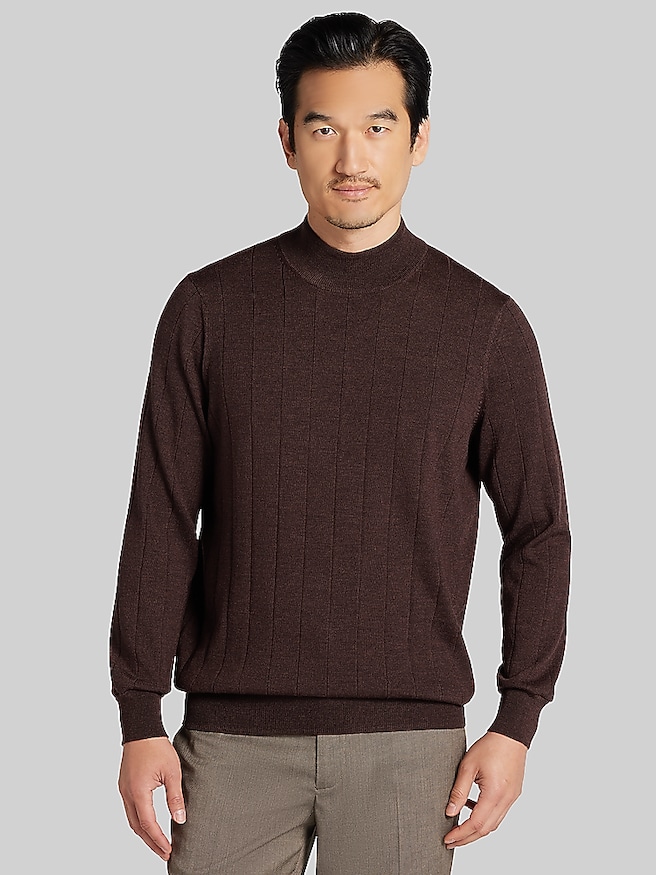
Men's faux sherpa-lined sweater jackets combine a knitted exterior with a plush, fleece-like lining, creating a layer that sits between a cardigan and a casual jacket. The outside has the texture and easy movement associated with knitwear, while the inside adds softness and insulation. Faux sherpa is designed to resemble the curled surface of shearling, often using synthetic fibers such as polyester rather than animal hide. The name describes the lining, not the composition of the entire garment: an outer shell may contain cotton, acrylic, wool, polyester, or a blend, and each combination has its own feel and care requirements. Cotton-rich knits can feel substantial and familiar, wool blends can add insulating warmth, and synthetic blends may contribute shape retention and easier maintenance, depending on their construction. A smooth knit gives the jacket a restrained appearance, while ribbing, cable patterns, and marled yarns add visible depth. These details make the category especially suited to everyday settings where a sweatshirt feels too relaxed but a tailored jacket would be unnecessary. Picture a textured knit over a plain T-shirt for a coffee stop, or a zip-front layer worn with a button-down for a casual dinner. The plush interior is useful for chilly commutes, an afternoon outdoors, or a workspace that calls for an extra layer. Warmth still depends on knit density, lining coverage, fit, and what is worn underneath. A sherpa-lined sweater jacket should not automatically be treated as windproof or water-resistant; an open knit can admit air, and a soft lining does not replace a protective outer shell in wet conditions. Closures and collars also affect comfort. A full zipper allows quick adjustments, buttons lend a cardigan-like character, and a higher collar can provide coverage at the neck without requiring a bulky scarf.
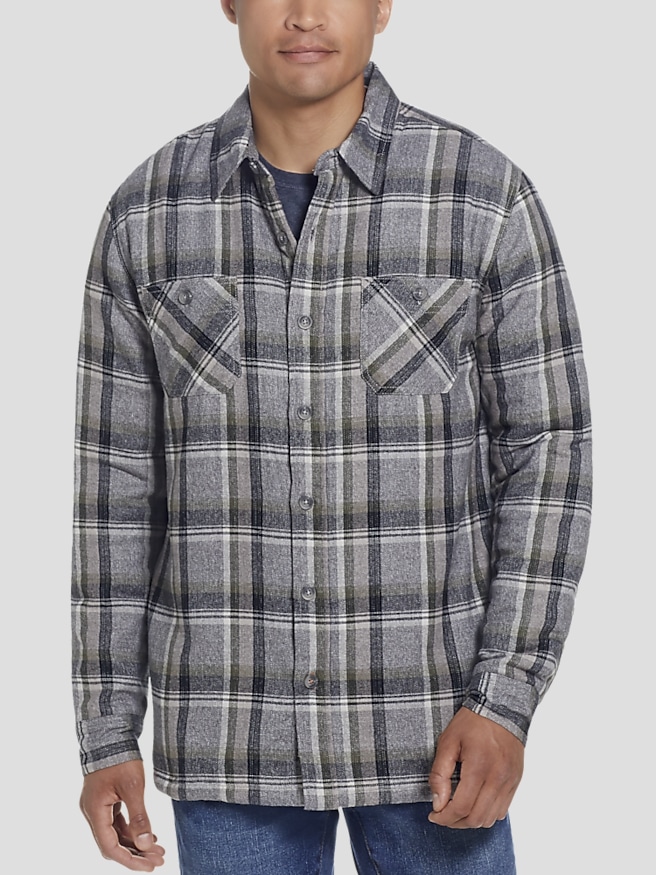
Fit matters because faux sherpa occupies space inside the jacket, making the interior feel more substantial than an unlined sweater of similar dimensions. The most useful fit allows the lining to rest comfortably against a shirt without compressing the shoulders, chest, or upper arms. With the jacket fastened, reaching forward, bending the elbows, and sitting down should feel easy. Pulling across the chest, a zipper that bows outward, or sleeves that grip the forearms can indicate that there is too little room for the intended base layer. Excess fabric can be just as inconvenient, particularly when the jacket needs to fit beneath a coat. Check the size chart and garment measurements when provided, and consider the clothing that will usually go underneath rather than choosing a size solely for a loose appearance. Someone wearing a thin crewneck tee may prefer a closer fit than someone layering over an Oxford shirt or a lightweight pullover. Sleeve construction deserves attention, too: lining coverage may vary, so the body can feel plush while the sleeves have a smoother interior that slides more easily over another layer. A hem near the hip typically works well with jeans, chinos, and casual trousers, while ribbed cuffs can help keep sleeves in place. For a simple outfit, balance a heavily textured jacket with smooth fabrics and uncomplicated colors. Dark denim and leather boots give a cable-knit style a grounded feel; straight-leg chinos and clean sneakers keep a finer knit relaxed without looking unfinished. A collared shirt can make the same jacket suitable for an informal office, provided the workplace dress expectations allow it. For a related look with a woven exterior and a more shirt-like shape, Men's Sherpa-Lined Flannel Shirt Jackets offer another way to pair a soft lining with everyday layers. The distinction is primarily in the outer construction and silhouette: sweater knits emphasize stretch and texture, while flannel shirt jackets emphasize woven fabric and familiar shirting details.
Thoughtful care helps preserve both the outer knit and the loft of the faux sherpa lining. Always follow the sewn-in care label, since a jacket with a washable synthetic lining may still have an outer fabric or trim that requires a gentler process or professional cleaning. When machine washing is permitted, the recommended water temperature and cycle matter; turning the garment inside out and avoiding a crowded load can help limit abrasion. Close zippers, empty pockets, and keep the jacket away from exposed hooks or other hardware that might catch the knit. Use only the drying method specified on the label. Excess heat can affect synthetic fibers, and hanging a heavy, wet knit can stretch the shoulders or lengthen the body, so flat drying is appropriate when directed. Between cleanings, let the jacket air out and address small spills promptly using a method suited to its fibers. Follow label guidance on brushing the lining or using fabric treatments, rather than assuming that every fleece-like surface responds the same way. Some surface pilling can occur where sleeves rub against the body or a bag strap repeatedly crosses the shoulder. If the fabric permits, careful use of a suitable sweater comb or fabric shaver can improve the appearance without tugging at loose fibers. Durability also starts with construction: evenly formed stitches, secure pocket openings, stable seams, and a closure that moves smoothly are useful details to examine. Fold the jacket for longer storage to help protect its shape, and make sure it is clean and fully dry before putting it away. As a gift, a faux sherpa-lined sweater jacket suits someone who enjoys soft layers, textured knitwear, and clothing that moves easily between home and casual outings. A familiar color and a fit matched to an existing favorite layer are practical starting points. Care preferences matter as much as appearance; an easygoing daily layer should fit the recipient's routine, whether that means occasional professional cleaning or label-approved washing at home. The strongest choice balances a comfortable interior, enough room to move, and an exterior texture that works naturally with the clothes already in regular rotation.