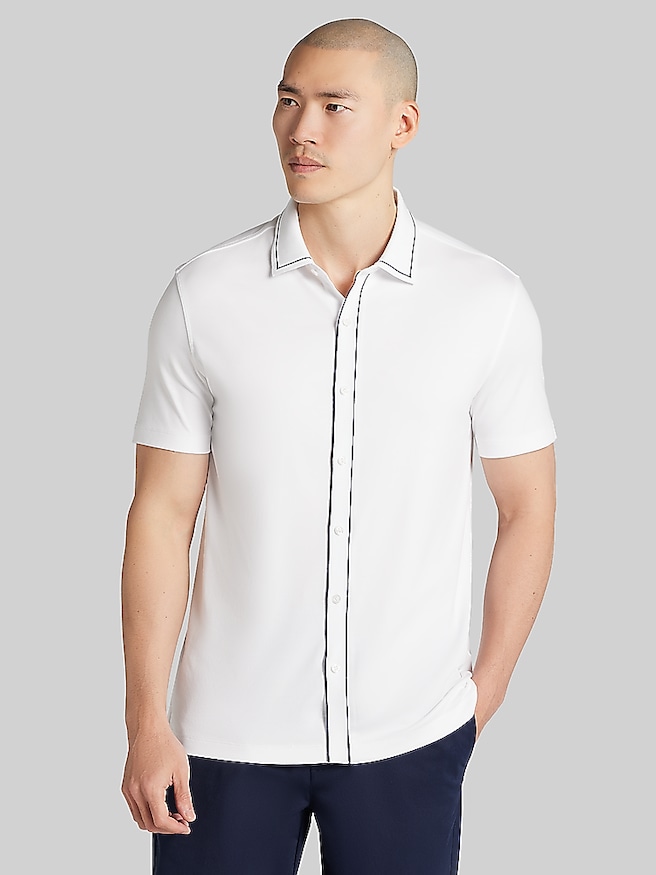
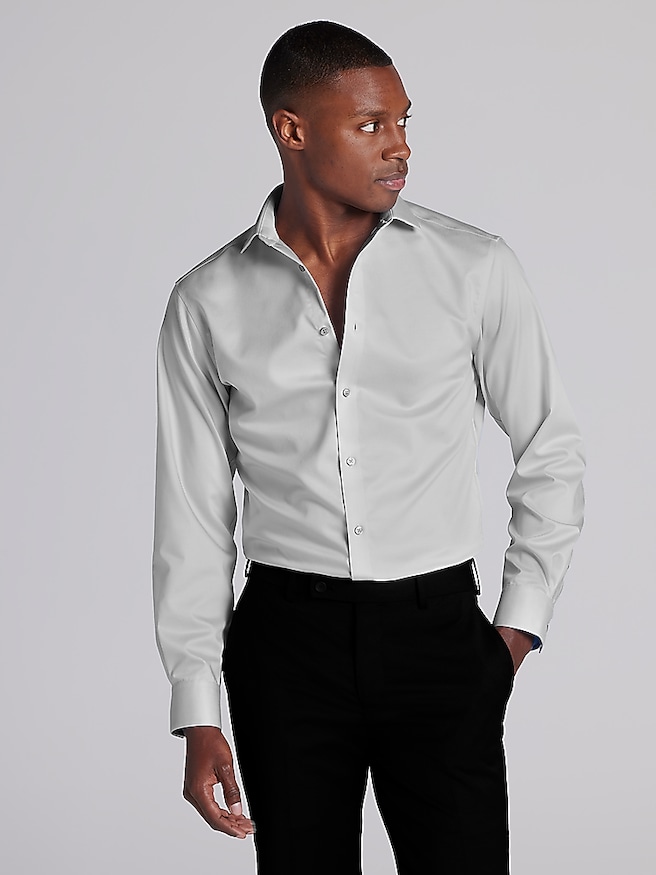
Men’s fashion tops include T-shirts, polos, casual button-downs, dress shirts, sweaters, and other knit layers that shape an outfit’s overall look. The category spans everyday basics and more expressive styles, with differences in fabric, neckline, pattern, and construction helping each piece serve a distinct purpose. A smooth crewneck T-shirt creates a clean foundation for jeans or chinos, while a polo adds a collar without the formality of a dress shirt. Casual button-downs offer room for texture and personality through checks, stripes, subtle prints, and woven finishes. Dress shirts bring a more structured appearance to tailored trousers and suits, especially when the collar sits neatly beneath a jacket. Sweaters and quarter-zip tops introduce another dimension through ribbing, stitching, and layered necklines. These distinctions matter in familiar settings: an office with a relaxed dress code, dinner at a neighborhood restaurant, a family celebration, or a work trip with several types of appointments. A solid polo can look composed at a team lunch, while a patterned shirt gives a simple pair of trousers more character for an evening out. Color also influences how easily a top works with the rest of a wardrobe. White, gray, navy, and black provide straightforward foundations; muted greens, blues, and earth tones offer variation without demanding a completely different outfit. Small-scale patterns tend to blend easily with solid pants, while larger prints become a more noticeable part of the look. Necklines change the effect, too: a crewneck frames the face simply, a V-neck leaves space for a shirt collar, and an open polo placket feels less structured than a fully buttoned shirt. For a contemporary interpretation of these familiar shapes, Mens Modern Tops connects the category with an emphasis on updated silhouettes and styling. The most useful distinctions remain practical ones: how a top feels, where it will be worn, and how naturally it fits into an established wardrobe.
Fabric and fit determine much of that everyday usefulness. Cotton is common in men’s tops because it can feel soft against the skin and work across many fabric constructions, from smooth jersey to textured piqué. Jersey has a flexible, familiar feel often associated with T-shirts, while piqué has a raised surface that gives polos visual depth. In woven shirts, poplin generally has a smooth, crisp appearance, Oxford cloth has a more visible basketlike texture, and twill is recognizable by its diagonal weave. Linen brings natural texture and a relaxed finish, including creases that are part of its character. Wool and fine-gauge knit blends can create a refined surface for sweaters, while synthetic fibers may contribute resilience, moisture management, or easier maintenance, depending on the fabric’s construction and finish. A small amount of stretch can support movement, but the fabric should still return to its intended shape rather than hang loosely at elbows or cuffs. Fit is equally specific. On a conventional set-in sleeve, the shoulder seam generally rests near the shoulder’s edge; a deliberately dropped shoulder creates a different, more relaxed silhouette. A close-fitting top should follow the torso without pulling across the chest, and a relaxed cut should leave comfortable room without overwhelming the wearer. Button-front shirts that gap when seated or pull into horizontal lines across the chest may need more room. Sleeve length, upper-arm space, and body length deserve attention as well, particularly for anyone who spends time reaching across a desk or driving between appointments. An untucked shirt usually works best when its hem looks intentional with the rise of the pants, while a tucked shirt needs enough length to stay in place through ordinary movement. When layering, a shirt collar should sit comfortably beneath the outer neckline, and sleeves should pass through a jacket without bunching. These small relationships often make an outfit look more considered than a bold color or prominent pattern alone.
Construction and care help men’s fashion tops retain that considered appearance over repeated wear. Even stitching, securely attached buttons, neatly finished seams, and collars that lie smoothly are useful details to notice. Knit cuffs and hems should recover after gentle stretching, while woven plackets should sit flat rather than twist. Durability depends on more than thickness: fiber quality, fabric structure, seam construction, and appropriate laundering all contribute to how a garment holds its shape and finish. The care label provides the clearest direction because similar-looking fabrics can require different treatment. Separating light and dark colors, treating marks promptly according to fabric instructions, and avoiding unnecessary exposure to high dryer heat can help preserve appearance. Some knits benefit from reshaping and drying flat when directed, while woven shirts may need ironing or steaming to restore a smooth surface. Folded storage can help prevent heavier sweaters from stretching on hangers; properly shaped hangers can support shirts without leaving sharp marks at the shoulders. Those practical details matter when a top needs to look presentable after a commute, fit neatly into a travel bag, or remain a dependable part of a weekly rotation. Styling can stay equally straightforward. A textured polo with flat-front trousers has enough definition for a polished casual outfit, while a plain T-shirt beneath an unstructured jacket keeps the focus on proportion and clean lines. A fine-gauge sweater over a collared shirt adds depth without needing a conspicuous pattern. Men’s tops can also make thoughtful gifts for a partner, parent, sibling, friend, or recent graduate, especially when the recipient’s preferred fit, usual size, and care habits are known. Someone who favors simple outfits may get more use from a familiar neckline and understated color than from an unfamiliar print. Across everyday dressing, work, travel, and social occasions, the strongest choices combine an appropriate silhouette with appealing fabric and realistic upkeep, making the top feel like a natural part of the wearer’s life.