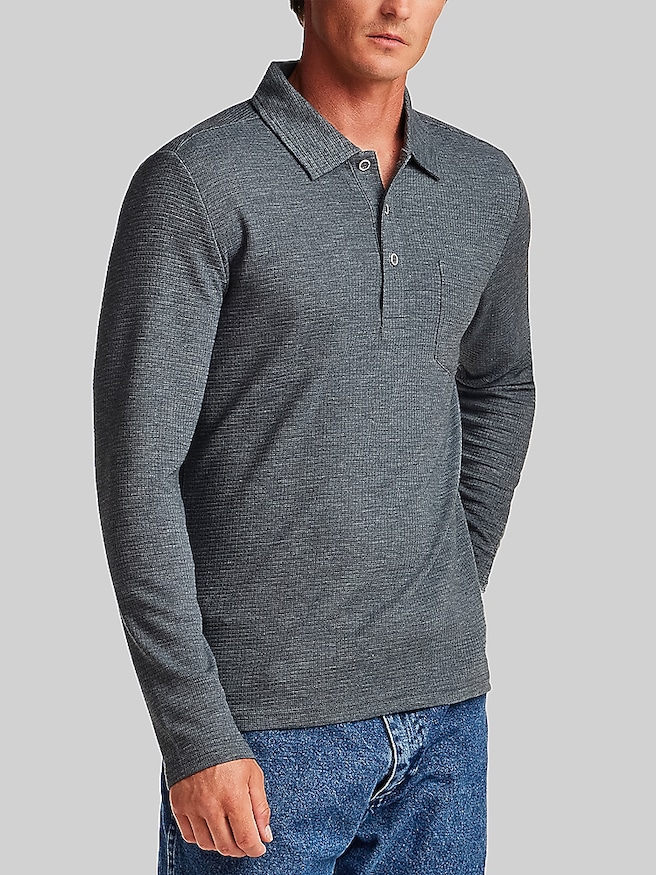
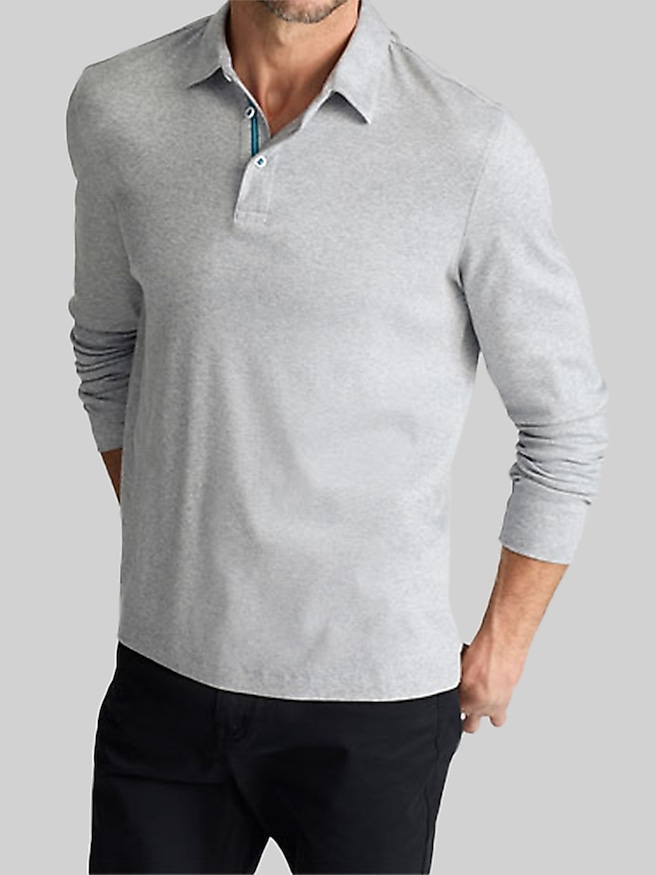
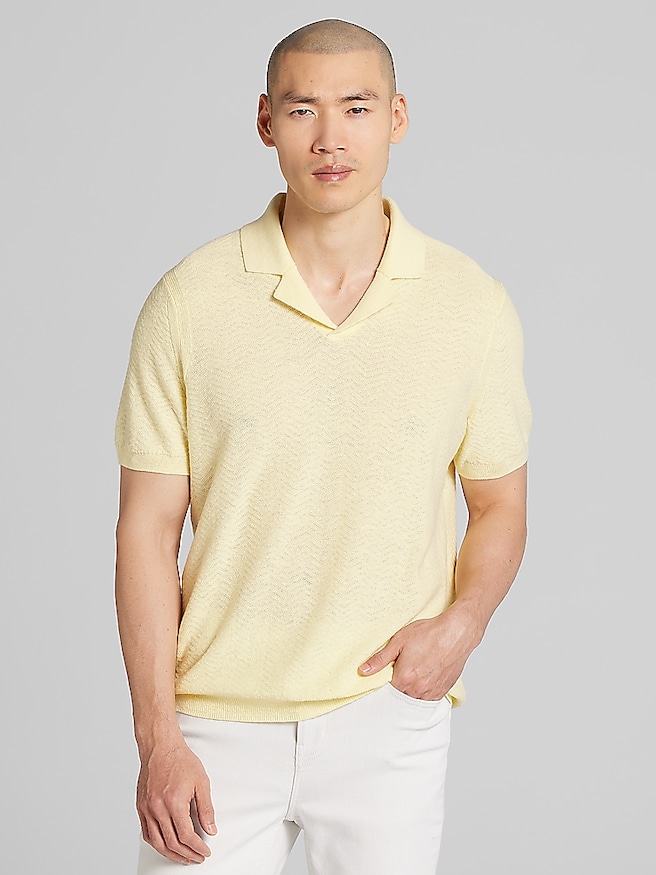
Men’s fall polos bring the familiar ease of a polo shirt into a wardrobe built around richer texture, substantial knits, and comfortable layers. Long-sleeve styles, sweater-knit constructions, and cotton or merino wool fabrics give the category its seasonal character, while short-sleeve options still work beneath jackets and sweaters. The appeal is straightforward: a collar adds definition around the face, a button placket allows an adjustable neckline, and a knit body offers more flexibility than many woven shirts. Fabric makes a noticeable difference in how a polo looks and feels. Cotton piqué has a lightly raised surface that adds visual depth without looking busy, while cotton jersey typically feels smoother and has a more relaxed drape. Sweater-knit polos offer a softer, more dimensional appearance that pairs naturally with corduroy, brushed cotton trousers, and wool-blend jackets. Merino wool can provide warmth with relatively little bulk, making it useful when a substantial outer layer already supplies most of the insulation. Cotton blends may combine a familiar soft hand with added stretch or easier shape retention, depending on their construction. Performance knits can emphasize moisture management and freedom of movement, qualities that suit a busy commute or a day spent moving between indoor spaces and outdoor errands. Fiber content alone does not tell the whole story, though; knit density, yarn thickness, and finishing also influence warmth, breathability, and drape. A fine-gauge knit may slip neatly under a blazer, while a thicker ribbed fabric creates a more substantial standalone look. Deep navy, olive, burgundy, charcoal, and earthy brown fit comfortably into fall dressing, especially alongside denim and textured trousers. Subtle stripes, heathered yarns, and tonal patterns add interest without demanding an entirely new wardrobe. The most useful fall polos balance these visual details with a comfortable feel, giving familiar everyday outfits a little more definition without the formality of a dress shirt.
Fit determines whether that texture looks polished or simply feels bulky. A shoulder seam that sits close to the natural shoulder generally creates a clean outline, while enough room through the chest and upper back allows comfortable reaching, driving, and sitting. A slim fit can work well beneath a close-fitting jacket, provided the placket lies flat and the fabric does not pull across the torso. A classic or more relaxed fit offers additional ease, particularly for anyone who prefers a looser silhouette or plans to wear a lightweight undershirt. Long sleeves should reach the wrist without bunching excessively, and ribbed cuffs can help keep the sleeve in place when pushed slightly up the forearm. Body length matters just as much: an untucked polo should look intentional rather than hang like an oversized layer, while a tucked style needs enough length to stay secure through ordinary movement. Side vents can give the hem room to settle comfortably over the hips. These proportions help a polo move between everyday settings without requiring much adjustment. With chinos and leather loafers, a smooth knit feels appropriate for a casual office or an informal client lunch. With dark denim and boots, a textured long-sleeve polo has enough presence for dinner out or a relaxed gathering with friends. An unstructured blazer adds definition for a workplace that does not require a tie, especially when the polo collar sits neatly beneath the jacket rather than folding into it. A field jacket or quilted vest creates a more casual combination for outdoor plans in fall weather. Short-sleeve polos remain useful beneath cardigans, where less fabric around the arms can make layering more comfortable. Matching the weight of the shirt to the layers around it helps avoid a crowded neckline or tight sleeves. A substantial sweater-knit polo often looks best with a jacket that has enough room to preserve its natural shape.
Care and construction contribute to how well men’s fall polos hold their appearance through repeated wear. Even stitching, a stable placket, securely attached buttons, and cuffs that recover after stretching are useful details to notice. A collar should have enough structure to lie neatly without feeling stiff, and seams should rest comfortably rather than twist around the body. The care label remains the best reference because cotton, wool, and blended fabrics can require different treatment. When machine washing is permitted, cooler water and a gentle cycle can help limit unnecessary stress on the fabric; avoiding excessive dryer heat is especially important for knits that may shrink or lose their shape. Wool styles may call for hand washing or professional cleaning, and heavier sweater knits often benefit from drying flat when their instructions allow washing. Folding substantial knits instead of leaving them on narrow hangers can help prevent stretched shoulders. Giving a polo time to air between wears, treating spots promptly according to its care instructions, and limiting repeated friction from rough bag straps can also help preserve its surface. Those practical qualities matter for a shirt expected to handle workdays, travel, and weekends rather than a single occasion. A fall polo can also make a thoughtful gift for someone who enjoys comfortable clothing but appreciates a defined collar and a tidy finish. Familiar colors and a known fit are generally more useful than guessing at a dramatically different silhouette, while the recipient’s usual laundry routine can help determine whether an easy-care blend or a more delicate knit makes sense. Across a broader wardrobe, Summer Polo Shirts offer a lighter counterpart to the richer textures and longer sleeves associated with fall. Together, these variations give the polo a lasting role: an approachable shirt that can feel relaxed with jeans, refined beneath a jacket, and comfortable enough for the ordinary routines that fill the day.