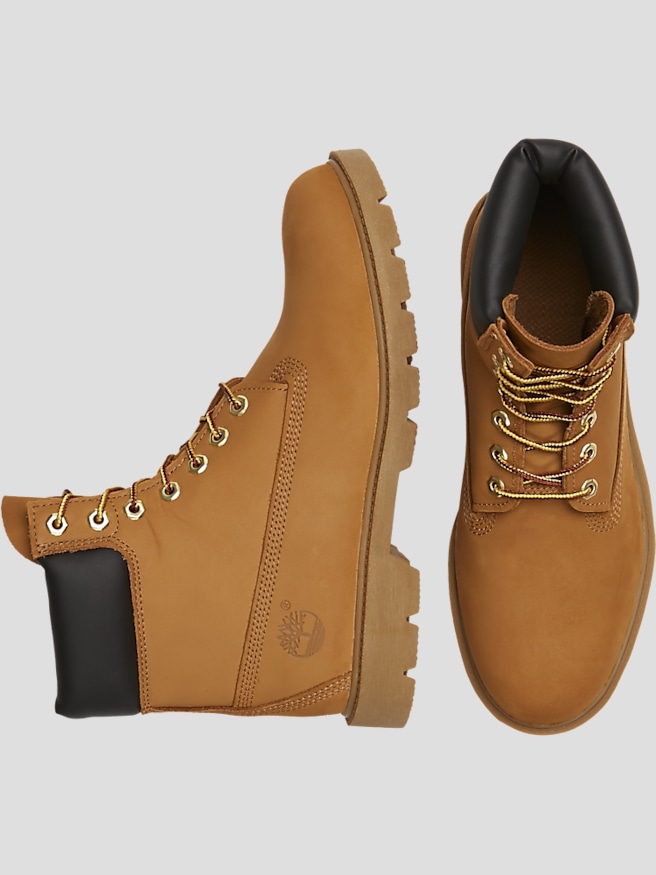
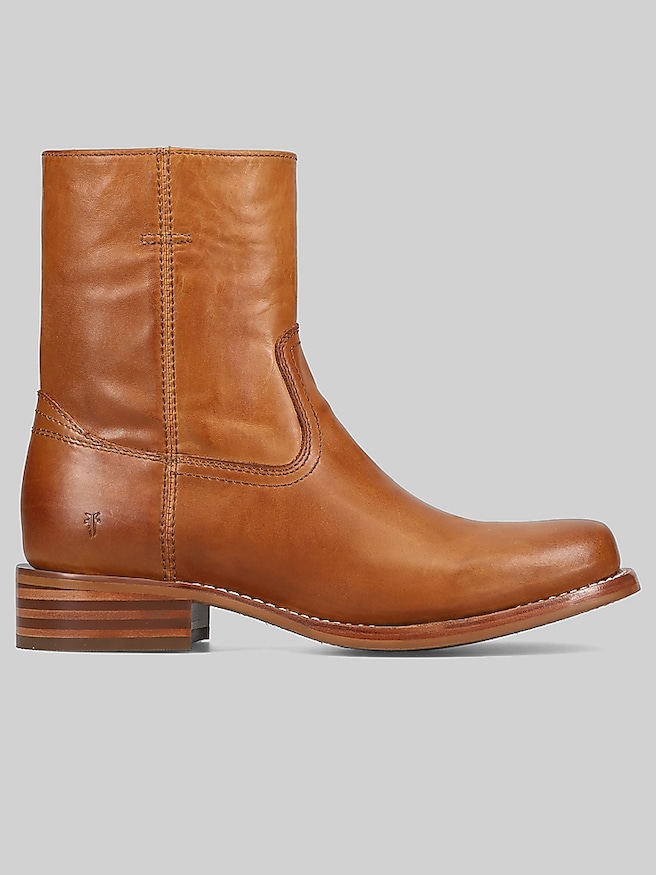
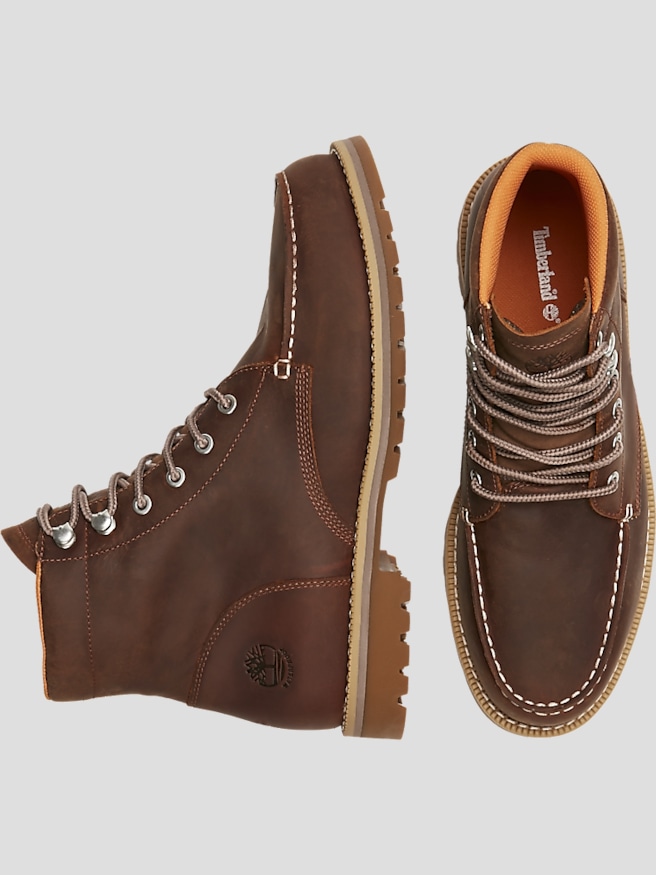
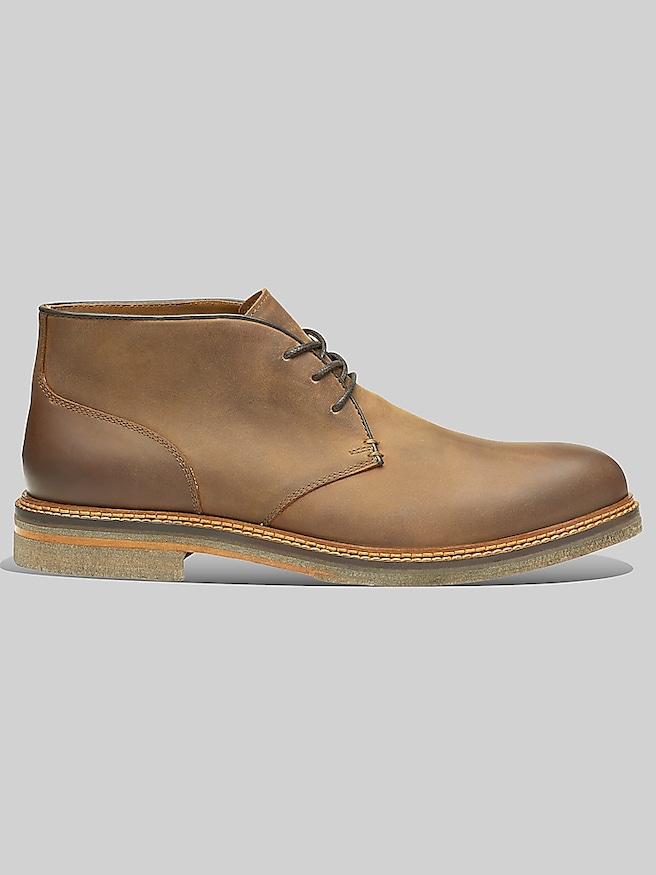
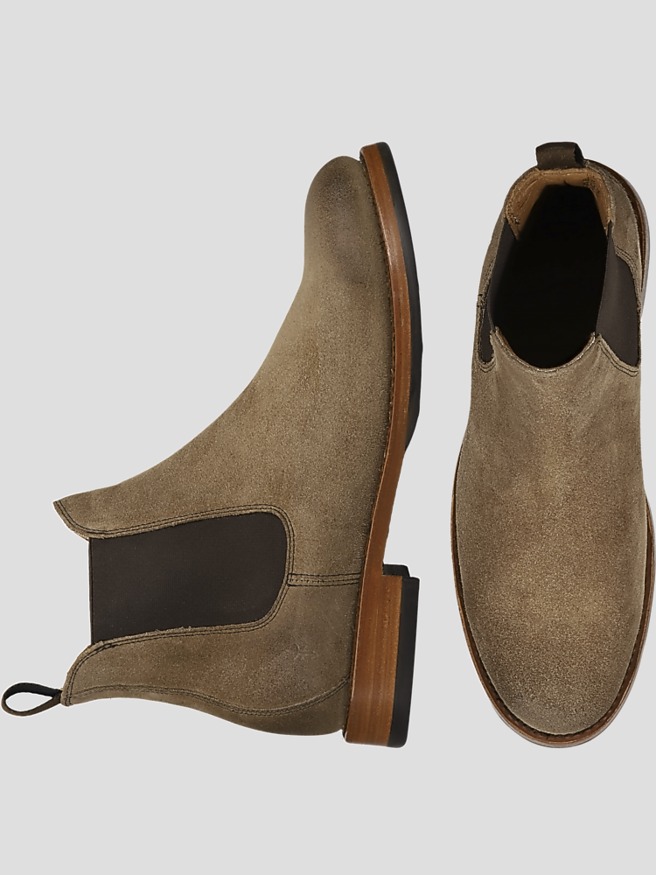
Men’s edgy boots bring a tougher, more expressive look to everyday footwear through substantial soles, strong silhouettes, textured finishes, and distinctive hardware. The category spans combat-inspired lace-ups, streamlined Chelsea boots, moto-influenced ankle boots, and platform shapes with a gothic influence. What connects them is attitude rather than a single construction: a broad toe, dark leather, exposed stitching, or a metal buckle can give a boot presence without requiring elaborate decoration. Black leather offers a sharp foundation, while charcoal, deep brown, and distressed finishes create a more worn-in effect. Smooth uppers and restrained hardware tend to look polished; scuffed textures, prominent eyelets, and chunky lug soles read more rugged. The right degree of edge depends on where the boots will go and how much attention they should command. For a concert, a substantial lace-up boot can anchor straight-leg denim and a simple T-shirt without making the outfit feel overworked. For dinner or a creative workplace with a flexible dress code, a slim ankle boot under tailored trousers delivers a subtler contrast. Chelsea silhouettes offer clean lines and pull-on convenience, while adjustable laces allow more control over how closely the upper wraps the foot and ankle. Buckles, harness details, and exposed zippers add visual weight, so even one of those elements can become the focal point of an outfit. Pant shape matters just as much as the boot itself. A narrow leg opening may catch on a wide shaft, while a straight or relaxed hem can fall naturally over it. A small cuff exposes the boot’s outline; a longer hem lets the toe and sole do most of the visual work. Edgy men’s boots do not have to be part of an entirely dark wardrobe, either. A textured knit, an Oxford shirt, or clean, unembellished denim gives a bold boot enough breathing room to look intentional rather than costume-like.
Materials and construction affect how men’s edgy boots feel, age, and hold their shape. Full-grain leather retains the hide’s natural surface and can develop creases and patina with wear, although its feel varies with thickness and finishing. Corrected-grain leather has a more uniform surface, while suede has a soft nap that gives even a heavy silhouette a quieter appearance. Synthetic uppers can create a similarly smooth or textured look, but their flexibility, breathability, and care requirements depend on the material. A distressed finish is an aesthetic treatment, not proof of durability, and a substantial-looking sole does not automatically make a boot suitable for demanding physical work. Everyday fashion boots and protective work footwear serve distinct purposes. Likewise, moto styling alone does not indicate the abrasion resistance or impact protection needed for motorcycle riding. For regular walking, comfort comes from the combination of shape, flexibility, cushioning, and secure fit rather than any single feature. Heavier soles can feel substantial underfoot, but they also add weight over a long day. Deep lugs provide a pronounced profile, though grip depends on the outsole compound and the walking surface, not tread depth alone. Welted construction may support resoling when the design and condition permit it; cemented construction can offer flexibility and a less bulky profile. Neither method guarantees comfort or longevity by itself. When assessing fit, wear the type of socks intended for the boots and check both feet while standing. Toes need room to move without pressing against the front, and the widest part of the foot should sit comfortably within the boot’s forefoot. The instep should feel secure rather than compressed. Some leather softens with use, but break-in should not be expected to correct pinched toes, numbness, or a fundamentally narrow shape. Walk far enough to notice heel rubbing, pressure from a seam, or a shaft that presses into the ankle. If personal orthotics are part of daily wear, sufficient interior depth and a removable footbed may be especially useful considerations.
Regular care helps preserve the details that give edgy boots their character without erasing the texture that makes them distinctive. Remove loose dirt with a soft brush or cloth before it settles into seams, welt edges, and the spaces around hardware. Smooth leather generally benefits from a compatible cleaner and occasional conditioning, following the footwear and care-product directions. Too much conditioner can alter the finish or leave residue, so a light application and a test on an inconspicuous area are sensible precautions. Suede needs its own brush and material-appropriate treatment; ordinary leather polish can flatten the nap and change its appearance. Intentionally distressed leather also deserves a cautious approach because heavy polishing may reduce the uneven color and surface variation that define it. Wipe metal details gently, keep zipper teeth clear of debris, and avoid forcing a closure against a tight fit. After wear, loosen the laces or fully open the zipper before removing the boots to reduce strain on the heel and fastening points. Let the interiors air out between outings, and use appropriately sized shoe trees when suitable for the construction. If boots become damp during cleaning or accidental exposure, allow them to dry naturally away from direct heat. Check heel edges, outsole wear, loose stitching, and worn laces periodically; addressing a small repair early may prevent more extensive damage. For someone building a wardrobe around bold footwear, versatility often comes from repeating one detail elsewhere, such as pairing brushed metal hardware with a similarly understated belt buckle. For a gift recipient, familiar sizing, preferred closures, and the shapes already worn regularly are more useful clues than the most dramatic design. A person who favors simple tailoring may appreciate a clean dark boot with a substantial sole, while someone drawn to expressive concert outfits may enjoy more visible hardware or texture. For another perspective on boot silhouettes and outfit combinations, Men's Fall Fashion Boots offers a related style category to explore. The strongest choice ultimately balances a distinctive profile with comfortable proportions, practical care, and the way the boots will actually be worn.