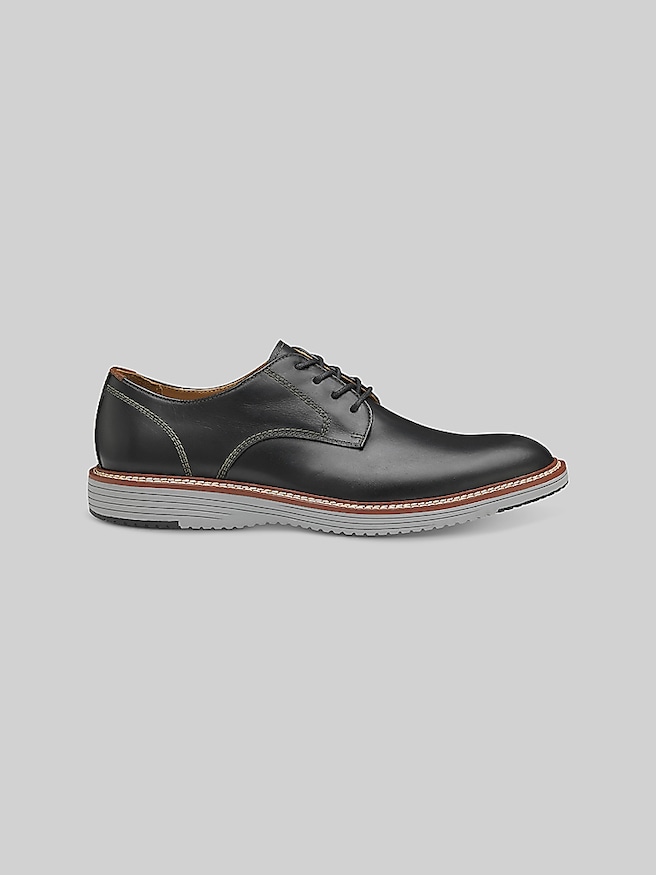
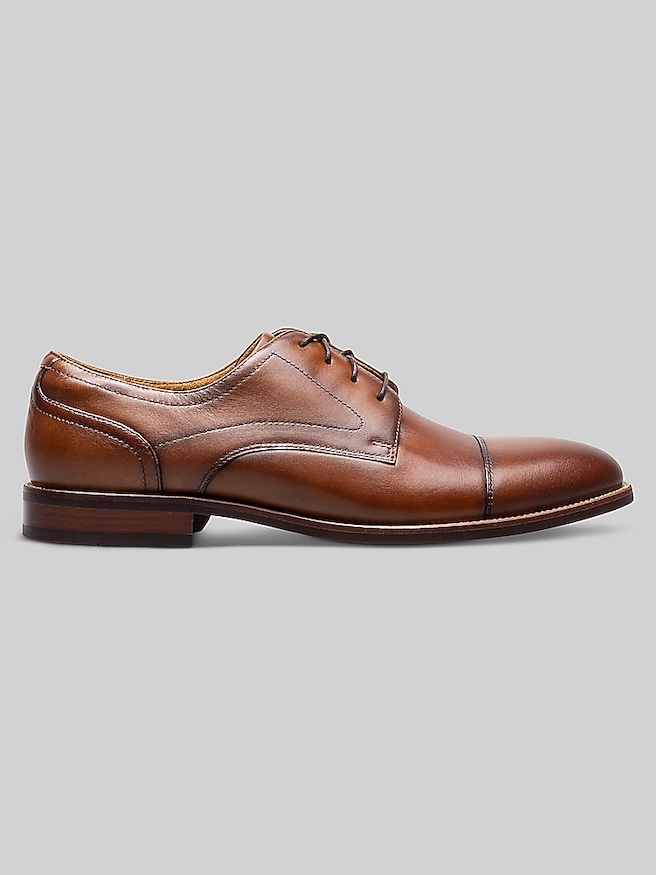
Men's dress shoes for black tie events are traditionally black patent leather oxfords, sleek wholecut oxfords, or classic opera pumps. Their appeal is straightforward: a clean silhouette and a polished finish complement a tuxedo without competing with its satin details. Black patent leather oxfords are a customary choice because their glossy surface provides the dressed-up appearance associated with formal evening wear. A plain toe keeps the look especially restrained, while a simple cap toe can also work when the rest of the shoe remains understated. Oxford construction features closed lacing, with the lace-bearing sections attached beneath the front portion of the upper, creating a neat profile across the foot. Wholecut oxfords achieve a similarly refined effect through an upper made from one main piece of leather, with minimal visible seaming. Classic opera pumps take a more traditional approach: these low-cut slip-ons typically feature a grosgrain bow across the front and have a longstanding place in formal evening dress. Highly polished black calfskin oxfords are another option for many black tie occasions, although patent leather remains the more conventional evening choice. The event's stated dress expectations matter, especially at particularly traditional gatherings. Across these styles, the strongest common features are black coloring, restrained detailing, and proportions that sit comfortably beneath tuxedo trousers. Heavy broguing, bulky soles, contrasting stitching, and conspicuous hardware generally move the look away from classic black tie. At a wedding reception, charity gala, or formal awards dinner, footwear should look deliberate from the first arrival through the final photograph. A smooth toe reflecting the room's light, a tidy lace arrangement, and a narrow, balanced sole edge support that effect. The goal is not an exaggerated shine at any cost, but an evening shoe that belongs with the outfit. Patent leather supplies that shine through its finish; calfskin relies on careful polishing. Both benefit from a shape that follows the foot naturally rather than stretching into an excessively long or sharply pointed toe.
Fit becomes especially important when an event includes a ceremony, a reception line, a seated dinner, and several hours of standing or dancing. A formal shoe can look elegant on a display and still feel wrong if its shape does not suit the wearer's foot. The last, or form around which the shoe is built, influences the width through the forefoot, the height over the instep, and the hold around the heel. A comfortable fit leaves room for the toes to lie naturally without allowing the foot to slide forward. The ball of the foot should align with the shoe's widest area, and the heel should feel secure without persistent rubbing. Lace-up oxfords offer some adjustment across the instep, while opera pumps depend more heavily on a precise match between the foot and the shoe's shape. Thin dress socks can change the fit compared with thick everyday socks, making the intended hosiery part of the fitting process. Black over-the-calf dress socks also help maintain an uninterrupted line when seated, keeping bare skin from showing beneath tuxedo trousers. Materials and construction contribute to how the shoes feel over an entire evening. Leather linings can absorb some moisture and become more supple with wear, while cushioning underfoot may soften pressure during long stretches on hard floors. A flexible forefoot can make walking feel more natural, but a shoe still needs enough structure to hold its shape. Leather soles provide a traditional, slim appearance, though smooth new soles may feel slippery on polished surfaces. Discreet rubber components can add traction without the visual weight of a thick tread. Construction also affects upkeep: some stitched soles can be replaced by a cobbler, depending on the design and condition of the uppers. Neither a particular material nor a construction method guarantees comfort, and painful tightness should not be treated as a necessary stage of breaking in formal shoes. Short periods of wear before an important occasion can reveal pressure points early, leaving the event itself for conversation, photographs, and time on the dance floor.
Care helps preserve the qualities that make black tie footwear distinctive: a smooth surface, a defined shape, and an even finish. Patent leather usually needs gentle wiping with a soft, slightly damp cloth, followed by drying with a clean cloth; care products should be specifically compatible with the finish. Ordinary leather polish is not a substitute for patent care, and harsh cleaners can damage the glossy coating. Patent surfaces can also pick up noticeable scuffs, so avoiding contact with abrasive edges helps keep the shine looking clean. Smooth calfskin calls for another approach, with appropriate cleaning, occasional conditioning, and black cream or wax polish suited to the leather. A high shine is generally concentrated on the structured toe and heel rather than built up heavily across areas that flex. Excess wax over the forefoot can crack as the shoe bends. Cedar shoe trees can help absorb residual moisture and maintain shape between wears, while a shoehorn helps protect the heel counter when putting shoes on. Shoes worn for a long evening benefit from time to air out before storage, away from direct heat. Separate shoe bags can reduce rubbing against other belongings during travel to a wedding or destination celebration. Within the broader category of Men's Black Dress Shoes, evening footwear stands apart through restraint, finish, and its relationship to formal tailoring. Highly polished calfskin may also suit dressy professional settings, whereas patent leather and bow-front opera pumps have a more distinctly ceremonial character. That intended use matters for someone building a first formal wardrobe as well as someone who regularly attends gala dinners. Dress shoes can also make a thoughtful gift for a partner, adult son, or close friend preparing for a significant occasion, provided the recipient's fit and style preferences guide the choice. With considered proportions, suitable materials, and consistent care, formal footwear can accompany many memorable evenings without drawing attention away from the person wearing it.