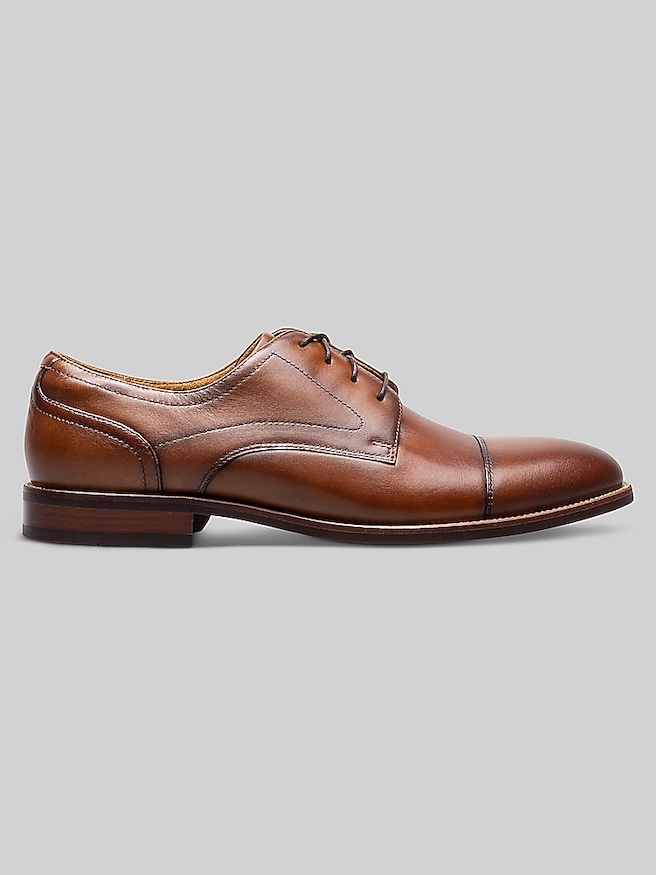
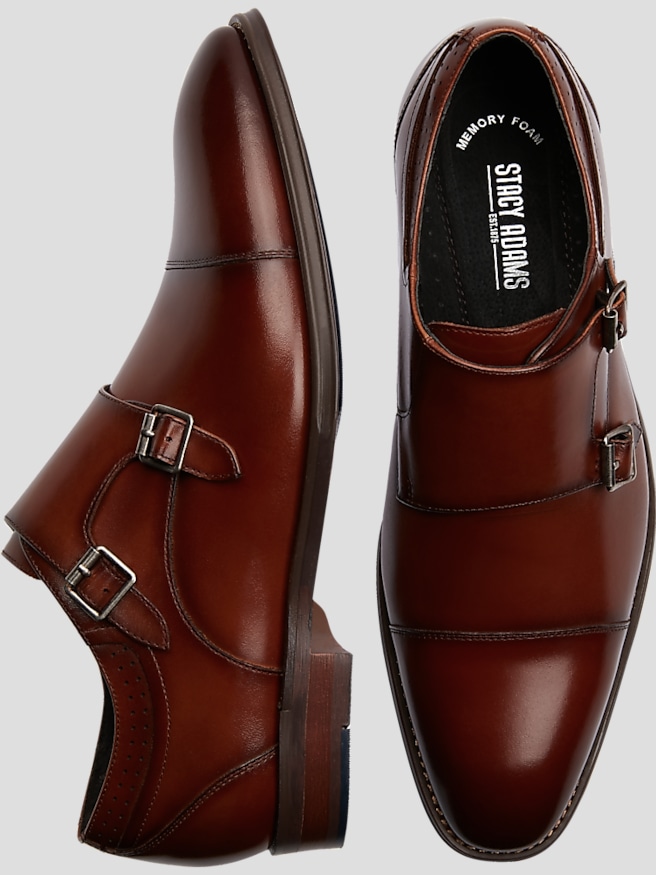
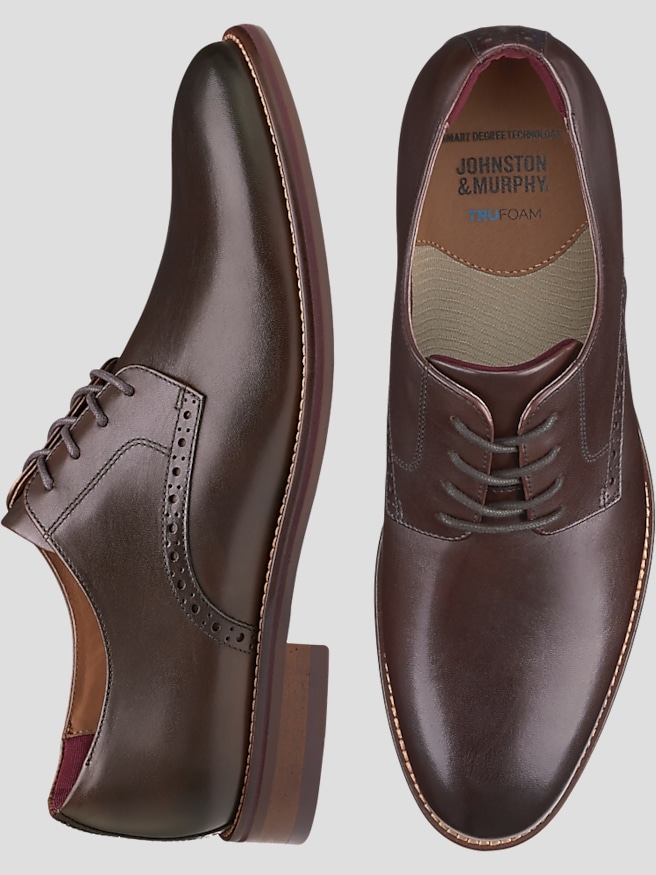
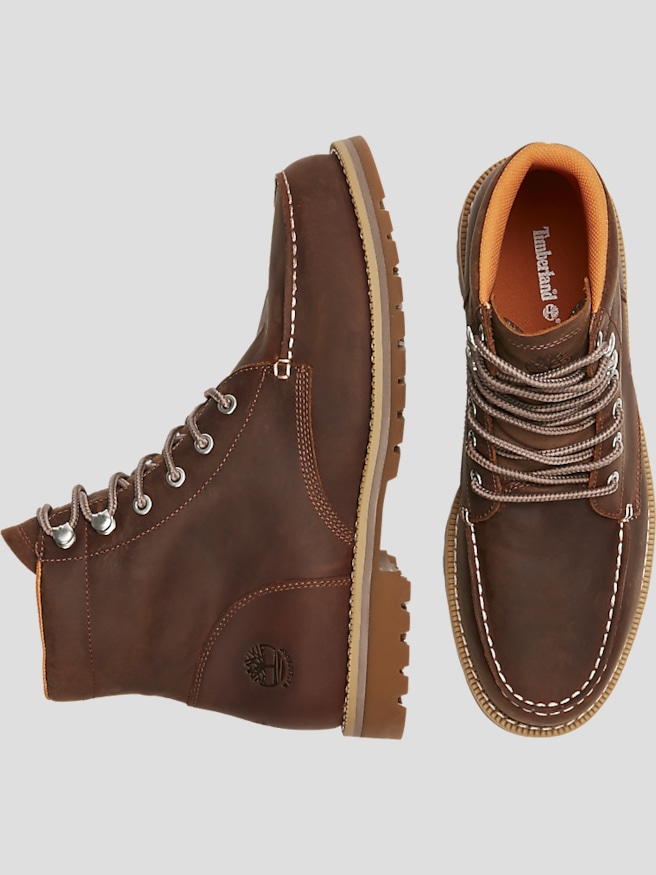
Men's brown dress shoes bring depth and character to tailored clothing, with shades that range from honey-toned tan to rich chocolate. The color has a natural warmth that complements navy suits, charcoal trousers, olive chinos, and textured sport coats without making every outfit feel equally formal. A smooth, dark brown lace-up can look composed in a conference room, while a lighter brown pair with visible grain adds a more relaxed note to a blazer and neatly pressed pants. The shape and finish matter as much as the shade. Oxfords have a closed lacing system that creates a clean, close-fitting appearance across the top of the foot; derbies use open lacing for a slightly less formal look and more flexibility when adjusting the fit. Loafers offer a streamlined slip-on option, and monk straps add distinction through buckle closures rather than laces. A plain toe keeps the focus on the leather and silhouette, while a cap toe introduces a subtle seam that works well with business attire. Brogue perforations and wingtip patterns add visual texture, making them especially effective alongside fabrics with some depth of their own. For outfits built around navy or gray tailoring, Men's Dark Brown Dress Shoes offer a deeper color that can anchor the look without drawing attention away from the clothing. A belt in a similar brown tone creates continuity, though an exact color match is not necessary; matching the general depth and level of polish usually matters more. Trouser length also changes the impression. A clean hem with a modest break allows the shoe's shape to remain visible instead of disappearing beneath excess fabric. Brown dress shoes suit office days, wedding guest attire, graduation celebrations, and dinners that call for something sharper than everyday casual footwear. For occasions with a prescribed dress code, the requested level of formality remains the deciding factor, since brown footwear does not suit every type of formal attire.
Materials and construction influence how brown dress shoes look on the foot, how they feel after several hours, and how they develop with wear. Smooth leather offers a crisp surface that takes polish well, while grained leather gives the color more dimension and can make minor surface marks less conspicuous. Suede has a soft, matte texture that pairs naturally with chinos and less structured tailoring, although its care needs differ from those of smooth leather. Full-grain leather retains the hide's natural surface and can develop a distinctive patina with proper maintenance; other leather finishes create a more uniform appearance. None of those descriptions alone guarantees comfort or longevity, because lining, stitching, sole construction, and fit all contribute to the experience. Leather linings can help manage moisture, cushioned footbeds may soften the feel underfoot, and a stable heel helps support a secure stride. Leather soles offer a traditional profile, while rubber soles or rubber inserts can provide added grip on smooth flooring. Some stitched constructions can be resoled by a qualified cobbler, but that depends on the shoe's design and condition. Fit deserves particular attention when footwear will be worn through a full workday or a wedding ceremony followed by a reception. Toes need room to rest naturally without pressing against the front or sides, and the widest part of the foot should align comfortably with the widest part of the shoe. The heel should feel secure without painful rubbing, and laces should adjust the upper without creating a tight band across the instep. Leather may soften through use, but a shoe that pinches sharply is not simply waiting to become comfortable. Trying shoes with the type of dress socks intended for regular wear gives a more useful sense of fit. Width, arch shape, and instep height can make two pairs in the same labeled size feel noticeably unlike each other. For a gift marking a new job, graduation, or another milestone, knowing the recipient's size, preferred width, and usual clothing style helps make brown dress shoes a thoughtful, practical choice.
Regular care preserves the qualities that make brown dress shoes appealing: clear color, supple uppers, tidy edges, and a finish that looks intentional rather than neglected. Dust and grit left on the surface can contribute to abrasion, so a soft brush or cloth is useful after wear. Smooth leather benefits from occasional conditioning with a compatible product, applied sparingly and tested in an inconspicuous area first. Cream polish can refresh color and nourish the surface, while wax polish can add shine, particularly at the toe and heel. The finish should suit the shoe and the occasion; a restrained sheen often looks more natural for everyday business clothing than a highly reflective polish across the entire upper. Because brown includes so many undertones, a close polish match matters. A reddish cream can shift the appearance of a neutral brown, and a shade that is too dark may obscure lighter detailing. Suede calls for a dedicated brush and appropriate cleaning products rather than conventional leather cream or wax. Shoe trees help maintain shape between wears, and unfinished cedar versions can absorb some residual moisture while the shoes rest. Alternating pairs gives linings and uppers time to dry fully after use, particularly when footwear has been worn for many hours. A shoehorn protects the heel counter from being crushed, while loosening laces before removing lace-ups reduces strain on the upper. Storage away from direct heat and prolonged sunlight helps protect both the material and its color. Worn heel edges, thinning soles, or loose stitching are worth addressing before they affect comfort or cause further damage. These details become especially relevant for someone walking between meetings, standing through a presentation, or spending an evening moving from a ceremony to dinner and dancing. The right brown dress shoes provide a polished foundation for those moments without overwhelming the outfit. With a comfortable fit, an appropriate silhouette, and care suited to the material, they can become a dependable part of a wardrobe rather than footwear reserved for a single occasion.