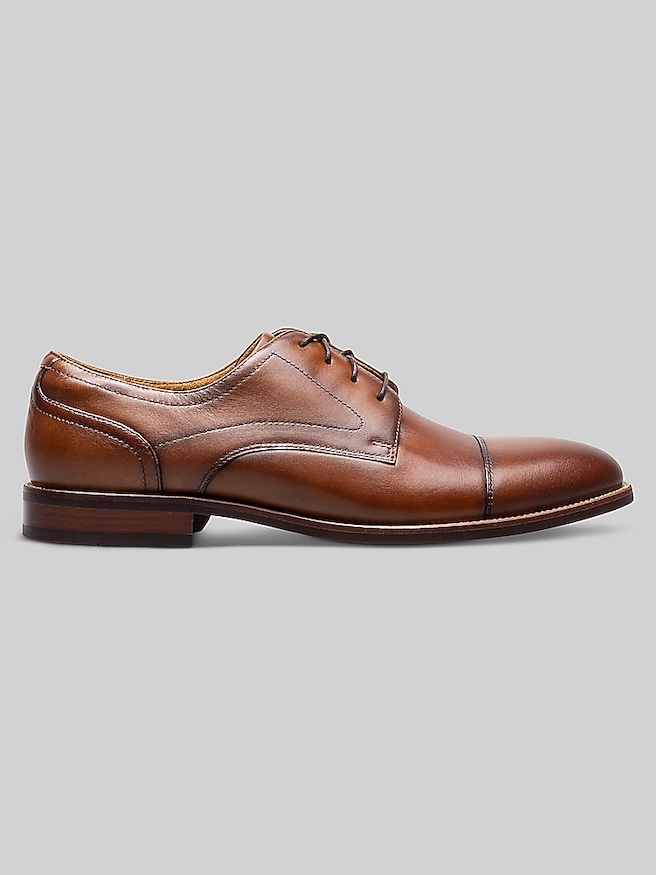
Men's dark brown dress shoes bring depth to tailored clothing without drawing attention away from the rest of an outfit. Shades that recall espresso, walnut, and dark chocolate have enough richness to complement a navy suit, enough warmth to soften medium-gray trousers, and enough restraint for a polished office wardrobe. Against a crisp white shirt and a well-fitted jacket, dark brown leather creates a finished look that feels considered rather than overly matched. The color also works naturally with olive, khaki, and subtle checked fabrics, making these shoes useful beyond a single suit or occasion. A smooth, plain-toe style keeps the focus on clean lines, while a cap toe adds a distinct seam across the front for a more structured appearance. Broguing introduces decorative perforations that give the leather texture and character; the more pronounced the detailing, the more relaxed the overall impression tends to be. Loafers offer a streamlined alternative to lace-up shoes, especially with tailored separates, while monk straps bring a buckle detail that can stand out quietly beneath a trouser hem. For client meetings, interviews, graduation ceremonies, and weddings where the dress code permits brown footwear, the right silhouette helps the outfit feel complete. More formal evening dress codes may call for black footwear instead, so the occasion matters as much as the suit color. Dark brown sits at the deeper end of the palette represented by Brown Leather Men's Dress Shoes, with a distinctive balance of warmth and understated polish. A belt in a similar brown tone ties the outfit together without requiring an exact color match. Small differences in shade often look natural, particularly when the leather finishes are similar. Trouser length makes a difference, too: a clean hem with a modest break lets the shape of the shoe show rather than hiding it beneath excess fabric.
Materials and construction influence how dark brown dress shoes look, feel, and hold up to repeated wear. Smooth leather offers a crisp surface that responds well to brushing, conditioning, and polish, while suede gives the same deep color a softer, more matte appearance suited to less formal tailoring. Full-grain leather retains the natural surface of the hide and can develop subtle creases and a distinctive patina with use. Other leather finishes may create a more uniform appearance, so surface consistency alone does not tell the whole story of a shoe's quality. The feel of the upper, the security of the seams, and the support beneath the foot all contribute to everyday comfort. An Oxford's closed lacing creates a compact, dressy profile; a Derby's open lacing allows more adjustment over the top of the foot, which may be helpful for a higher instep. Neither shape guarantees the right fit on its own. A well-fitting pair should hold the heel securely without pinching, leave room for the toes to rest naturally, and feel supportive across the widest part of the foot. Persistent pressure, cramped toes, or substantial heel movement are not problems to dismiss as part of breaking in the leather. Trying shoes with the socks intended for everyday wear gives a more useful sense of fit, particularly when the pair will be worn through a full workday or several hours at a celebration. Anyone who uses an orthotic should account for its depth and the space it takes inside the shoe. Leather soles offer a traditional look and can feel flexible with wear, while rubber soles can provide practical traction and cushioning; performance depends on the actual sole design and surface underfoot. A discreet rubber outsole can preserve a dressy appearance while making long walks between appointments more comfortable. Welted construction may allow resoling when the upper remains in good condition, though repair options vary by design. For frequent wear, thoughtful construction and a comfortable fit matter more than decorative details that will spend most of the day beneath a desk.
Regular care helps men's dark brown dress shoes retain their rich color and presentable shape. Dust and grit can dull the surface, especially around seams and along the welt, so a soft brush or clean cloth is useful after wear. Smooth leather benefits from occasional conditioning with a product appropriate to its finish, followed by a compatible cream or polish when needed. Testing any treatment on a small, inconspicuous area helps avoid an unexpected change in color. Brown polish should be chosen carefully because a shade that is too light or too dark can alter the appearance of the upper. A modest shine often looks right for daily office wear, while a more deliberate polish on the toe and heel can sharpen the appearance for a dressier event. Suede requires a different approach: a suede brush and suitable cleaner help maintain its texture without the creams used on smooth leather. Cedar shoe trees can help absorb moisture and support the shape between wears, and allowing shoes to air out before storing them helps keep the interior comfortable. Alternating pairs gives leather and linings time to dry naturally. If shoes become damp, gentle drying away from direct heat is preferable to placing them beside a heater, which can harden or damage the leather. A shoehorn protects the heel counter from being crushed during dressing, while attention to worn heel edges can prevent uneven wear from progressing. These small habits are especially worthwhile for someone who wears dress shoes to work several days a week. Dark brown footwear can also make a thoughtful gift for a graduate entering a professional setting, a partner refreshing a tailored wardrobe, or a father who appreciates classic clothing. Fit and personal preference deserve particular attention with a footwear gift, including width, usual sock weight, and whether the recipient favors laces or slip-on styles. The strongest choice is one that suits an established routine: polished enough for important occasions, comfortable enough for repeated use, and versatile enough to work with the trousers and suits already in the closet.