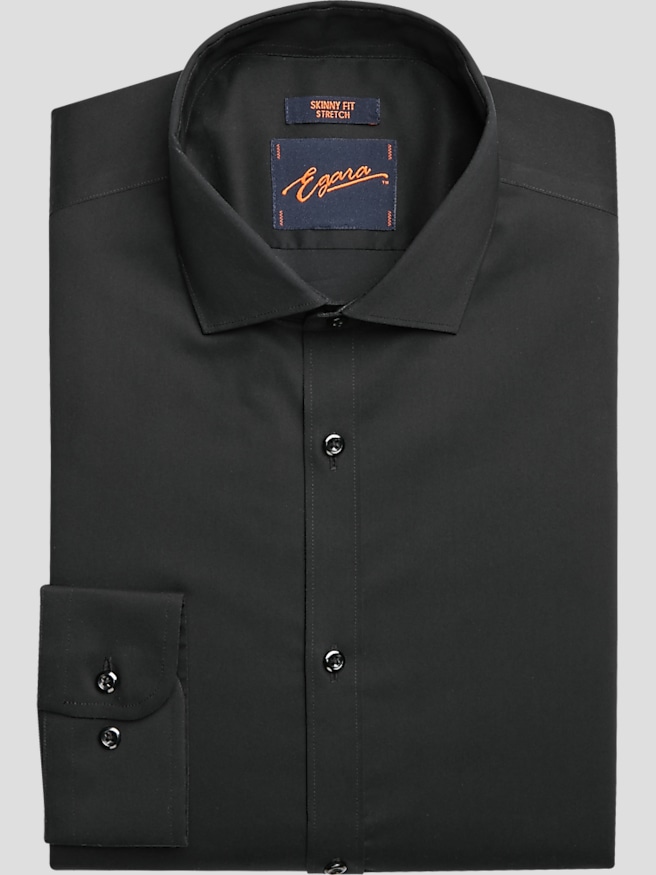
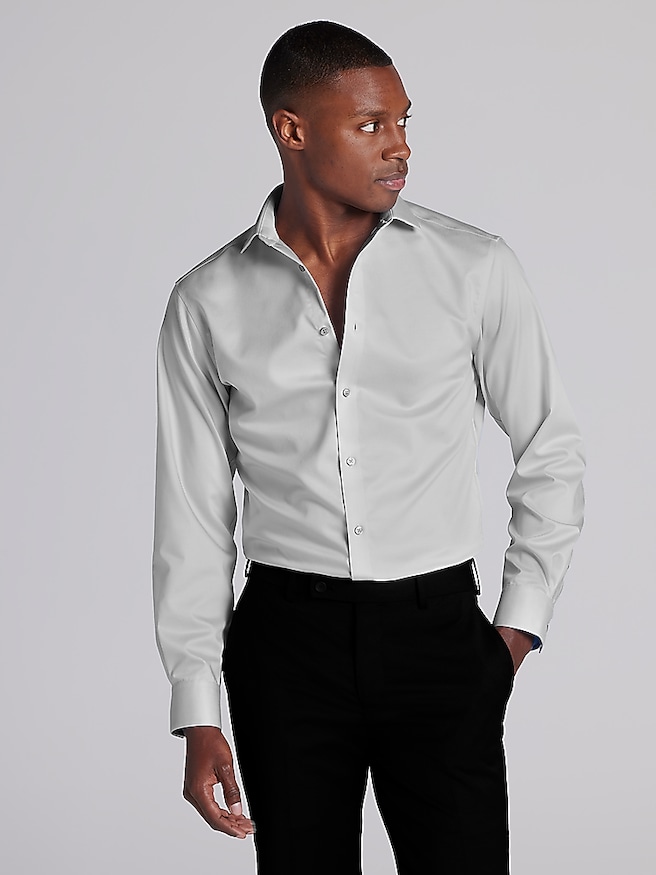
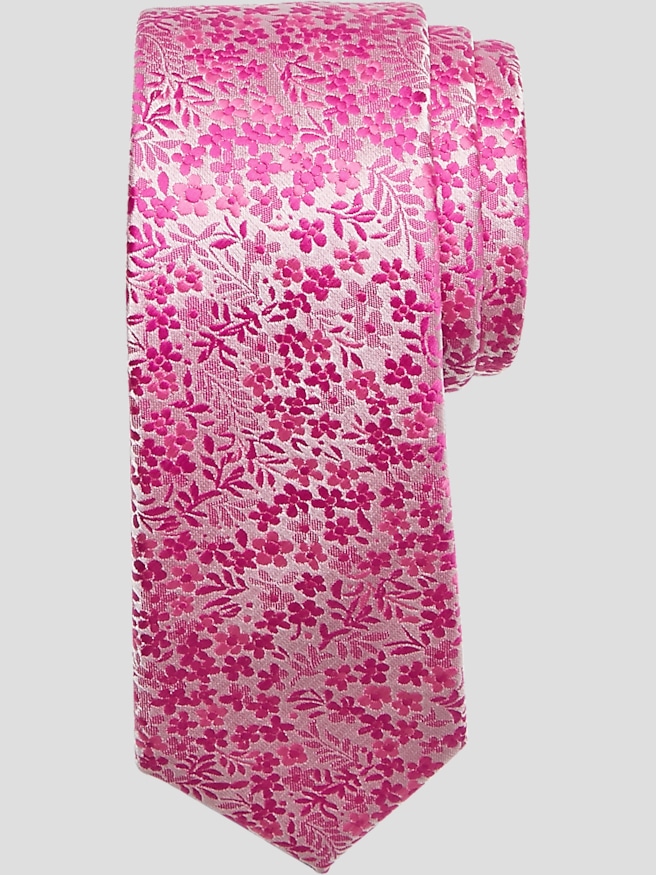
Men’s dress shirts and ties bring structure, color, and personality to tailored clothing, whether the setting is a client meeting, a wedding reception, or a graduation ceremony. A crisp shirt creates the foundation, while a tie adds contrast or carries a color through the rest of the outfit. Coordinated combinations can feel polished without looking identical: a pale blue shirt with a navy patterned tie, for example, has depth without competing for attention. White shirts offer a clean backdrop for both restrained and expressive neckwear, while subtle stripes and small checks introduce interest beneath a solid suit. A matching look does not require the shirt and tie to share the exact same shade. Repeating one color from a tie’s pattern in the shirt often creates a more natural connection, especially when the patterns differ in scale. A fine-striped shirt can sit comfortably alongside a tie with a larger, more open motif; two equally small, busy patterns may be harder to distinguish. Fabric matters just as much as color. Cotton dress shirts offer softness and breathability, and cotton blends can combine a familiar feel with easier maintenance, depending on their construction and finish. Poplin generally has a smooth surface and a clean appearance, while twill has a diagonal weave that adds texture and can give the fabric a fluid drape. Oxford and pinpoint weaves introduce varying degrees of visible texture, making them useful for outfits that balance professional polish with everyday practicality. Silk ties are valued for their drape and natural luster, while textured woven and knit ties can create a less formal effect. Polyester ties can offer resilience and straightforward upkeep, though care requirements still depend on the fabric and construction. The strongest shirt-and-tie combinations consider these surfaces together: a smooth shirt leaves room for a textured tie, while a richly textured shirt often benefits from quieter neckwear. The result is an outfit that looks considered at conversational distance, not just in a mirror.
Fit gives men’s dress shirts and ties their finished appearance and has a direct effect on comfort through a full day. A dress shirt should button at the neck without squeezing, with enough room for comfortable movement rather than a visibly loose gap. Shoulder seams should sit near the edges of the shoulders, and the fabric across the chest should lie smoothly instead of pulling into lines between the buttons. Slim fits generally follow the torso more closely, while classic or traditional fits provide more room through the chest and waist; exact proportions vary, so measurements are more dependable than the fit name alone. Sleeve length deserves particular attention when a jacket is part of the outfit. Cuffs should reach the wrist without sliding far onto the hand, allowing a small amount of shirt cuff to show beyond the jacket sleeve. For someone who spends the day reaching across a desk, driving between appointments, or sitting through a ceremony, room through the upper back and armholes helps keep the shirt from feeling restrictive. A tuck-in shirt also needs enough length to stay secure when sitting or raising the arms. Collar shape helps determine how the tie settles at the neckline. A point collar generally frames a compact knot neatly, while a spread collar leaves more space for a fuller knot. The thickness of the tie affects that balance: a substantial fabric can create a larger knot even with a simple tying method. Tie width looks most coherent when it relates to jacket lapel width and the wearer’s proportions, rather than following a single rule for every outfit. The tip should generally reach the waistband, which makes tie length worth considering for taller wearers or anyone who prefers a larger knot. A neatly centered knot, a collar that sits flat, and a tie that hangs straight contribute more to a polished result than unnecessary complexity. These details make the same shirt and tie feel appropriate beneath a business suit or with a tailored jacket and dress pants.
Long-term satisfaction with dress shirts and ties comes from choosing fabrics and construction suited to the way they will be worn, then treating each piece according to its care label. For frequent office wear, smooth seams, securely attached buttons, and consistent stitching help a shirt hold up to repeated use. Collar and cuff construction also influences whether the shirt maintains a crisp outline after cleaning. Wrinkle-resistant finishes can simplify preparation, but they do not eliminate the need to follow washing, drying, and pressing directions. Some shirts can be machine washed, while others need more specialized treatment; fabric composition, trim, and construction all affect the appropriate method. Prompt attention to collar buildup and small marks can help prevent a shirt from looking worn before its time. Ironing at the recommended setting and hanging a shirt after pressing help preserve its appearance between wears. Ties need a separate approach. Untying the knot after use, rather than pulling the narrow end through a tightened knot, reduces unnecessary strain on the fabric. Hanging or loosely rolling a tie can help it recover its shape, while careful storage keeps it from catching on sharp edges or crowded accessories. A stain on silk or another delicate tie may call for professional attention rather than rubbing or washing at home. For a first professional wardrobe, a few versatile shirt colors and complementary ties can support interviews, presentations, and important dinners without making every outfit look the same. Wedding participants may prioritize a coordinated color palette, while guests can use pattern and texture to express personal style within the dress code. Shirts and ties can also make thoughtful gifts for a graduate, a partner, or someone starting a new role, especially when neck size, sleeve length, and preferred fit are known. For settings that call for an open collar and a more relaxed finish, Mens Casual Dress Shirts offer a related direction. Across these occasions, comfortable fit and compatible fabrics give a coordinated wardrobe lasting usefulness.