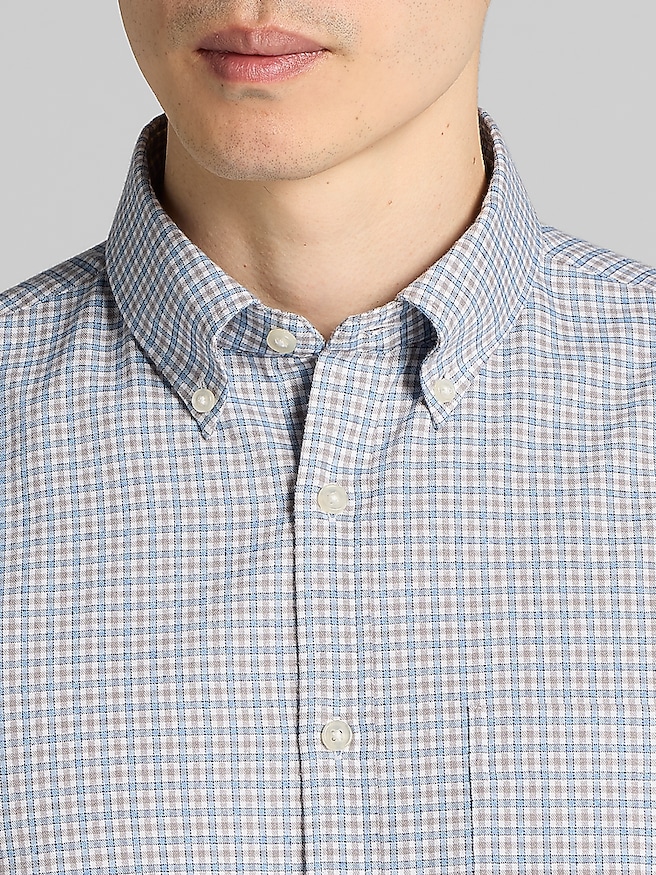
Men’s casual dress shirts bring the clean lines of a collared, button-front shirt into a more relaxed everyday wardrobe. They sit between a formal dress shirt and a laid-back T-shirt, with fabric, pattern, and styling details that make them easy to pair with jeans, chinos, or tailored trousers. A solid shirt with subtle texture can look polished enough for a business-casual office, while a small check or understated stripe adds personality to dinner plans or a weekend gathering. The fabric plays a big part in how the shirt feels and falls. Cotton is a familiar choice for its softness and breathability, though its weight and weave can create very different results. Oxford cloth has a textured surface and a substantial feel that works well with denim or cotton trousers. Poplin is smoother and generally lighter, giving a shirt a crisp appearance without much surface texture. Twill has a recognizable diagonal weave and often offers a soft drape, while linen brings a more relaxed finish with natural texture and visible creasing. Cotton-linen blends can balance those qualities, and fabrics with a small amount of stretch may provide added flexibility when reaching across a desk or settling into a car seat. Neither fiber content nor a wrinkle-resistant finish tells the whole story: weave, construction, and fit also affect comfort and appearance. A shirt should feel pleasant against the skin, sit neatly beneath a jacket when needed, and have enough structure to look intentional on its own. For someone whose day includes a morning meeting, errands, and dinner out, that middle ground is especially useful. The same shirt can feel more refined with pressed trousers and leather shoes or more relaxed with dark jeans and simple sneakers. Its versatility comes from the balance of fabric and detail rather than from trying to imitate a formal shirt worn without a tie. Muted colors, manageable patterns, and a comfortable collar help make that balance easy to maintain across everyday settings.
Fit gives men’s casual dress shirts their shape, but a neat appearance should not come at the expense of ordinary movement. Shoulder seams generally belong near the edge of the shoulders, and the front should lie smoothly without pulling into horizontal lines across the chest or opening between buttons. A slim fit usually follows the torso more closely, while a classic or regular fit typically leaves more room through the chest and waist; the exact proportions vary, so fit names are a starting point rather than a guarantee. Someone with broader shoulders may need extra space through the upper body even when a closer fit at the waist is preferred. Stretch can help with movement, but it does not replace enough room in the right places. Long sleeves should reach the wrist without covering much of the hand, and cuffs should close comfortably rather than grip tightly. Short sleeves create a more relaxed profile and tend to look cleanest when they follow the upper arm without squeezing it or flaring excessively. Shirt length matters just as much as sleeve length. A shirt intended to stay tucked needs enough fabric below the waistband to remain secure when sitting or reaching. An untucked style usually has a shorter hem that falls around the middle of the fly, although body proportions and the shape of the hem affect the result. A long, deeply curved tail can look unfinished when left outside the trousers, while a shorter hem may pull free too easily when tucked. Collar construction changes the impression, too. A button-down collar has buttons securing its points and lends a familiar, relaxed character; the term describes the collar, not simply the buttons along the shirt’s front. A spread or point collar can also work casually when it holds its shape with the top button open. With an unstructured jacket, the collar should rest neatly rather than disappear beneath the lapels. Worn alone, a smooth placket, balanced sleeve length, and clean hem keep the outfit composed without making it feel overly formal.
The everyday usefulness of casual dress shirts also depends on how well their fabrics and construction hold up to repeated wear and care. Secure buttons, even stitching, and neatly finished seams are practical details that contribute to a shirt’s longevity. Areas that receive frequent handling, including cuffs, collars, and buttonholes, deserve particular attention because they often show wear first. Fabric weight is not a simple measure of quality: a lightweight weave may suit someone who prefers less bulk, while a more substantial cloth can offer the texture and body another person wants. Comfort-focused details also matter when choosing men's comfortable dress shirts, especially for long stretches at a desk, travel days, or occasions that involve plenty of sitting and standing. Care requirements should fit the wearer’s routine. Many cotton shirts can be machine washed, but the care label determines the appropriate water temperature, drying method, and ironing settings. Linen and blended fabrics can have different requirements, and wrinkle-resistant treatments do not necessarily mean a shirt will never need smoothing. Avoiding excessive dryer heat, removing shirts promptly, and hanging them with the collar and placket straight can help limit wrinkles and preserve their shape. A light press may sharpen the collar and cuffs without removing every trace of texture from a casual fabric. Addressing stains before they set and repairing a loose button early can also keep a frequently worn shirt looking presentable. These details are particularly relevant for shirts that move between work, restaurant dinners, family celebrations, and travel. As a gift for a father, brother, partner, or friend, a casual dress shirt is most useful when its fit and care needs match the recipient’s habits. Familiar collar shapes, colors that complement existing trousers, and a preferred level of pattern make it easier to wear repeatedly. A person who usually leaves shirts untucked may appreciate a shorter hem, while someone who wears jackets often may prefer a smooth fabric that layers without bunching. The strongest choice is a shirt that feels natural in the wearer’s routine, with enough polish for everyday occasions and enough comfort to stay on after the workday ends.