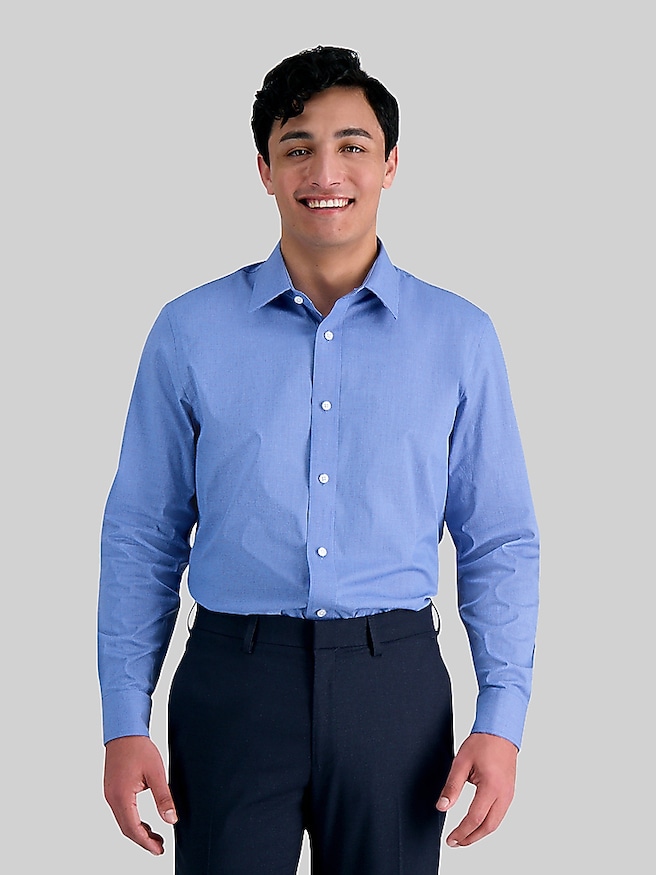
Men’s dress shirts for dinner bring a finished look to evenings that call for more polish than an everyday shirt. A restaurant reservation, an anniversary celebration, a business dinner, or a meal marking a personal milestone can each call for something slightly different, but the common thread is a shirt that looks composed and feels comfortable through the entire evening. Crisp white offers a clean backdrop for a dark suit and tie, while pale blue adds color without competing with a jacket. Fine stripes and restrained checks can give a dinner outfit personality, especially when the rest of the clothing is simple. Under restaurant lighting, texture can be more noticeable than a bold pattern: a subtle woven surface adds depth while keeping the overall impression refined. The collar plays an equally important role. A point collar creates a narrower line around the face and works naturally with many traditional tie knots, while a spread collar leaves more room for a fuller knot. For dinner without a tie, a collar with enough structure to sit neatly beneath jacket lapels keeps an open neckline from looking unfinished. One open button often provides a relaxed balance, though the setting and dress code should determine how formal the outfit feels. Cuffs also influence the result. Button cuffs suit a broad range of dinner occasions and are straightforward to wear; French cuffs introduce a more formal detail through cufflinks. Neither needs to draw attention away from the person wearing the shirt. A small amount of cuff showing beyond a jacket sleeve gives the outfit a deliberate finish. For a black-tie dinner, the invitation matters more than color alone, since a tuxedo may call for a formal shirt with particular front and cuff details. For most other dinners, a well-fitting dress shirt provides a versatile foundation, whether paired with tailored trousers, a suit, or a sport coat. Its purpose is to complement the occasion without making the wearer feel overdressed or distracted by clothing that needs constant adjustment.
Comfort at dinner depends on both fabric and fit, particularly when much of the evening is spent seated. Cotton is a familiar choice for its breathable feel and its ability to take a crisp press, although the weave affects how a shirt looks and handles. Poplin typically has a smooth, relatively flat surface that pairs well with tailored clothing. Twill has a fine diagonal texture and often a softer drape, while pinpoint fabric offers a subtly textured appearance that bridges polished and less formal settings. Fabric weight, yarn quality, and construction all contribute to the feel, so a fiber label alone does not tell the whole story. Cotton blends may offer easier maintenance or greater resistance to wrinkles, depending on their composition and finishing. A small amount of stretch can provide flexibility when reaching across the table or moving between a reception and a seated meal, but stretch is not a substitute for the right size. A comfortable collar should close without pressing into the neck, especially when a tie will stay on throughout dinner. Shoulder seams should sit near the edge of the shoulders rather than dropping down the arms, and the chest should have enough room to prevent the placket from pulling apart. A slim fit creates a closer outline beneath a jacket, while a classic or roomier fit allows more space through the torso. The best choice follows body shape and personal comfort rather than a fit name alone. Sleeves should reach the wrist with cuffs secured, without excessive fabric bunching along the forearm. Shirt length matters, too: a dress shirt intended to be tucked in needs enough length to remain secure when sitting, standing, or leaning forward. At the waist, moderate ease helps the fabric lie smoothly instead of ballooning above the waistband. These details become especially noticeable over a long meal, when a shirt should continue to look neat without requiring repeated tugging, cuff adjustments, or an uncomfortable loosened collar.
A dinner shirt earns its place in a wardrobe through repeated wear, thoughtful care, and the ability to work with more than one outfit. White and light blue are useful foundations because they complement many trouser, jacket, and tie colors, while a quiet pattern can change the character of familiar tailoring. For a celebratory restaurant dinner, a solid shirt beneath a textured jacket keeps the look focused; for a professional meal, a restrained stripe can add interest without becoming the main conversation. Less formal gatherings allow more flexibility, and the Casual Shirts For Dinner Party collection provides another point of reference when a relaxed shirt better suits the setting: Casual Shirts For Dinner Party. Whatever the level of formality, durability depends partly on construction and partly on how the fabric is maintained. Even stitching, securely attached buttons, and neatly finished seams are useful qualities in a shirt that will be worn regularly. Collars and cuffs receive frequent contact with skin and surfaces, so prompt attention to marks can help preserve their appearance. Care instructions should always take priority, particularly for blends, special finishes, and shirts with distinctive trim. Washing with compatible colors, using an appropriate cycle, and avoiding excessive drying heat can help protect fabric and shape. Removing a shirt promptly after laundering and placing it on a suitable hanger helps limit deep creases. Pressing or steaming, where permitted by the care label, restores a smooth front, tidy collar, and clean cuffs before an evening out. Wrinkle-resistant fabric can simplify that routine, but it does not necessarily eliminate the need for finishing. Dress shirts also make practical gifts for a partner, father, friend, or graduate whose routine includes restaurant meals, celebrations, and professional events. Knowing the recipient’s neck and sleeve measurements, preferred fit, and usual approach to wearing a tie makes the choice more personal. A shirt that suits both the wearer and the setting is more likely to become a dependable part of dinner plans, rather than something reserved for a single occasion.