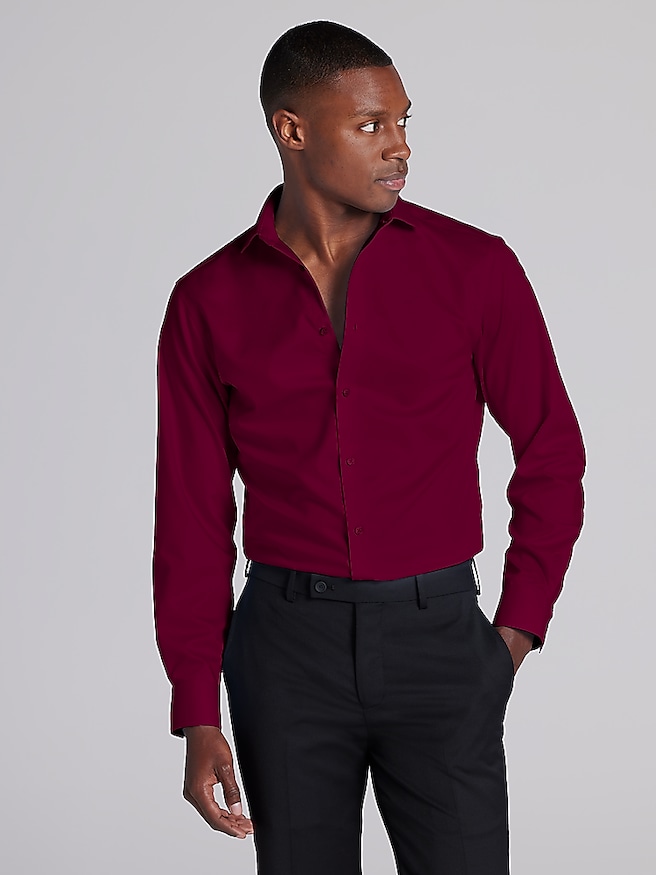
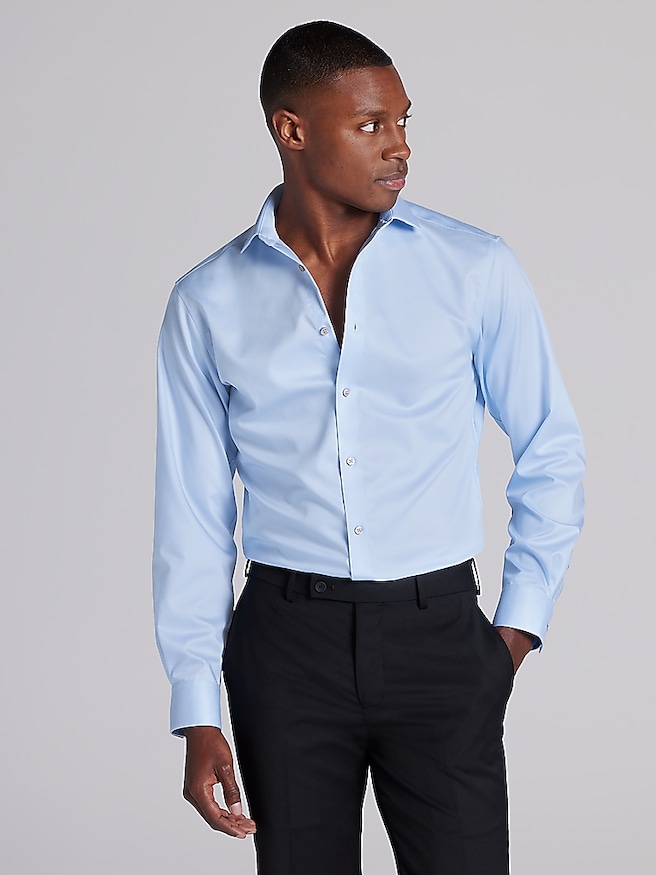
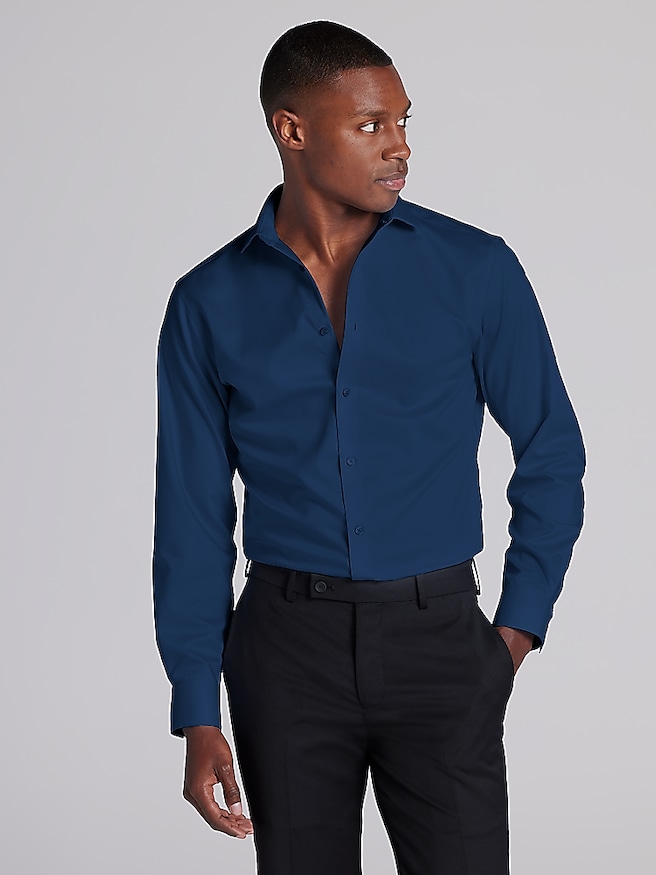
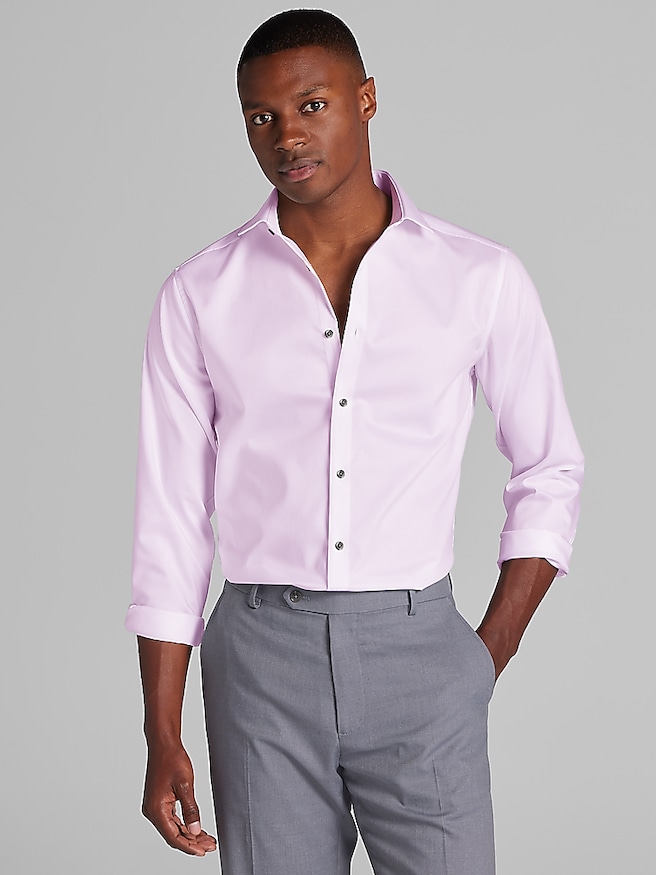
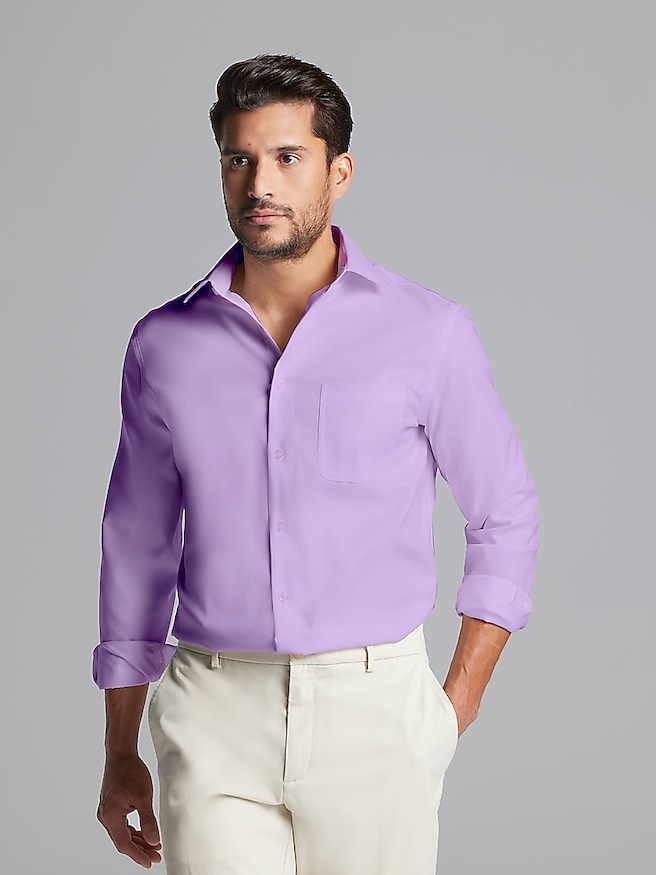
Men’s dress shirts for work provide a polished foundation for office outfits, whether the day involves client meetings, presentations, or time at a desk. The most useful choices balance the workplace dress code with comfort through hours of sitting, standing, and moving between appointments. In a formal office, a smooth white or light blue shirt creates a clean backdrop for a suit and tie. In a business casual setting, subtle stripes, small checks, and textured solids bring variety to dress pants or chinos without making an outfit feel busy. White offers sharp contrast with navy and charcoal tailoring, while pale blue pairs easily with gray, brown, and deeper blue tones. Fine patterns can add dimension beneath a solid jacket, though tightly spaced designs may appear distracting on video calls. A solid shirt often produces a simpler on-screen appearance. Collar shape also affects how a work shirt looks with the rest of an outfit. A point collar has a traditional profile, while a spread collar leaves more room for a fuller tie knot. A button-down collar keeps its points secured and often suits a less formal office. For days without a tie, a collar that sits neatly inside the jacket neckline helps the outfit look finished with the top button open. Barrel cuffs fasten with buttons and work well for everyday office wear; French cuffs require cuff links and bring a more formal touch. These details make dress shirts useful across career stages, from a first interview to a leadership presentation. For someone building a professional wardrobe, a few compatible colors and patterns make repeat combinations feel intentional rather than repetitive. Collections of modern men's dress shirts offer another way to explore clean lines and versatile styling for professional settings. A work shirt can also be a practical gift for a graduate or someone starting a new position, especially when their measurements and workplace expectations are known.
Fabric determines much of a dress shirt’s texture, drape, and everyday upkeep. Cotton is a familiar choice for its breathability and feel against the skin, but the weave makes a meaningful difference in appearance. Poplin has a smooth surface and a crisp look that works especially well beneath tailored jackets. Twill has a subtle diagonal structure, typically with a softer drape, and its texture can make minor creasing less noticeable. Oxford cloth has a more visible basket-weave texture and often reads as less formal, while pinpoint Oxford offers a finer surface that bridges traditional business and business casual dressing. These weave names describe construction, not a guarantee of quality; yarn, fabric weight, finishing, and stitching all contribute to how a shirt performs over time. Cotton blends may add wrinkle resistance or quicker drying, depending on their composition. Fabrics containing stretch fibers can allow more give through the shoulders and elbows, a useful quality when reaching across a conference table or spending much of the day at a keyboard. Stretch should complement a sound fit rather than compensate for a shirt that is too tight. Performance dress shirts may include moisture-management or easy-care features, but those benefits depend on the fabric and finish and should be confirmed in the garment details. Non-iron and wrinkle-resistant descriptions are also worth distinguishing. Non-iron shirts are designed to maintain a smoother appearance after laundering according to their care instructions, while wrinkle-resistant shirts may still benefit from a light touch-up. Neither description means a shirt will remain perfectly crease-free through every commute or full workday. Fabric opacity matters, too, particularly with white and pale shades. A finer cloth may reveal an undershirt more readily, while a denser weave can provide more coverage. A low-contrast undershirt with flat seams helps preserve a clean appearance beneath lighter fabrics. The right material feels comfortable during routine movement and has enough body to sit neatly under a jacket without bunching at the sleeves.
Fit gives those fabric and styling choices their finished shape. A work dress shirt should sit cleanly across the shoulders, with the shoulder seams close to the point where the shoulder meets the arm. The collar should button without pressing into the neck, leaving modest room for comfortable movement rather than a visible gap. Sleeves should reach the wrist with the arms relaxed, and cuffs should stay in place instead of sliding over the hands. Beneath a suit jacket, a small amount of shirt cuff showing creates a tidy frame. Through the chest and waist, the fabric should lie smoothly without pulling the button placket open or collecting in heavy folds above the waistband. Slim fits generally follow the torso more closely, while classic fits usually provide additional room; modern or tailored fits often sit between those shapes, though definitions vary. Neck and sleeve measurements provide a stronger starting point than a familiar size label alone. Comfort while seated matters just as much as appearance while standing, especially for desk-based work. A shirt that looks neat in front of a mirror should also allow a natural reach toward a keyboard without straining across the back. For tucked-in office wear, sufficient length helps the hem remain secured when sitting or lifting the arms. Lasting usefulness also depends on care and construction. Even stitching, firmly attached buttons, and neatly finished seams are worthwhile details, while collars and cuffs deserve attention because they receive frequent handling and friction. Following the care label helps protect the fabric, finish, and shape. Prompt attention to collar marks, separating laundry by color, and avoiding more heat than the label permits can help maintain a clean appearance. Removable collar stays should come out before washing or pressing unless the garment instructions specify otherwise. Hanging shirts promptly after drying reduces the chance of deep-set folds, and pressing at the appropriate setting restores definition where needed. Rotating shirts through the workweek spreads out wear and allows time for proper laundering, helping a professional wardrobe stay presentable through regular use.