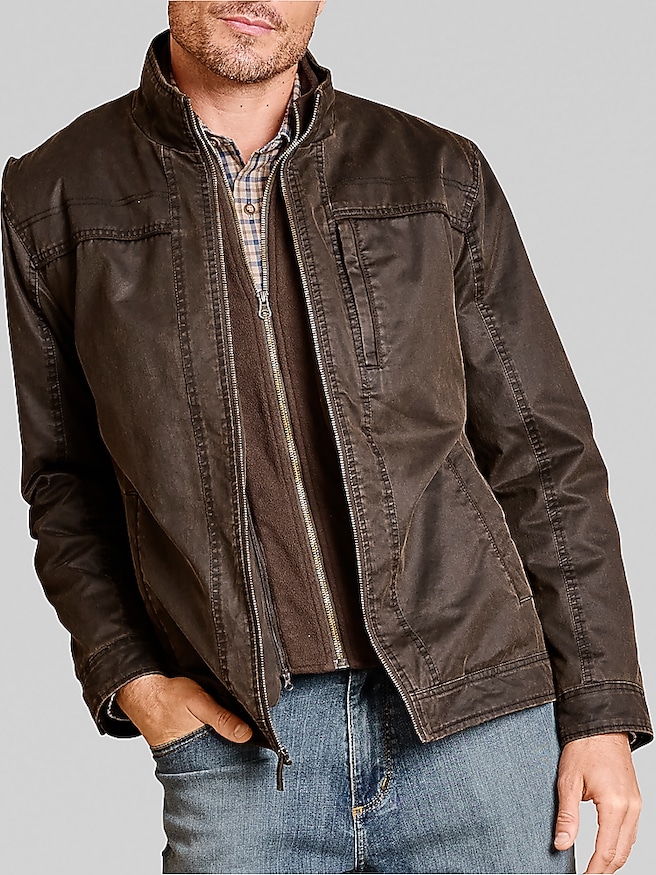
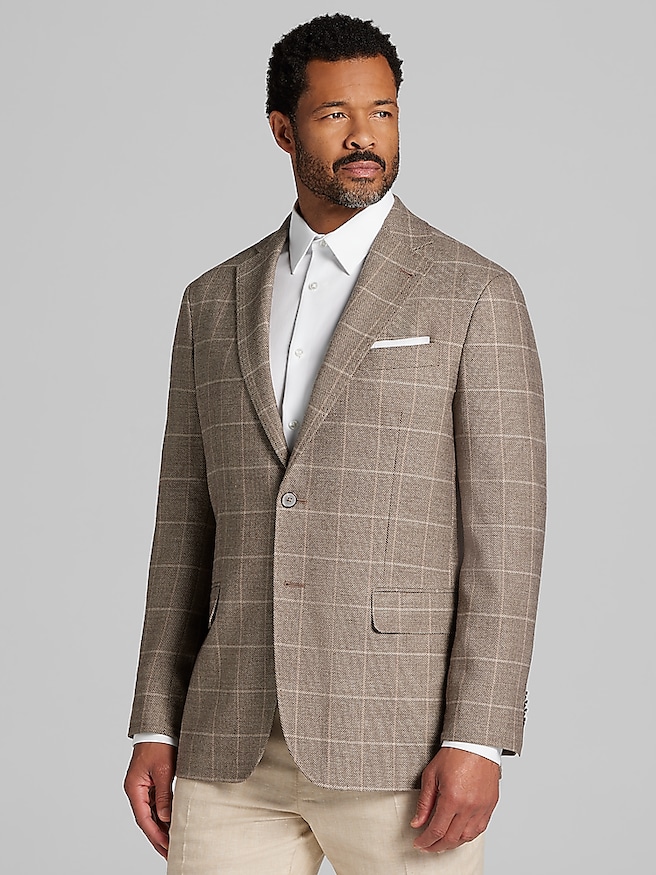
Men’s cotton coats are outer layers made from cotton or cotton-blend fabrics, with designs ranging from relaxed chore coats to tailored, longer silhouettes. Their character comes largely from the cloth: sturdy canvas has a substantial, workwear-inspired feel, cotton twill has a recognizable diagonal weave, and finer, tightly woven fabrics can give a coat a smoother, more polished finish. These differences affect how a coat hangs, how much structure it has, and how easily it pairs with the rest of a wardrobe. A canvas coat with patch pockets looks natural over a casual shirt and jeans, while a streamlined cotton coat with a neat collar can complement trousers and a button-down. Cotton offers a familiar feel, but the fiber name alone does not tell the whole story. Fabric weight, weave, lining, and construction all contribute to comfort and shape. An unlined design generally feels less substantial than a fully lined coat, and a crisp finish behaves differently from fabric that has been washed for softness. Cotton blends may add stretch, help the material recover its shape, or change its texture, depending on the fibers involved. The shell and lining can also have different compositions, making the full fabric description more useful than a single material label. Color and surface texture bring another layer of personality. A smooth navy or charcoal coat creates a restrained backdrop for patterned shirts, while khaki, olive, and brown emphasize cotton’s connection to practical everyday dressing. Dark shades are not automatically more durable, and lighter shades are not necessarily delicate; construction and care matter more than color alone. Some cotton fabrics develop subtle fading and softened edges with repeated wear, giving casual coats a more lived-in appearance. Others are designed to maintain a cleaner, more uniform look. That range makes cotton coats relevant to men who prefer easygoing clothing as well as those who want a less formal alternative to a sharply tailored outer layer.
Fit gives a cotton coat its balance, whether the intended look is trim and refined or loose enough for comfortable layering. The shoulders should support the coat’s shape without pulling across the upper back, and the sleeves should allow natural movement when reaching for a steering wheel, carrying a bag, or sitting at a desk. A coat that looks neat while standing still may feel restrictive once it is fastened over a sweater or jacket. Enough room through the chest and upper arms helps preserve comfort without requiring excess fabric through the body. Cotton does not automatically stretch, so ease of movement depends on the cut unless the fabric includes stretch fibers or a construction designed to provide flexibility. Length changes both appearance and use. A shorter coat can work well with casual trousers and everyday movement, while a longer silhouette creates a continuous line over more tailored clothing. When worn over a suit jacket, the outer coat generally looks more considered when its hem covers the jacket beneath it. Collar shape, front fastening, and pocket placement also influence the overall impression. Patch pockets and visible stitching emphasize a utilitarian character; discreet pockets and a simpler front tend to look more understated. A double-breasted front adds visual structure, while a single-breasted design often has a cleaner profile. These details become especially noticeable in everyday combinations: a textured cotton coat over an Oxford shirt and chinos feels put together without looking ceremonial, while a plain crewneck and dark jeans keep the same type of layer relaxed. For an office commute, a smooth lining can make the coat easier to slip over tailored sleeves. For a day with frequent stops, accessible pockets and a comfortable opening matter more than decorative details. Men who carry a phone, keys, and a wallet may also appreciate pockets positioned so their contents do not distort the front. The most useful fit leaves the coat looking intentional both open and fastened, with the clothing underneath resting smoothly rather than bunching at the waist or shoulders.
Durability in men’s cotton coats depends on more than a heavy fabric. Secure seams, neatly finished edges, firmly attached buttons, and reinforcement around frequently used pockets all contribute to how well a coat handles regular wear. A substantial canvas can resist everyday abrasion, but even sturdy cloth benefits from care that respects its finish and construction. The care label is the starting point because a washable cotton shell does not necessarily mean the entire coat belongs in a washing machine. Linings, interfacing, trims, and applied finishes can require different treatment, and some structured coats call for professional cleaning. Where home washing is permitted, following the specified water temperature and drying method helps limit unwanted shrinkage, fading, and changes in shape. Excessive heat can be especially hard on a carefully fitted garment. Between cleanings, a soft clothing brush can lift loose surface dust, and airing the coat before storage helps keep it fresh. Spot treatment should suit both the fabric and the type of mark, with any unfamiliar cleaner tested discreetly first. A broad, supportive hanger helps maintain the shoulders; tightly packing a coat into a crowded closet can leave creases that undermine its shape. Cotton’s tendency to crease is part of the material’s character, although the amount varies with the weave, weight, and blend. Gentle pressing or steaming may restore a neater finish when the care instructions allow it. For a coordinated wardrobe, Cotton Clothing For Men offers a related direction for combining familiar textures without making every layer identical. A smooth shirt beneath a more textured coat, for example, creates contrast while keeping the outfit grounded. Cotton coats can also make thoughtful gifts for a father, partner, brother, or graduate whose everyday style is already clear. Knowing the recipient’s usual size, preferred coat length, and layering habits is more helpful than choosing by color alone. A well-considered cotton coat earns its place through comfortable movement, useful details, and a shape that feels at home across the wearer’s regular routine.