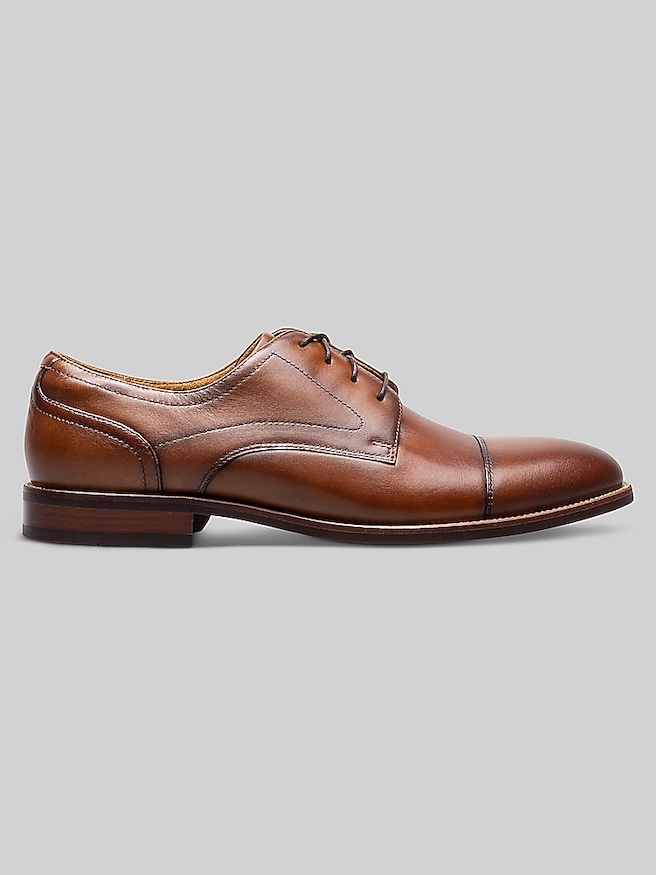
Men’s cognac slip-on dress shoes bring a warm, distinctive finish to tailored clothing without the visual weight of black footwear. Cognac usually sits between tan and deeper brown, with amber or reddish undertones that give leather depth and make subtle stitching easier to see. That color can look particularly sharp beneath navy trousers, where the contrast feels intentional without overpowering the outfit. With charcoal, it adds warmth; with medium gray, it creates a softer transition from the trouser hem to the shoe. A smooth, minimally detailed slip-on works well with a suit for an office presentation, a wedding with a suit-and-tie dress code, or a dinner that calls for more than everyday casual clothing. A pronounced apron seam, decorative strap, or tassel can give the same color a more relaxed character, especially with chinos and a sport coat. The defining feature is the uninterrupted, lace-free shape, which keeps the front of the shoe clean and puts more attention on the leather, toe shape, and proportions. A gently rounded or almond-shaped toe generally complements tailored trousers, while a broader silhouette can feel more substantial with heavier fabrics or fuller trouser legs. Hem length matters, too: excessive fabric pooling over the vamp can hide the details that make a slip-on appealing. A clean break allows the shoe to remain part of the outfit rather than disappearing beneath it. Matching a cognac belt closely enough to echo the footwear creates a coherent finish, although the two pieces do not need to be identical in shade. Dark brown accessories can also work when the rest of the outfit stays restrained. Within the broader category of Men's Cognac Shoes, slip-on dress styles offer a particularly streamlined way to bring this versatile brown tone into a wardrobe. Their usefulness comes from that balance of polish and ease, though traditional black-tie attire generally calls for black formal footwear rather than cognac.
Fit deserves close attention in a slip-on because there are no laces to adjust the hold across the foot. The heel and instep need to feel secure together: a shoe that grips tightly across the top but slips noticeably at the back is not necessarily the right fit. Some slight heel movement may occur with a new, firm sole, but repeated lifting that makes the foot work to keep the shoe on can become distracting over a full day. The toes should have room to rest naturally without pressing against the front, and the widest part of the foot should sit comfortably within the widest part of the shoe. Leather may soften with wear, but that is not a dependable solution for a shoe that is too short or pinches sharply. Trying slip-ons with the type of socks intended for everyday wear gives a more useful sense of fit than switching between thick athletic socks and thin dress socks. For a workday that includes a walk from a parking garage, several hours at a desk, and standing through a reception, lining, underfoot support, and sole flexibility can matter as much as appearance. Smooth leather provides the familiar polished surface associated with dress shoes, while suede creates a softer, more textured expression of cognac that often suits less formal combinations. Leather quality and finishing influence how the upper creases, responds to care, and develops character over time. Natural variations in tone can add dimension, but stiffness, comfort, and durability cannot be judged by color alone. Interior seams should not rub, the heel should feel stable, and the shoe should flex comfortably where the foot bends. Leather soles often support a slim dress profile; rubber soles can offer more grip or cushioning, depending on their construction. Neither material automatically determines comfort. For someone who spends much of the day walking or standing, the relationship between fit, support, and sole design is more meaningful than choosing footwear solely for its appearance.
The appeal of cognac leather continues after the first few wears, when gentle creasing and variations in sheen begin to give the shoes a lived-in character. Good care helps that character remain polished rather than neglected. Surface dust and grit can dull the finish and contribute to wear, so a soft brush or cloth is useful after use. Smooth leather benefits from care products suited to its finish, with conditioner applied sparingly and polish selected carefully to avoid shifting the color too dark or too orange. Testing a product on a discreet area helps protect the original tone, especially on leather with shaded edges or a hand-finished appearance. Suede requires its own brush and appropriate protective products rather than the creams and waxes used on smooth leather. Allowing shoes to air out between wears helps manage moisture from the foot, while well-fitted shoe trees can support the shape and reduce the appearance of creasing. Direct heat is best avoided because it can dry leather excessively. A shoehorn is another small habit that makes a practical difference with slip-ons, protecting the heel counter from being crushed during repeated entry. Over time, worn heel edges, separating soles, or damaged stitching deserve attention before the problem spreads; whether a shoe can be resoled depends on its construction, not simply its dressy appearance. These considerations make cognac slip-on dress shoes a useful choice for someone building a professional wardrobe, refining an established suit rotation, or looking for footwear that can move from business appointments to an evening celebration. They can also be a thoughtful graduation or career-milestone gift when the recipient’s size, preferred fit, and usual dress code are known. A person who favors navy suits may appreciate the contrast of a rich cognac finish, while someone who wears chinos and jackets more often may gravitate toward a softer shape or textured upper. The strongest choice is one that feels comfortable, suits the occasions ahead, and brings a consistent, considered finish to clothing already worn with confidence.