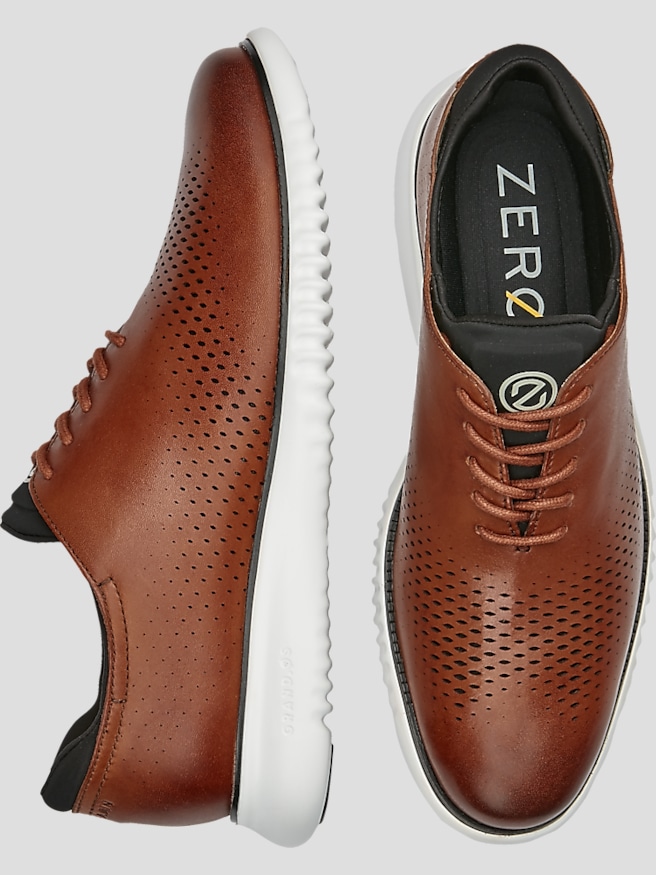
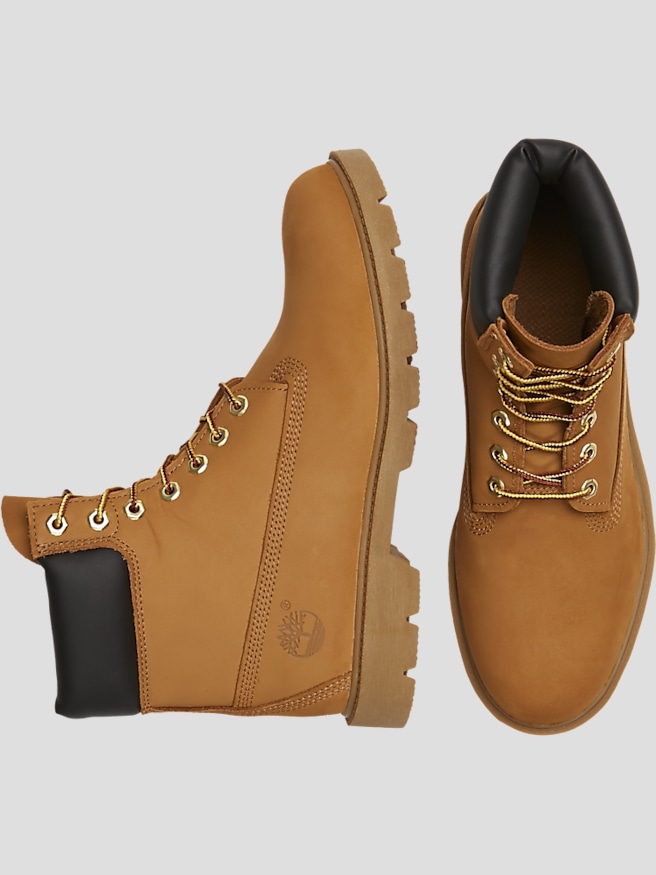
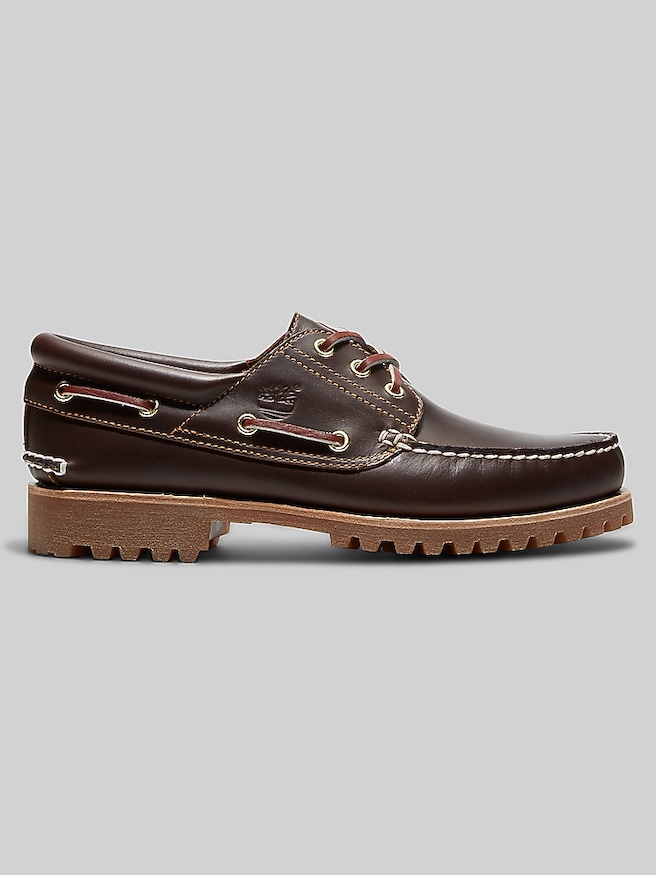
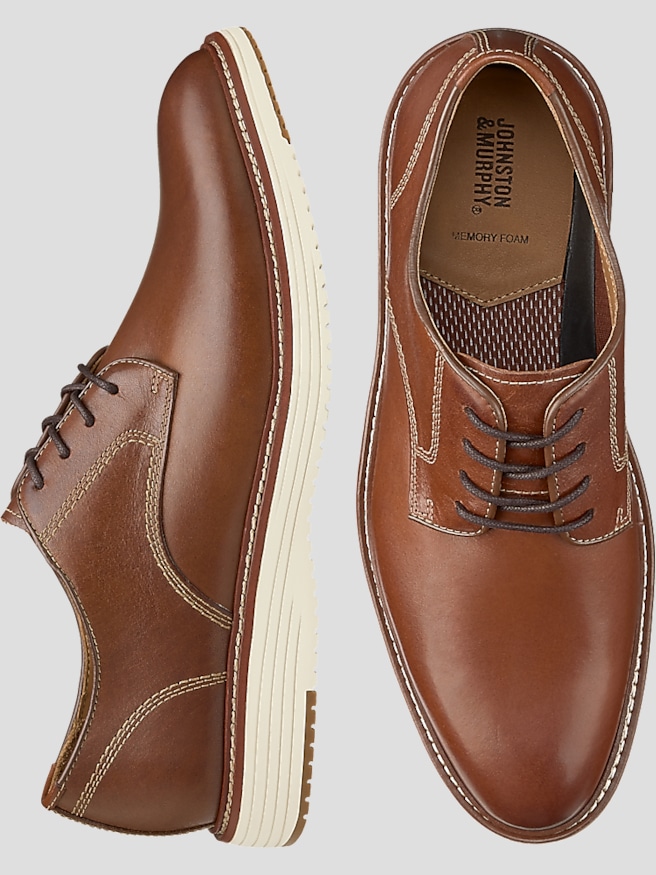
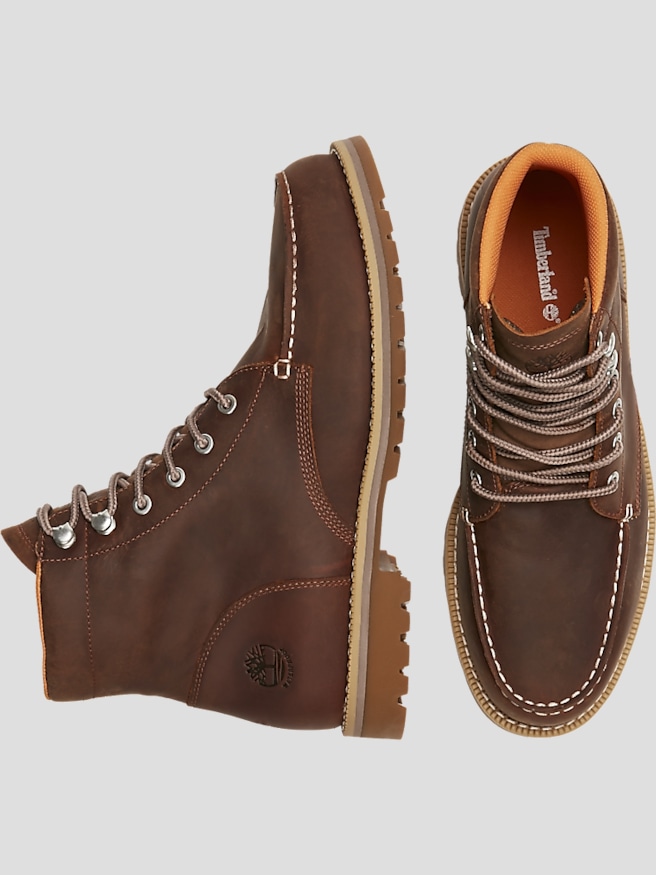
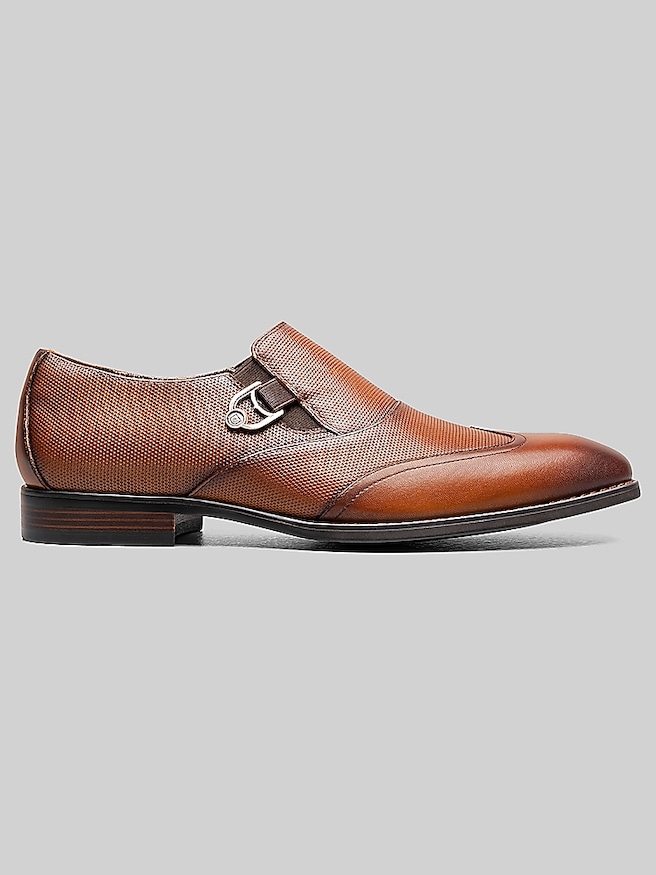
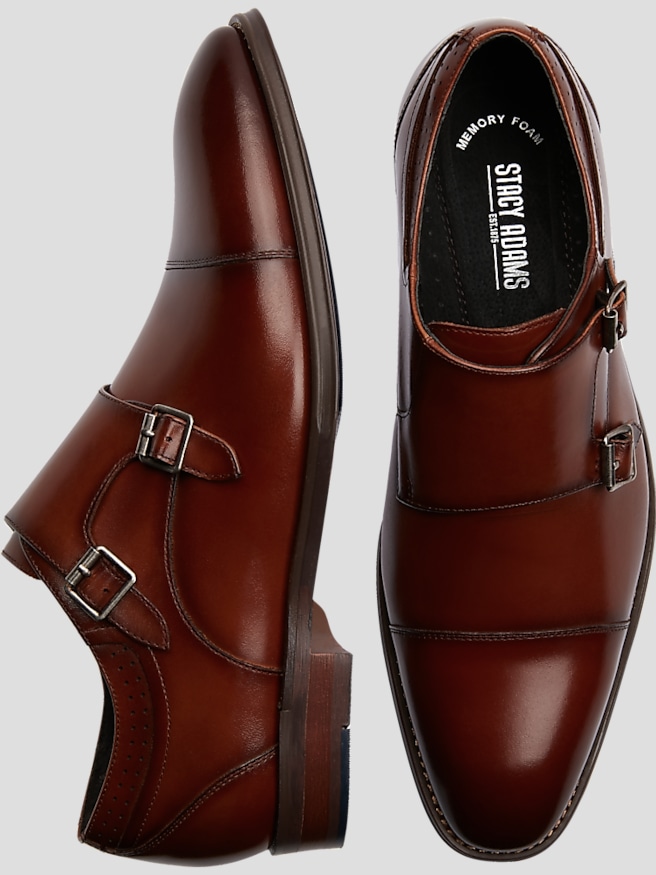
Men’s cognac shoes are defined by their warm amber-brown color, often with reddish or golden undertones that give leather a richer appearance than pale tan. Cognac describes the shade rather than a particular shoe style, so the category can include lace-up dress shoes, loafers, monk straps, boots, and more relaxed silhouettes. The exact color varies with the material and finish: a smooth, evenly dyed upper looks clean and understated, while burnished toes and darker seams create depth. That warmth makes cognac a distinctive complement to mid-blue tailoring, light gray trousers, olive chinos, and cream-colored pants. With a blue suit, a restrained cap-toe shoe adds contrast without needing elaborate details; with chinos and a tucked-in shirt, a loafer keeps the outfit polished but less formal. Very dark charcoal or midnight-blue suits create a stronger contrast, which can draw attention toward the feet rather than blend into the outfit. For conservative business settings or occasions with strict formal expectations, darker footwear may be a more appropriate match. Cognac generally belongs with business, dress-casual, and smart-casual clothing rather than traditional black-tie attire. Shape and detailing help set the tone within those settings. Oxfords have closed lacing and a neat profile that works well with tailored trousers, while derbies have open lacing and can feel slightly more relaxed. Broguing adds decorative perforations, and a plain toe lets the leather color carry the visual interest. For an easy-on silhouette, men’s cognac slip-on dress shoes complement outfits ranging from office separates to a sport coat and chinos. A belt in a similar brown tone helps connect the outfit, although an exact color match is not essential. Keeping the belt and shoes close in warmth and formality usually looks more natural than trying to duplicate every shade variation. Trouser length matters, too: a clean hem with little excess fabric leaves the shoe’s shape visible and makes the overall outfit look more deliberate.
Material and construction influence how cognac shoes look, feel, and hold their shape through repeated wear. Smooth leather gives the color a clear, polished surface, while suede softens it with a matte texture that generally reads as more casual. Full-grain leather retains the hide’s natural grain and can develop a patina over time; corrected-grain leather has a more uniform surface, often with a finish that changes its appearance and care needs. Neither the cognac color nor a glossy finish alone establishes leather quality. Supple uppers, even stitching, neatly finished edges, and a secure connection between the upper and sole are more useful details to consider. Leather linings can help manage moisture, while padded footbeds and flexible soles may improve comfort during a commute, a presentation, or several hours of standing at a reception. Cushioning does not compensate for poor fit, however. Toes should have room to rest naturally without pressing against the front or sides, and the widest part of the foot should sit comfortably within the shoe’s forefoot. A pointed silhouette may extend beyond the toes by design, so empty space at the tip is not automatically a sign that the shoe is too long. The heel should feel secure without painful rubbing, and the instep should not be squeezed by the upper. Lace-up styles allow some adjustment across the top of the foot; slip-ons depend more closely on the relationship between the shoe’s shape and the wearer’s heel and instep. Trying shoes with the socks intended for regular use gives a more realistic sense of fit. Leather may soften and conform with wear, but a shoe that pinches sharply should not be expected to stretch into the correct size. Sole choice also affects intended use. Leather soles offer a traditional dress appearance, while rubber soles can add flexibility and grip, depending on their design. A discreet rubber outsole can suit frequent walking without giving a dress shoe an overly bulky profile.
Cognac footwear stays visually appealing when care preserves both the material and the balance of color across the upper. Dust and grit can dull a finish and work into creases, so a soft brush or clean cloth is a useful first step after wear. Smooth leather benefits from an appropriate conditioner applied sparingly according to the maker’s recommendations; too much product can leave residue or alter the shade. Polish should suit the leather and the intended finish. A close color match can help minimize small scuffs, while a compatible neutral cream may maintain the existing tone without adding pigment. Even neutral products can affect lighter leather, making a small test on an inconspicuous area worthwhile. Darker polish can deepen burnishing but may also create uneven patches, particularly around decorative stitching or perforations. Suede needs its own brush and suitable care products rather than creams made for smooth leather. If shoes become damp, allow them to dry naturally away from direct heat, which can stiffen the leather or affect adhesives. Cedar shoe trees can help absorb residual moisture and support the upper’s shape, especially through the toe and vamp. Alternating pairs gives the interiors time to dry between wears, and using a shoehorn helps protect the heel counter from being crushed. Durability also depends on maintenance below the upper: worn heel edges, thinning soles, and loose stitching deserve attention before they affect the shoe’s structure. Some stitched constructions allow resoling, although repair options depend on the individual construction and condition. For someone building a work wardrobe, cognac shoes can become a dependable companion to blue and gray separates; for someone who dresses up less often, a simple silhouette can cover dinners, daytime weddings, and family celebrations where the dress code permits brown footwear. They can also make a thoughtful graduation or career-milestone gift when the recipient’s size, width, and preferred style are known. A comfortable fit, useful shape, and finish that complements existing clothing matter more than decorative detail alone.