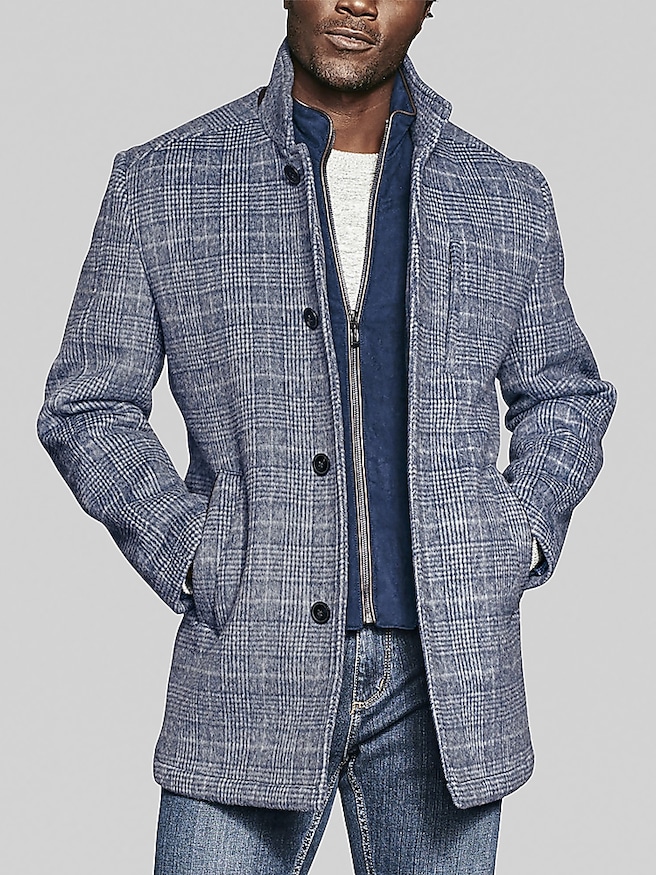
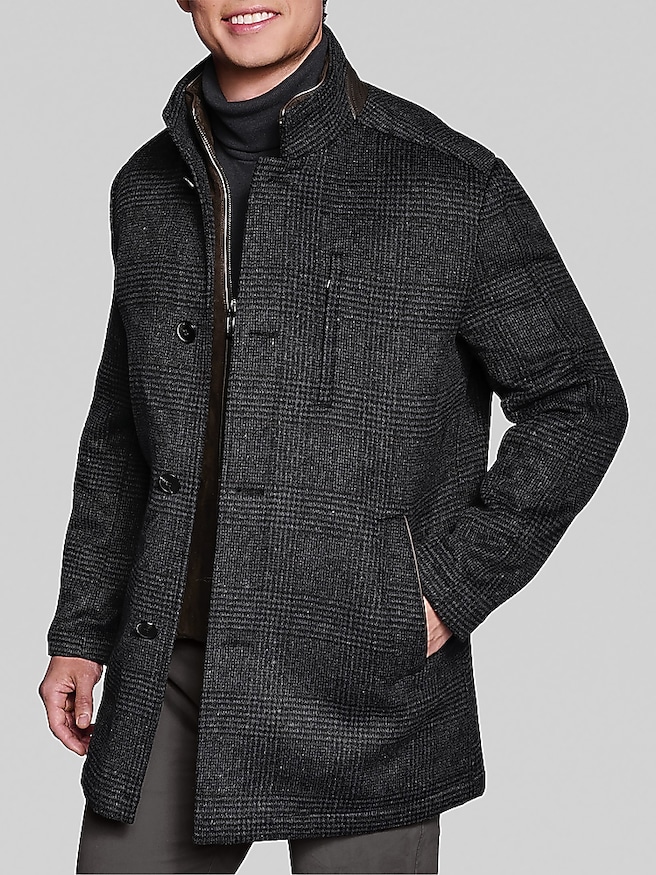
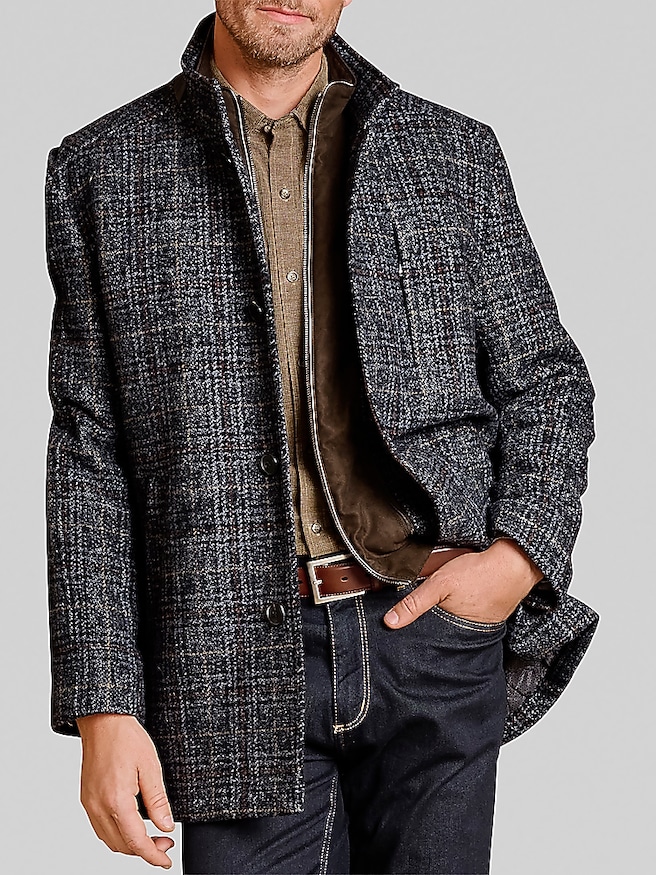
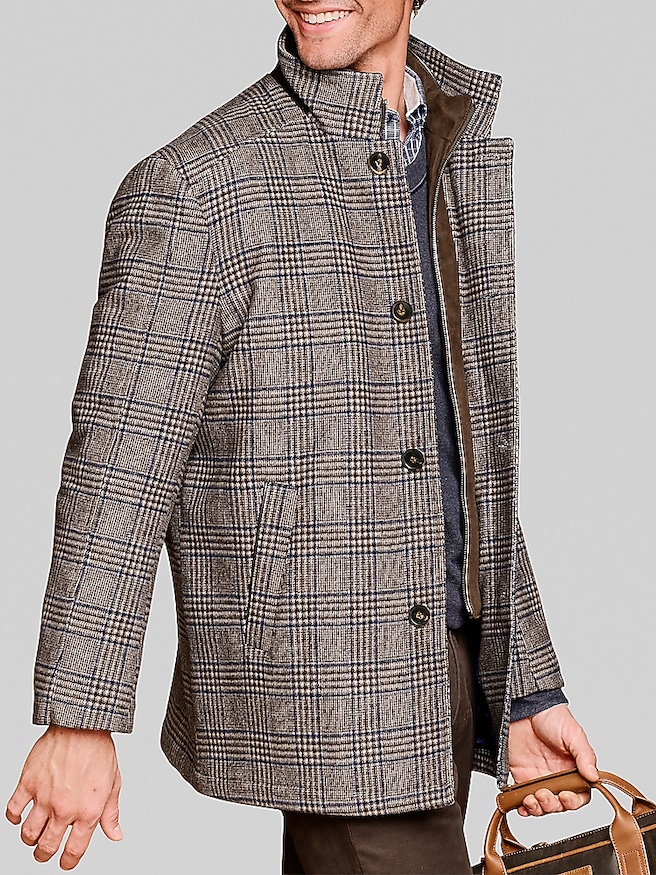
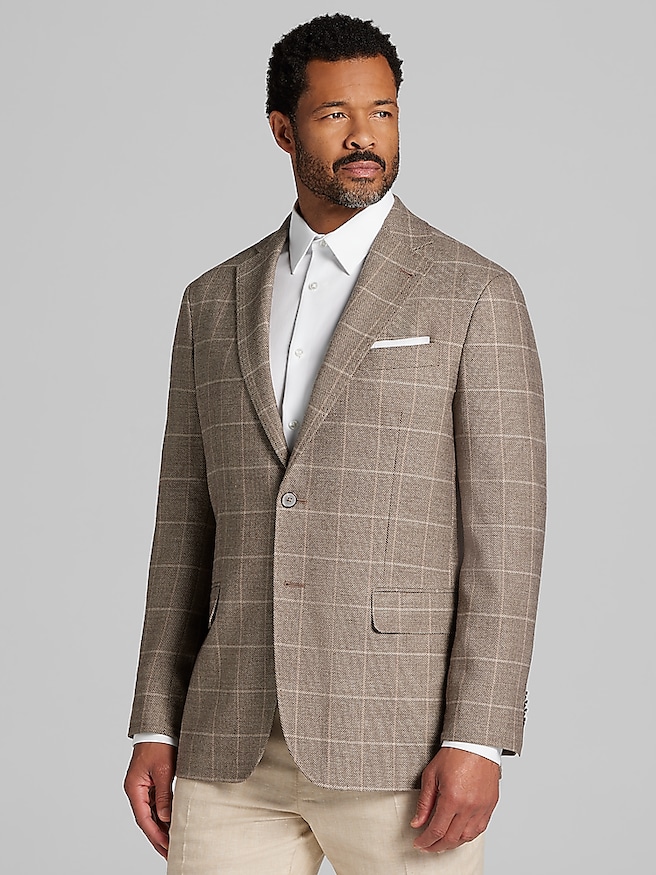
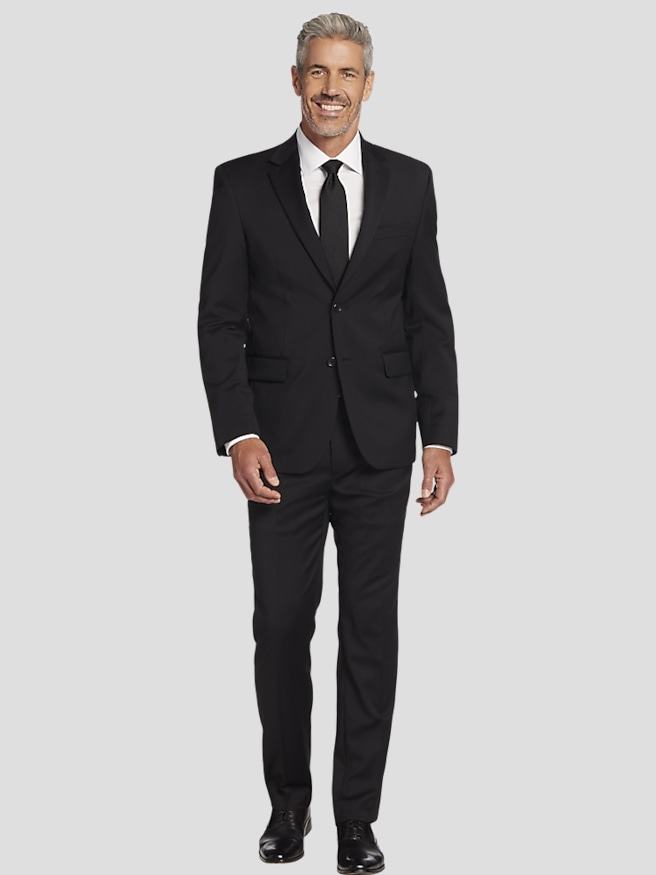
Men’s coat styles range from tailored outerwear cut to fit over a suit to casual coats that sit naturally over jeans, chinos, and knitwear. An overcoat typically falls to the knee or below and has a clean, structured shape that follows the lines of a suit without clinging to it. It’s a natural match for business attire or a formal evening outfit, especially when the coat covers the suit jacket completely. A topcoat serves much the same purpose but is usually lighter and often ends above the knee, making it less bulky for a commute that involves a lot of sitting and standing. A trench coat can go either way: the longer cut looks at home over dress trousers, while the belt and more relaxed fit work just as well over a sweater and chinos. On the casual side, the pea coat is a short, double-breasted style with broad lapels, often made from dense wool. Its shorter hem leaves more of the trousers visible, and the strong shape at the shoulders gives a plain sweater and jeans some definition. A parka usually has a hood and a longer, roomier cut that puts coverage and layering ahead of a trim silhouette. A chore coat has a straighter shape and patch pockets, with workwear roots that show in the practical cut and easy reach of the pockets. The details can say as much about formality as the length does. Concealed buttons and understated pockets give a coat a dressier finish; visible stitching, large patch pockets, and substantial hardware make it feel more casual. For a coat that will go from the office to dinner, a simple front and enough length to cover a blazer can do more than a pronounced waist or an elaborate set of pockets. For everyday wear with denim, a shorter cut with room through the upper back is often easier to move in, especially when getting in and out of a car.
Fabric can make two coats with nearly identical cuts feel quite distinct. A smooth wool fabric with a tight weave tends to drape neatly over tailoring, while a brushed wool surface softens the look and pairs well with textured knitwear. Dense wool often has enough body to hold a lapel in place and keep a long hem from swinging loosely. A wool blend can change the weight, texture, or resilience of the fabric, but the fiber percentages alone won’t tell the whole story. Look at how the cloth hangs, how easily it bends at the elbow, and whether it looks smooth or pulls around the buttons when closed. For options in wool, browse Men's Wool Coats For Winter Style. Cotton twill and canvas give chore coats their familiar structure, and some canvas softens at the elbows and along the pocket edges with wear. Parkas often use synthetic shell fabrics, which can provide coverage without the weight of a dense woven coat. A water-resistant finish and a waterproof construction are not the same; for that level of protection, the seams matter as much as the outer fabric. Inside the coat, a smooth sleeve lining can make a noticeable difference when pulling it on over a blazer or a chunky sweater. It also helps keep the layer underneath from bunching up near the elbow. For a coat that will see frequent use, pay attention to the places that take the most strain: pocket corners, cuffs, button attachments, and the base of the back vent. Secure stitching and a lining that lies flat without tugging at the seams are useful signs of sound construction. Comfort matters just as much. A substantial coat may feel fine over a shirt but surprisingly restrictive over the layers it’s meant to cover.
The best way to judge fit is to try on a coat over the thickest layer it will regularly cover. A coat meant for a suit needs space over the jacket shoulders and across the chest, but it shouldn’t bunch at the back of the neck or sag around the upper arms. Close the front and reach forward as if taking hold of a steering wheel. If the coat pulls sharply across the shoulder blades or the buttons strain, more room through the chest or upper back may help. Sit down with the coat closed, too. On a longer style, a back vent helps the hem spread rather than bind around the legs. With arms relaxed, the sleeves should cover the layer beneath without getting in the way when reaching into a pocket. For a gift, the smartest starting point is what the recipient already wears. Someone who spends much of the workweek in a suit may get more use from a tailored overcoat than from a hooded parka, while a person who lives in denim and sweaters may appreciate the easy fit of a chore coat or pea coat. Comparing the chest, shoulder, and sleeve measurements with those of a coat that already fits is more useful than relying on a letter size alone. Care is part of the choice as well. Follow the label rather than assuming all wool or cotton coats can be cleaned the same way, since the lining and internal structure may need special treatment. A soft garment brush can lift surface lint and dust from suitable wool fabrics between cleanings. A broad hanger supports the shoulders, and emptying the pockets before hanging the coat helps keep them from stretching out of shape. Those small habits are especially worthwhile for an everyday coat, where the cuffs, pockets, and front closure see far more wear than the rest of the garment.