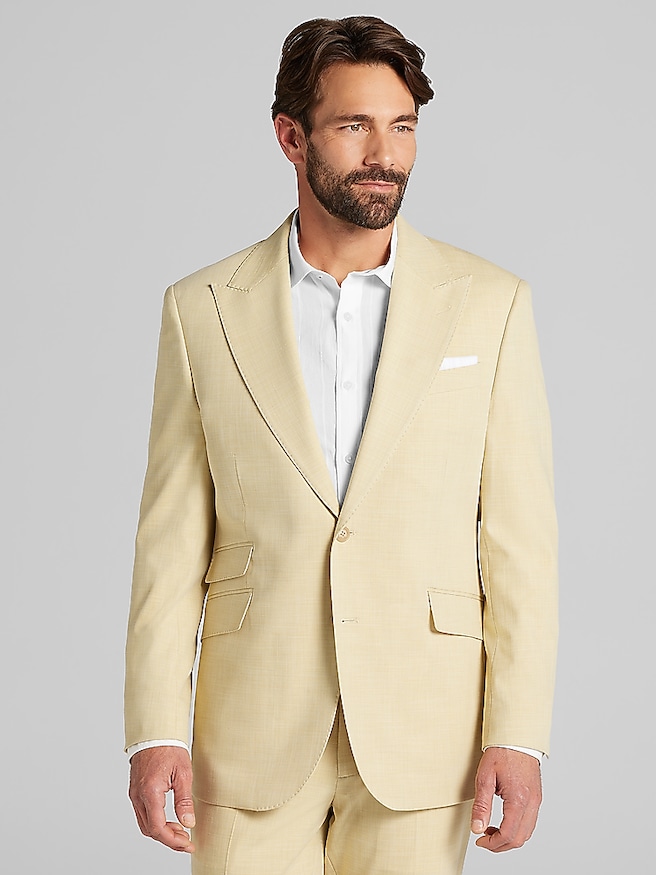
Clean-cut men’s work outfits pair neat lines and well-proportioned layers with fabrics that look appropriate for the workplace. The look can be formal or relaxed: what makes it clean-cut is the way the clothes sit on the body and work together, not the number of tailored pieces in the outfit. In a traditional office, a charcoal or navy suit with a light dress shirt and understated leather shoes is a natural choice for a client presentation or a meeting with senior leadership. The matching jacket and trousers create one continuous line, and a solid shirt keeps the combination simple. In a business-casual office, a softly structured sport coat over a fine knit or button-down brings some of that definition to chinos or tailored trousers without looking like half a suit. A creative studio or casual tech office may leave room for a cotton-twill jacket, straight-leg trousers, and low-profile leather sneakers. The twill adds texture, while a close color pairing, such as olive and deep brown, keeps the outfit from looking busy. Navy, gray, and khaki are useful starting points for a work wardrobe because they can be repeated without making every outfit look the same. Charcoal trousers look at home with a pale blue shirt and dark leather shoes on a meeting day; the same trousers take on a softer look with a textured knit for a day spent reviewing projects with coworkers. Footwear makes a noticeable difference at the more relaxed end of the dress code. Smooth leather lace-ups reinforce the formality of pressed trousers, while simple loafers suit many combinations of chinos and a sport coat. Where sneakers are accepted, a clean, low-profile pair works best with a hem that falls neatly rather than gathering over the shoe. In offices that balance desk work with client visits, those choices make it possible to maintain a consistent style while adjusting how formal each outfit feels.
Fit does more for a clean silhouette than a narrow cut does. A jacket should follow the shoulders without extending noticeably beyond them, and the front should lie smoothly when fastened. Pulling around the button or folding near the upper arms can signal that the jacket is too tight, even if the shoulder line looks right at first glance. A shirt needs enough room through the chest and back to reach across a conference table without pulling at the buttons. Trousers should sit securely at the waist and leave enough room through the seat and thighs to stay comfortable through a commute or a long stretch at a desk. Straight legs offer a consistent line from thigh to hem, while a gentle taper gives some definition at the ankle without requiring a close fit through the whole leg. Clean Fit Professional Office Pants are a useful starting point for outfits that need to work with both tailored jackets and more casual layers. With dress shoes, a hem that just touches the top of the shoe can give trousers a crisp finish; a slight break, the small fold where the fabric meets the shoe, offers a more traditional look. The best length depends on the width of the trouser leg and the profile of the shoes, so a hem that looks balanced with lace-ups may sit awkwardly over a bulkier sole. Proportions matter above the waist, too. A fine knit can fit comfortably beneath a tailored jacket without bunching at the sleeves, while a thicker knit works better beneath a layer cut with more room. Small checks, subtle stripes, and textured solids can all fit a clean-cut office wardrobe. A patterned shirt usually sits more easily beside a quiet jacket fabric than beside another prominent pattern, especially when both are visible from across a meeting room. The aim is enough definition to look put together without sacrificing the room needed to sit, walk, or reach comfortably.
Fabric affects how work clothes look after several hours of wear, not just how they look on a hanger. Woven wool and wool blends often drape smoothly, which makes them well suited to tailored trousers and jackets. Cotton twill has a more matte finish and a firmer feel, qualities that complement less formal combinations built around chinos or structured layers. Smooth cotton shirting gives an outfit a sharper finish, while an Oxford weave has a visible texture that feels at home with business-casual clothing. A modest amount of stretch can make a difference through the knees and seat for someone who alternates between desk work and trips across a large office. Stretch alone does not determine durability, though. The weave and construction matter, particularly at the pockets, inseams, and other places that see regular friction. Care routines also affect how long clothes hold their shape. The care label is the best reference for whether a piece can be washed, pressed, or steamed. For tailored garments, a broad hanger supports the shoulders between wears, and hanging trousers neatly helps keep folds from settling in where they do not belong. Rotating frequently worn pieces gives fabric time to relax and spreads wear across more than one garment. That matters for a pair of trousers worn on the train, at a desk, and out to a client lunch in the same day. The most useful office pieces tend to suit the wearer’s actual routine: a new hire in a formal workplace may get more mileage from matching tailoring, while someone on a hybrid schedule may rely on trousers and layers that can be worn in several combinations. Work clothing can also make a practical graduation or new-job gift when the recipient’s measurements and office dress code are known. Whether it’s for a first office wardrobe or an established rotation, a piece earns its place when it fits comfortably, works with familiar shoes and layers, and can be cared for without complicating the workweek.