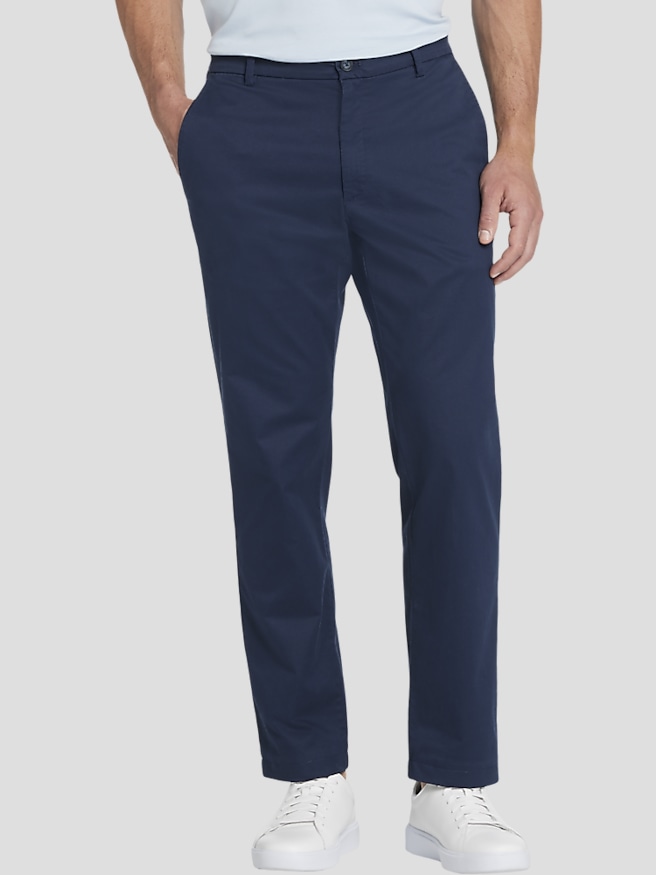
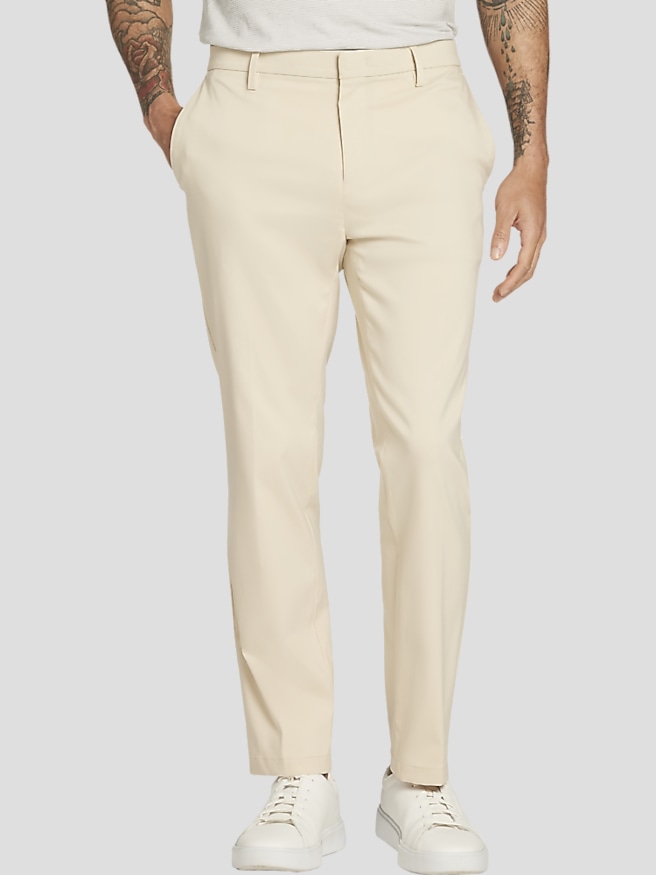
Men's classic fit chinos are casual trousers with comfortable room through the seat and thigh and a generally straight leg, creating a balanced silhouette without the close cut of slim or skinny pants. They occupy a useful middle ground between denim and dress trousers: polished enough for many business-casual settings, yet relaxed enough for a neighborhood lunch or an afternoon spent visiting friends. Chino fabric is traditionally a cotton twill, recognizable by its subtle diagonal weave and smooth surface. That understated texture gives these pants their versatility, allowing a tucked-in button-down to look considered without making a simple polo feel out of place. Classic fit describes the overall proportions rather than one fixed set of measurements, so the rise, leg opening, and amount of room can vary between cuts. A comfortable waistband rests securely without digging in when seated, while the fabric across the hips falls smoothly rather than pulling into horizontal lines. Through the thigh, enough ease for walking, climbing stairs, and sitting at a desk helps preserve both comfort and a clean appearance. The result should feel roomy, not oversized, with a seat that follows the body without sagging and a leg that hangs neatly toward the shoe. Hem length also affects the impression: a slight break creates a traditional finish, while little or no break gives the same classic proportions a cleaner outline. Excess fabric pooling over the shoes can make an otherwise well-fitting pair look less deliberate. Front construction is a separate feature from fit, and Men's Flat Front Chinos offer the unpleated styling often associated with a smooth, straightforward appearance. A flat front does not automatically mean a narrow leg; it can work naturally with the comfortable proportions of a classic fit. For someone who prefers breathing room through the upper leg but still wants pants that look appropriate with a tucked shirt and leather shoes, that combination has lasting appeal.
Fabric composition makes a meaningful difference in how classic fit chinos feel throughout the day and how they respond to repeated wear. All-cotton twill often appeals to someone who enjoys a natural hand, breathable comfort, and fabric that gradually softens with laundering. Cotton can develop creases, particularly behind the knees and across the lap, so an entirely crisp appearance may take pressing. A small amount of elastane or spandex adds stretch that can make sitting, bending, and moving between appointments more comfortable without requiring a visibly athletic look. Cotton blends containing polyester may offer better wrinkle resistance or shape retention, although the exact feel depends on the weave, fabric weight, and finishing. Stretch content alone does not determine comfort; adequate room in the rise and thigh remains important, and a tight waistband will not become a good fit simply because the fabric gives. Likewise, wrinkle-resistant chinos can reduce maintenance without eliminating every crease. Smooth, fine twill tends to read a little dressier, while a more substantial fabric can create a sturdier, more casual impression. Construction matters alongside fiber content, especially at pocket openings, belt loops, and seams that experience regular tension. Even stitching, secure closures, and neatly finished seams are useful details in pants intended for frequent rotation. Care begins with the garment label, since finishes and fiber blends can require different washing and drying methods. When permitted, washing with similar colors in cool water and avoiding unnecessary heat can help protect color and limit shrinkage. Prompt removal from the dryer, gentle smoothing, and hanging from a suitable hanger can reduce stubborn wrinkles. Any ironing should follow the recommended temperature, with extra care around stretch fibers and treated fabrics. Small habits also affect appearance over time: keeping bulky keys out of front pockets helps the fabric lie flatter, and addressing a loose button or an opening seam early can prevent a minor repair from becoming a larger problem.
The appeal of classic fit chinos becomes especially clear in the everyday situations that call for looking put together without wearing a suit. In an office with a business-casual dress code, navy chinos, a light blue button-down, and brown leather shoes create a composed outfit with very little fuss. A belt in a related leather tone makes the transition from waistband to footwear feel intentional without requiring an exact color match. Khaki chinos bring an easy contrast to a navy polo or a darker knit, while gray offers a quieter alternative that pairs naturally with white, blue, and muted earth tones. Olive can add variety without relying on a bright color, particularly alongside cream, charcoal, or denim blue. These combinations work because the pants provide a steady foundation rather than competing with every other part of the outfit. For a dinner reservation or a casual professional gathering, a textured sport coat can give chinos more structure, provided the occasion does not require formal attire. An untucked shirt or a simple crewneck creates a more relaxed direction, with a hem that finishes neatly rather than extending far down the thigh. Footwear changes the impression, too: loafers emphasize polish, lace-up leather shoes bring a traditional finish, and clean, understated sneakers keep the outfit casual. The leg opening should fall comfortably over the chosen shoes without catching at the ankle or swallowing the upper. For travel, a comfortable rise, useful pocket depth, and fabric that recovers well after sitting can matter as much as the initial appearance in a mirror. Classic fit chinos can also make a practical gift for a father, partner, graduate, or anyone building a dependable everyday wardrobe. Knowing the recipient's waist measurement, preferred rise, and usual inseam is more helpful than guessing from another type of pants. A familiar neutral color and proportions similar to a well-liked pair keep the choice personal and useful, giving the recipient something that can move easily between workdays, meals out, and ordinary plans.