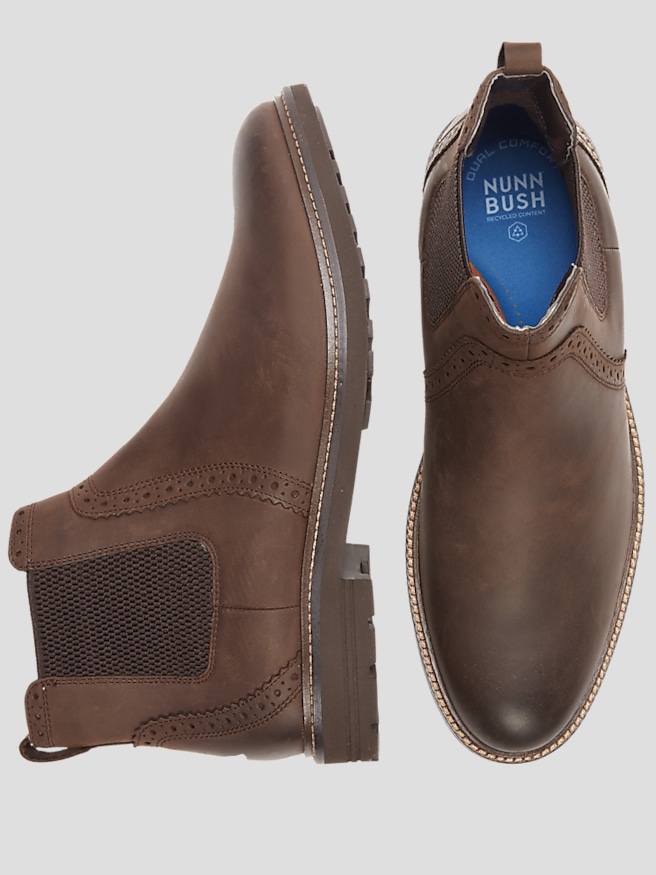
Men’s classic Chelsea boots are ankle-high, pull-on boots defined by elastic side panels, a close-fitting shaft, and a clean silhouette without laces. Often finished with a rear pull tab and a rounded or softly tapered toe, they sit comfortably between dress shoes and casual footwear. Their appeal comes from that balance: a smooth leather pair can look polished beneath tailored trousers, while suede gives the same familiar shape a more relaxed character with chinos or dark denim. The details determine how dressy a boot feels. A slim sole, restrained stitching, and a softly tapered toe tend to complement sharper tailoring; a broader toe and a thicker rubber sole give the boot more visual weight. Black leather creates a crisp finish with charcoal trousers or black jeans, while dark brown works naturally with navy, olive, tan, and a wide range of denim washes. The most useful color is often the one that already connects with the belts, jackets, and trousers worn most frequently. For an office that favors business casual, Chelsea boots can anchor wool trousers and an open-collar shirt without making the outfit feel overly formal. For dinner, the same streamlined shape works beneath a sport coat and neatly hemmed jeans. Trouser length matters here: a hem that rests lightly over the boot keeps the line clean, while excess fabric bunching around the ankle can hide its defining shape. Very narrow leg openings may catch on the shaft, so a little room through the lower leg helps trousers fall naturally. Although Chelsea boots can complement a suit, particularly in a sleek leather finish, formal occasions still call for attention to the stated dress code. Their strength is versatility rather than universal formality, giving men a recognizable, understated boot that can move from a workday to an evening out with only a change of clothing.
Materials and construction shape how classic Chelsea boots feel, age, and perform through repeated wear. Smooth leather offers a relatively even surface that can be conditioned and polished, making it a natural match for outfits that call for a maintained, dress-shoe finish. Full-grain leather retains the hide’s natural surface, while suede has a textured nap that creates a softer, matte appearance. Neither the material name nor the finish alone tells the whole story; leather quality, stitching, lining, sole attachment, and fit all contribute to a well-made boot. A leather lining can help manage moisture from the foot, while a cushioned footbed may soften the feel underfoot. Comfort also depends on the shape of the last—the form around which the boot is built—and whether its proportions suit the wearer’s foot. Because Chelsea boots have no laces to adjust, the fit across the instep and around the heel is especially important. The elastic panels should stretch enough to allow entry, then hold the ankle comfortably without digging in or leaving the boot loose. Toes need room to rest naturally, and the widest part of the foot should align with the widest part of the boot. A small amount of heel movement can occur in a new pair, but pronounced lifting, sliding, pinching, or numbness points to a fit problem rather than something to tolerate. Leather may soften with wear, but a boot that is too short will not gain meaningful length through a break-in period. Trying boots with the socks intended for everyday use gives a more realistic sense of fit. Sole choice deserves similar attention. Rubber soles can provide flexibility and traction, depending on their compound and tread, while leather soles typically create a more traditional dress profile. A deeply textured outsole looks more substantial than a low-profile sole and can change how the boot pairs with tailoring. Welted construction may allow resoling when the design and condition permit, whereas other construction methods can prioritize lightness or flexibility. Strong, even stitching and securely attached elastic panels are useful details to examine regardless of the construction method.
Regular care helps preserve the clean lines that make men’s classic Chelsea boots so adaptable. Smooth leather benefits from dust removal with a soft brush or cloth, followed by a leather conditioner used according to the product and boot maker’s directions. Polish can restore color and refine the finish when appropriate for the leather, but suede requires its own approach: a suede brush helps lift the nap and loosen surface dirt without flattening the texture. Care products should match the material and finish, with any unfamiliar treatment tested on a discreet area first. Boots should dry naturally away from direct heat after cleaning, and cedar shoe trees can help support their shape and absorb residual moisture between wears. Alternating pairs gives the interior time to air out, while using a pull tab gently rather than tugging on the elastic helps reduce unnecessary strain. Small maintenance habits matter because worn heel edges, damaged elastic, and separating soles can affect both appearance and comfort; an early assessment by a qualified shoe-repair professional may help address repairable wear before it becomes more extensive. The Chelsea shape also makes a thoughtful gift for someone who appreciates straightforward dressing, especially when the recipient’s size, width, and preferred toe shape are already known. A birthday or graduation gift feels more personal when its finish matches how the recipient actually dresses, whether that means polished leather with office trousers or suede with casual separates. For another classic ankle-height option, Mens Classic Chukka Boots have lace-up fronts that allow more adjustment across the instep and create a distinct look beneath chinos or denim. Chelsea boots instead emphasize an uninterrupted upper and the convenience of a pull-on design. A pair that fits securely, complements familiar clothing, and receives consistent care can become an easy starting point for getting dressed, offering enough polish for tailored outfits without losing the simplicity that makes a classic boot useful day after day.