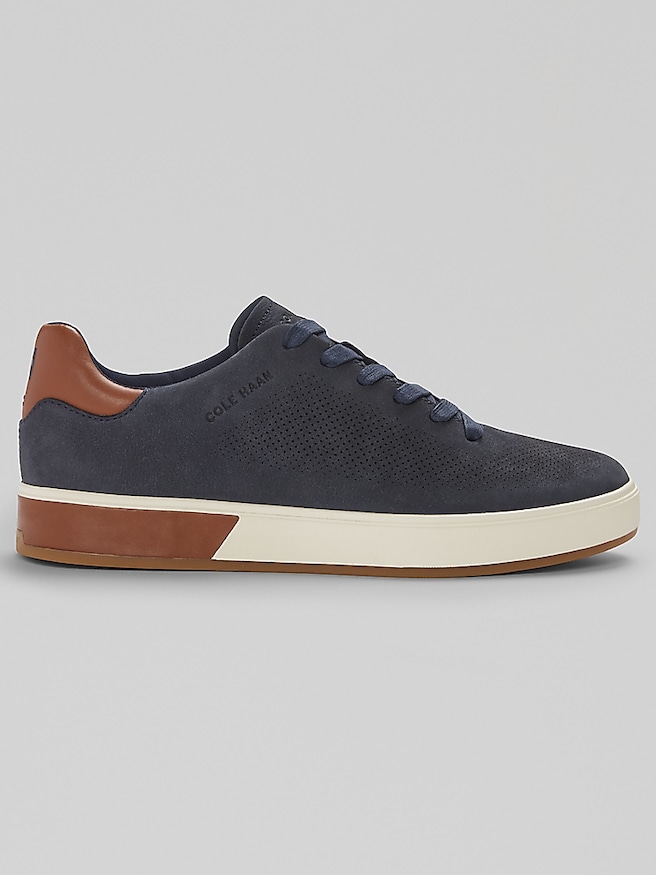
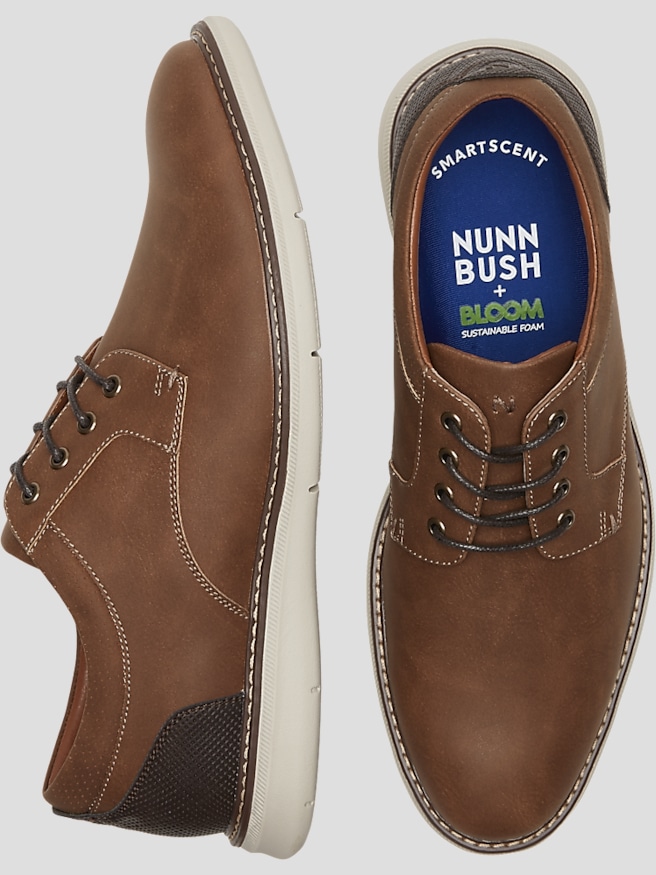
Men’s casual work sneakers bring a relaxed feel to everyday office clothing without making an outfit look unfinished. Their appeal is in the balance: the ease of a sneaker, paired with clean lines that sit comfortably alongside chinos, five-pocket pants, and more relaxed tailoring. In workplaces where the dress code allows sneakers, a low-profile shape and restrained detailing can make the difference between footwear that looks ready for a meeting and footwear that looks headed to the gym. Smooth leather, subtle stitching, and a sole that does not overwhelm the upper tend to create a polished impression. Black, brown, navy, gray, and off-white each offer different styling possibilities, whether the outfit is a knit polo with straight-leg trousers or a button-down shirt beneath an unstructured jacket. A dark sneaker can blend into the trouser line, while a lighter pair adds contrast without requiring a louder shirt or accessory. Pants with a clean hem allow the shoe’s shape to show; excess fabric bunching around the ankle can make even a streamlined sneaker look bulky. For an office with a slightly more tailored approach, men’s casual oxford sneakers offer a related look that draws on the familiar lace-up styling of traditional dress shoes. Casual work sneakers are especially useful for days that move between a desk, a walk to lunch, and an informal conversation with colleagues. They can also suit a shared workspace, a creative studio, or a business-casual setting where comfort matters but presentation still carries weight. The appropriate choice depends on the workplace: client-facing meetings may call for a quieter design, while a relaxed office may leave more room for texture or contrasting soles. Sneakers intended for office wear are not a substitute for footwear required by a job’s safety rules. A polished appearance alone does not establish slip resistance, protective construction, or suitability for a workshop or commercial kitchen. Their strongest role is as everyday footwear for environments where a casual shoe is welcome.
Materials and construction influence how casual work sneakers feel over a full day, not just how they look when first laced up. Leather uppers often provide a smooth surface and some structure, with natural creasing developing at flex points through wear. Suede has a softer, more textured appearance that works well with brushed fabrics and relaxed tailoring, though its surface benefits from different care than smooth leather. Textile and knit uppers may feel lighter and more flexible, with breathability depending on the fabric, lining, and overall design. Inside the shoe, a softly finished lining and well-placed padding can reduce distracting friction around the heel and ankle. Cushioning underfoot may make everyday walking more comfortable, but softness alone does not tell the whole story. A stable heel, a secure midfoot, and enough room through the toe area help a sneaker feel settled rather than loose or restrictive. The outsole also contributes to the experience: its thickness, flexibility, weight, and tread all affect how the shoe moves and feels against the floor. Rubber outsoles are common, though grip and wear characteristics vary by construction and surface. Fit deserves attention because a familiar shoe size does not guarantee the same feel across different shapes. Toes need space to rest naturally, the heel should remain secure during a normal stride, and laces should hold the foot without creating pressure across the top. The socks worn to work can change that balance, particularly when moving between thin dress socks and more cushioned everyday socks. For someone who alternates between sitting and walking throughout the day, a comfortable fit should remain comfortable beyond the first few minutes. A shoe that pinches across the forefoot or rubs at the heel is not necessarily going to become suitable simply through repeated wear. Removable insoles can be useful for those who use compatible personal inserts, but interior depth and fit still matter. Construction details such as even stitching, securely attached soles, and reinforcement around frequently stressed areas can also help indicate how thoughtfully a sneaker is made.
Keeping casual work sneakers presentable is largely a matter of treating the material appropriately and addressing everyday buildup before it becomes harder to remove. Dust along the welt, marks on a light-colored sole, and dingy laces can change the impression of an otherwise neat outfit. Smooth leather generally benefits from gentle cleaning with suitable products, followed by conditioning when recommended for that particular finish. Suede calls for a dedicated brush and material-appropriate treatment rather than the same routine used on polished leather. Textile uppers may have their own cleaning requirements, and machine washing should never be assumed safe simply because a shoe has fabric panels. The maker’s care directions remain the best reference for cleaning methods and protective treatments. Shoes that become damp during wear should dry naturally away from direct heat, which can affect some uppers, adhesives, and finishes. Allowing pairs to rest between wears gives interior moisture time to dissipate and reduces the strain of wearing the same shoes every day. Laces and insoles also deserve attention, since both contribute to comfort and the overall look. Durable footwear still shows wear over time, especially at the heel, toe, and points where the sole bends. Changes in tread, a compressed footbed, persistent rubbing, or a loosening sole can signal that the shoe no longer provides the same experience. For gifting, casual work sneakers can be a thoughtful choice for a man beginning a new office role, updating a business-casual wardrobe, or spending more of the day on his feet between meetings. The most useful pair reflects his actual routine rather than an imagined dress code. Someone who regularly wears navy chinos and knit shirts may appreciate a different color or texture than someone whose workday clothing centers on dark trousers and crisp button-downs. Knowing his usual size, preferred width, and taste for understated or more noticeable details makes the choice more personal. Whether chosen for a gift or an everyday wardrobe, the lasting appeal of men’s casual work sneakers comes from the combination of an office-appropriate appearance, a comfortable fit, and materials that respond well to regular care.