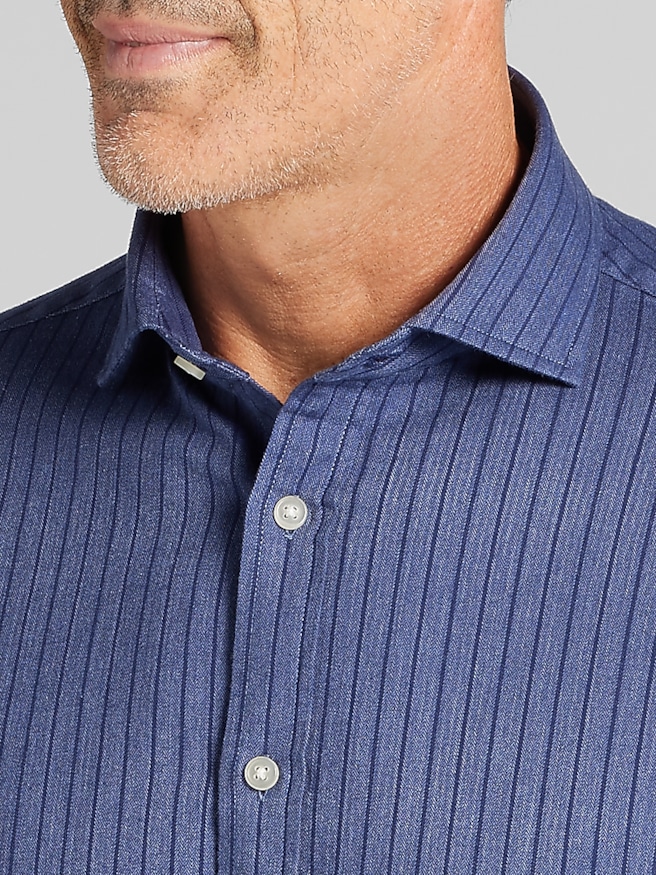
Men’s casual striped shirts include button-front styles, relaxed open-collar shirts, polos, and T-shirts, with patterns woven, knitted, or printed into fabrics such as cotton poplin, oxford cloth, linen blends, and cotton jersey. Stripes give these everyday shirts definition without requiring much else from an outfit. A fine blue-and-white stripe can look understated with dark jeans, while broader bands in contrasting colors create a stronger focal point over solid chinos. The direction, spacing, and color of the stripes all influence the effect. Narrow vertical lines often read as crisp and subtle; wider horizontal bands have a more relaxed, sporty character. Neither pattern needs to be reserved for a particular build, and overall fit usually matters more than any supposed rule about stripe direction. Tonal combinations, such as navy with a slightly lighter blue, offer texture from a distance, while high-contrast stripes remain noticeable across a room. For a casual office, a small-scale striped button-front shirt works naturally with unpatterned trousers and loafers. For a coffee stop, an afternoon gathering, or dinner with friends, a striped knit shirt and clean sneakers keep the look easy without feeling unfinished. Collar shape adds another distinction: a button-down collar holds its points in place, a spread collar creates a more open neckline, and a resort collar lies flat for a relaxed finish. A polo collar brings some structure to a knit shirt without making it feel like dress clothing. When a shirt is worn beneath an unstructured jacket, a restrained stripe can provide interest while letting the jacket remain the strongest element. Worn open over a solid crewneck, a striped button-front shirt takes on a more casual role. Keeping the surrounding pieces simple allows the pattern to do its work, whether the preference is a quiet pinstripe effect, evenly spaced bands, or a bolder arrangement of contrasting widths.
Fabric and construction help determine how a casual striped shirt feels through a full day of sitting, walking, reaching, and moving between plans. Cotton poplin has a smooth surface and a relatively crisp drape, making it well suited to shirts that look neat without much bulk. Oxford cloth has a more textured weave and a substantial hand that pairs comfortably with denim and chinos. Cotton jersey offers the flexibility and familiar softness associated with T-shirts, while piqué knits add a lightly textured surface often used in polos. Linen and linen blends can have a naturally irregular texture and an easy drape; visible creasing is part of their character rather than necessarily a sign of poor care. Blends containing synthetic fibers may improve shape retention or wrinkle resistance, though the exact feel depends on the fabric’s composition and construction. Stretch can make reaching and sitting more comfortable, but it does not replace adequate room through the chest, shoulders, and upper arms. A well-fitting woven shirt should button without pulling into little gaps across the front, and its shoulder seams should sit near the natural shoulder edge unless the cut is intentionally relaxed. A slim fit generally follows the torso more closely, while a classic or relaxed fit leaves more space for movement. Hem shape matters, too: shorter, straighter hems tend to look natural untucked, while longer curved tails are generally easier to keep tucked. Sleeve length changes both the look and the practical feel of an outfit. For additional coverage or a cuff that can be rolled neatly, men’s long sleeve striped shirts offer a useful variation on the same everyday pattern. Cuffs should close comfortably around the wrist without sliding far over the hand. With any sleeve length, an easy reach forward and a comfortable seated fit are better signs of suitability than a shirt that looks smooth only while standing still.
The lasting appeal of a striped shirt depends as much on everyday care as on the initial fit. The care label is the best starting point because cotton, linen blends, stretch fabrics, and decorative finishes can require different treatment. Where machine washing is permitted, washing with similar colors and avoiding unnecessarily harsh cycles can help preserve the fabric’s appearance. Turning a shirt inside out may reduce surface abrasion, especially on printed patterns, while prompt removal after washing helps limit deeply set wrinkles. Drying instructions deserve attention: excessive heat can contribute to shrinkage or affect stretch fibers, and a shirt that fits well before washing should not have to depend on stretching it back into shape afterward. Woven shirts often benefit from being smoothed along the placket, collar, and cuffs before hanging; knits should be dried and stored as directed to help maintain their shape. If ironing is appropriate, the recommended setting matters more than trying to force every fabric into the same crisp finish. Durability also shows up in details such as even stitching, secure buttons, tidy buttonholes, and seams that lie flat rather than twisting. Stripe alignment at visible joins can contribute to a clean appearance, although exact matching varies with the shirt’s construction. For travel, a pattern that coordinates with two pairs of pants and a plain layering piece can make a small wardrobe feel less repetitive. For regular office wear, subtle stripes bring variety to familiar combinations without demanding new accessories. As a gift, a casual striped shirt is most useful when its proportions, fabric feel, and colors reflect what the recipient already enjoys wearing. A favorite shirt’s size and fit label offer a better reference than size alone, since cuts vary. Someone who reaches for soft tees may appreciate a striped knit, while someone who prefers a defined collar may get more use from a woven style. The right choice feels recognizable enough to wear often, with just enough pattern to make an ordinary outfit feel considered.