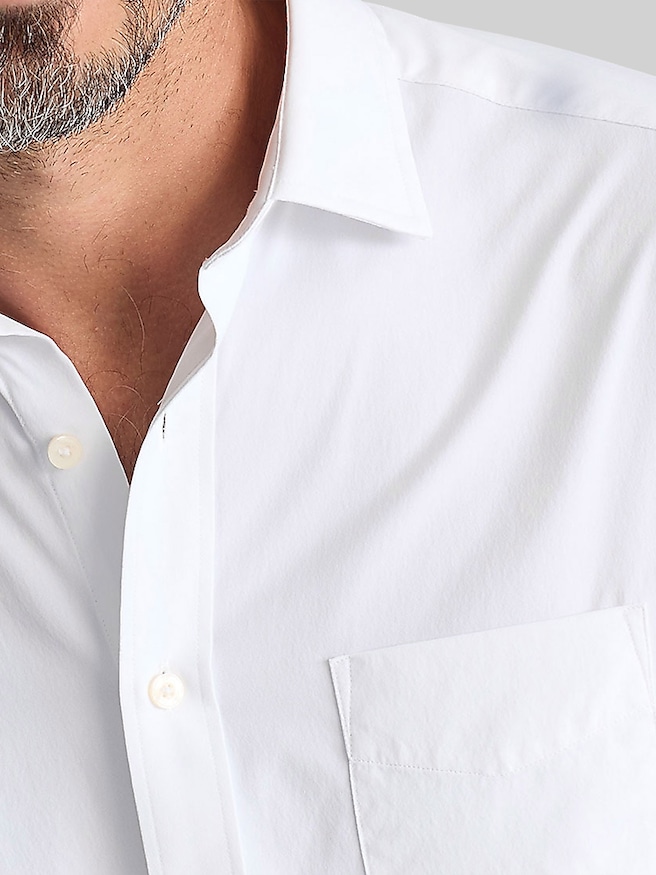
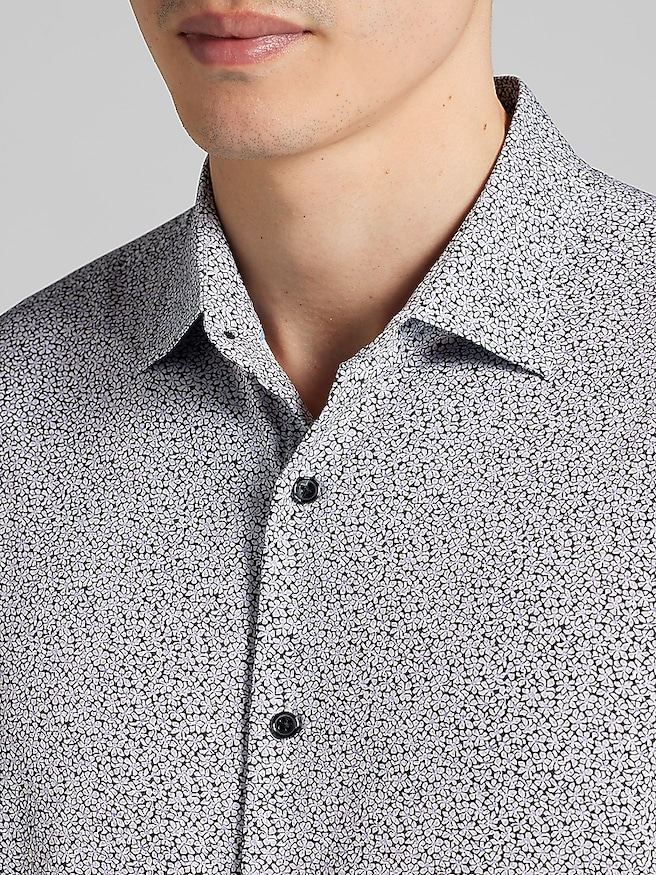
Men’s casual button-down shirts bring the structure of a collared shirt to everyday clothing, with fabrics, patterns, and fits that feel at home with jeans, chinos, and casual trousers. The term often describes casual button-front shirts generally, although a true button-down has small buttons securing the collar points to the shirt. That detail keeps the collar neatly positioned without requiring a tie, making it useful for relaxed office settings, dinner plans, and weekends spent out and about. Fabric gives each shirt much of its character. Cotton Oxford cloth has a subtly textured weave and a substantial feel that suits repeated everyday wear. Poplin has a smoother surface and a generally lighter feel, while twill’s diagonal weave adds texture and can give the fabric a softer drape. Chambray offers the visual depth of contrasting yarns without necessarily having the weight of denim. Linen has a distinctive, slightly irregular texture, and its natural creasing is part of its relaxed appearance rather than a flaw to eliminate. Cotton-linen blends can balance that texture with a smoother hand, while blends containing stretch fibers provide additional give when reaching, sitting, or moving through a busy day. Fiber content alone does not determine quality or comfort: weave, fabric weight, finishing, and construction all contribute. A tightly woven lightweight shirt can feel crisp, while a heavier washed cotton can feel soft from the start. Secure stitching, neatly finished seams, and firmly attached buttons are practical details that support durability. At points that receive repeated stress, such as cuffs and pocket corners, sound construction matters as much as the fabric itself. Within the broader category of men's casual shirts, button-downs offer a middle ground between the ease of a T-shirt and the more formal appearance of a dress shirt. Their appeal comes from that balance: enough definition to look intentional, with room for personal preferences in texture, color, and silhouette.
Fit determines whether a casual button-down looks comfortably relaxed or simply oversized. Shoulder seams generally sit near the outer edge of the shoulders, and the chest should have enough ease for the fabric to lie smoothly without pulling between the buttons. A shirt that looks fine while standing still may feel restrictive when the wearer reaches across a table or settles into a desk chair, so movement is an important part of fit. Slim fits usually follow the torso more closely, regular fits allow more room through the chest and waist, and relaxed fits provide a fuller silhouette, though these labels vary by maker. Measurements are a more dependable reference than the name of a fit alone. For long sleeves, cuffs should sit around the wrist without swallowing the hand, and the sleeves should allow the elbows to bend comfortably. Short sleeves look balanced when their openings do not pinch the upper arms or project too far away from them. Shirt length also affects how the garment works with the rest of an outfit. A hem intended for untucked wear generally offers enough coverage through everyday movement without extending so far that it overwhelms the trousers. Longer, curved shirttails tend to stay tucked more securely, while straighter or gently curved hems often suit an untucked look. Neither approach needs to look fussy. A solid cotton shirt tucked into chinos with a simple belt can suit a casual workplace, while a checked shirt worn untucked with straight-leg jeans feels natural for lunch or an evening gathering. Smaller checks and narrow stripes create a quieter pattern; larger checks and bolder prints become more prominent parts of an outfit. Pairing a patterned shirt with solid-colored trousers keeps the combination visually clear. Worn open over a plain T-shirt, a button-front shirt takes on an easier feel. Under a sweater, a neatly positioned collar and smooth sleeves help prevent bunching. The best proportions leave enough room for the intended layers without making the shirt look loose when worn on its own.
Everyday usefulness also depends on how a shirt fits into an existing routine. Someone who moves between a desk, errands, and dinner may prefer a restrained pattern and fabric that maintains a tidy appearance through repeated sitting and standing. For travel, ease of care and the fabric’s tendency to crease can matter more than a particularly crisp finish. Shirts described as wrinkle-resistant may still need light pressing, and performance claims should be understood according to the individual garment’s care information. Care labels remain the starting point for laundering because cotton, linen, stretch blends, dyes, and finishes can respond differently to washing and heat. Washing with similar colors, addressing stains promptly, and avoiding unnecessarily high dryer temperatures can help preserve appearance and fit. Removing a shirt promptly after drying and smoothing the collar, placket, and cuffs can reduce the amount of pressing needed. When ironing is appropriate, the temperature should match the fabric, with particular care around stretch fibers and decorative details. Hanging a clean shirt with enough space around it helps limit compression creases, while checking occasionally for loose buttons can prevent a small repair from becoming a larger inconvenience. Casual button-downs can also make thoughtful gifts for a father, brother, partner, friend, or recent graduate building an everyday wardrobe. A familiar shirt size is helpful, but preferred fit, sleeve length, and typical wearing habits make the choice more personal. Someone who consistently wears solid neutrals may get more use from a subtle texture than a large print, while someone comfortable with checks or stripes may appreciate a pattern with similar scale and color. For birthdays, graduations, or other personal milestones, the strongest choice is a shirt that feels connected to the recipient’s actual life. Comfortable movement, dependable construction, manageable care, and a style that works with familiar trousers are what turn a casual button-down into a shirt reached for repeatedly.