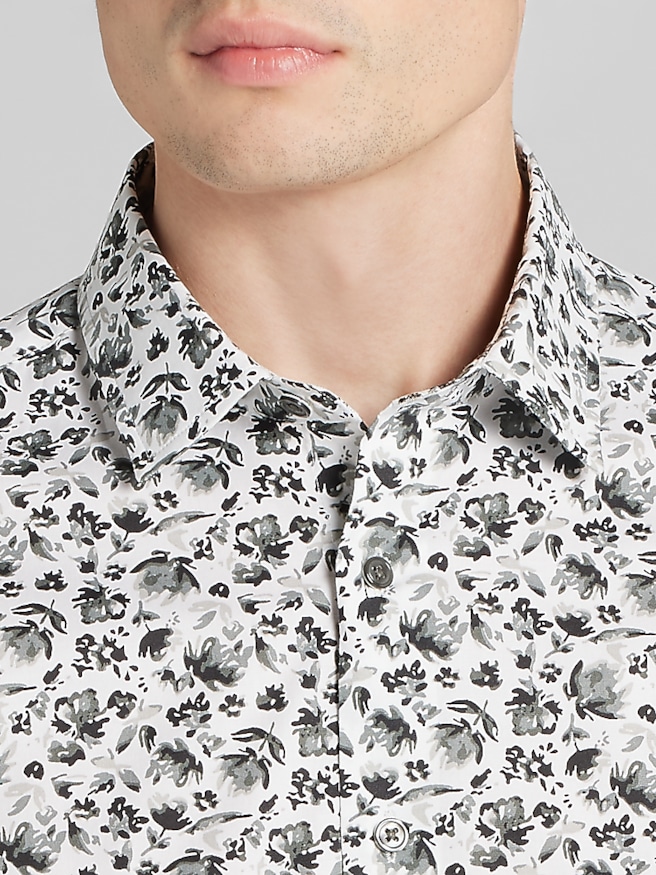
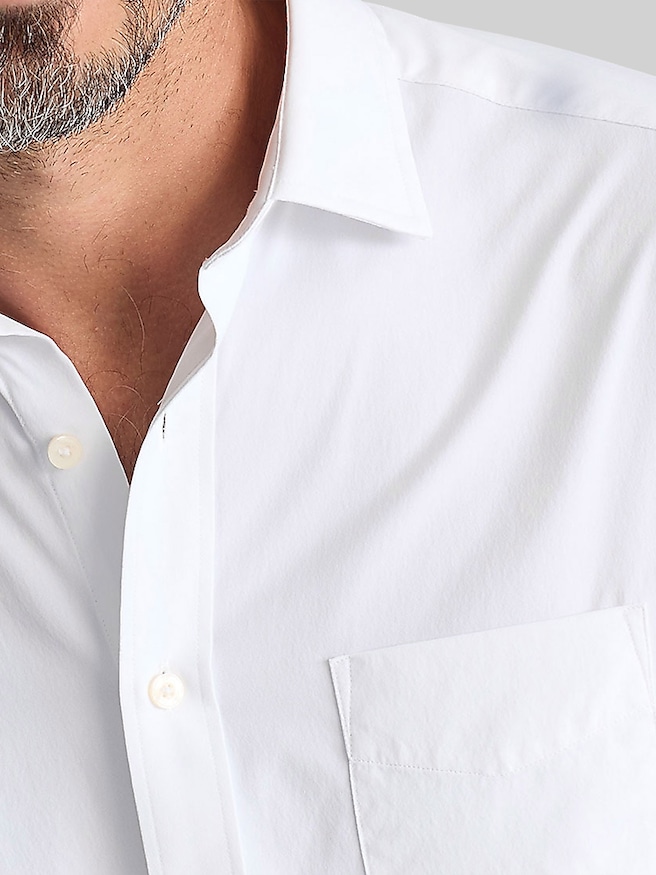
Men's button-up fashion spans polished dress shirts, textured casual shirts, and relaxed styles that work as light layers over a T-shirt. What connects them is a full front opening secured with buttons, a detail that makes the shirt adaptable across workdays, dinners, celebrations, and everyday plans. A button-down is a type of button-up shirt with small buttons fastening the collar points to the shirt; the terms describe different features rather than two entirely separate categories. That distinction helps explain the range of looks within button-up dressing. A button-down collar has a grounded, slightly sporty appearance, while a spread or point collar can create a more tailored finish. A crisp white shirt with dark trousers feels deliberate without needing much decoration, and a blue Oxford with chinos has an approachable character suited to an office lunch or a casual gathering. Stripes, checks, and small geometric patterns introduce personality while remaining easy to coordinate with solid pants. Larger prints make the shirt the focal point, especially when the rest of the outfit stays simple. Details such as a chest pocket, a visible button placket, contrasting buttons, or a softly structured collar also influence how dressed up a shirt appears. Smooth fabrics and restrained details generally read as more formal, while visible texture and relaxed construction lean casual. Long sleeves offer several styling possibilities, from neatly buttoned cuffs beneath a jacket to a deliberate roll at the forearm. Short sleeves create a cleaner alternative to a polo or T-shirt when a collared look is preferred without the structure of a dress shirt. For someone moving between a desk, a dinner reservation, and a weekend get-together, the appeal is that a familiar silhouette can feel distinct through fabric, fit, and styling rather than elaborate outfit changes. Even a subtle change from a fine stripe to a textured solid can shift the mood while keeping the overall outfit familiar and uncomplicated.
Fabric and fit shape how a button-up shirt looks after several hours of actual wear, not just when it is first buttoned. Cotton is a familiar choice for its breathable feel and range of textures, from smooth poplin to more substantial Oxford cloth. Poplin has a fine, even surface that sits neatly beneath tailoring, while Oxford's basket weave gives it a textured appearance that works comfortably with denim and chinos. Twill has a diagonal weave and often a softer drape, making it useful when a shirt needs polish without a particularly crisp feel. Linen brings visible texture and a relaxed character, with natural creasing that is part of its appearance. Lyocell can contribute fluid movement and a smooth hand, while cotton blends may include synthetic fibers for easier maintenance or elastane for added stretch. Performance features vary by fabric and finish, so terms such as moisture-wicking, wrinkle-resistant, and stretch describe separate qualities rather than interchangeable benefits. A shirt can stretch without resisting wrinkles, and a wrinkle-resistant shirt still needs appropriate care. Fit is equally specific. Slim cuts generally sit closer through the torso, classic cuts provide more room, and relaxed silhouettes create a looser outline, though measurements vary across designs. A well-proportioned fit allows the button placket to lie flat without pulling when seated or reaching forward. Shoulder seams should sit near the natural shoulder, and long-sleeve cuffs should meet the wrist without swallowing the hand. The collar needs enough room to close comfortably if worn with a tie. For untucked wear, a shorter hem keeps the shirt from overwhelming the pants; longer tails are better suited to staying secured inside a waistband. These proportions matter beneath a sport coat as well, where excess fabric can bunch around the waist or sleeves. For broader shoulders, a fuller midsection, or a longer torso, the most useful fit is the one that balances those proportions rather than relying on the cut name alone. That balance lets the shirt move naturally while keeping its intended shape.
The strongest button-up outfits usually have a clear relationship between the shirt, the pants, and the level of formality. A patterned shirt paired with solid trousers gives the eye a place to settle, while a solid shirt leaves more room for a textured jacket or distinctive footwear. Dark denim and an untucked button-up can suit a casual dinner; tailored trousers, a tucked hem, and leather shoes bring more structure to a business presentation or graduation celebration. An open button-up over a plain crewneck creates a relaxed layer, especially when the undershirt has a close neckline and the shirt itself has enough room to hang cleanly. These combinations connect naturally with the broader looks featured in Men's Fashion, where small changes in texture and proportion can make familiar pieces feel personal. Keeping that appearance intact depends on care as much as styling. The garment label should determine washing temperature, drying method, and whether ironing or professional cleaning is appropriate. Prompt removal from the washer or dryer can help limit set-in creases, while careful smoothing of the placket and collar supports a neat finish. Some fabrics respond well to steam; others need an iron used at the correct setting. Wrinkle-resistant finishes reduce maintenance but do not make a shirt immune to creasing. Durability also comes from details such as secure buttons, even seams, and reinforcement at areas that receive repeated stress. A loose button repaired early is a small fix that can prevent an inconvenient wardrobe problem later. For gifting, button-up shirts suit birthdays, graduations, and career milestones when the recipient's size, preferred fit, and daily routine are known. Someone who regularly wears a tie may appreciate a structured collar, while someone who favors jeans may get more use from a softly textured, untucked style. The best match feels comfortable in both fit and personality, earning a place in the regular rotation rather than waiting for a single occasion.