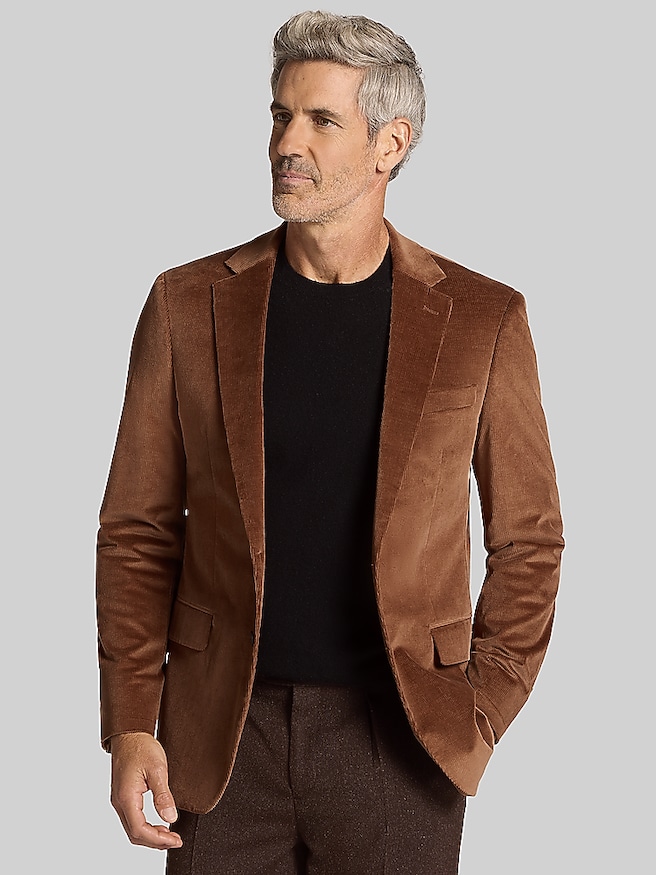
Men’s corduroy shirts bring a distinctive, touchable texture to everyday dressing, with raised ribs that give the fabric depth without relying on a bold print. Those ribs, known as wales, are the defining feature of corduroy: narrow wales create a finer, more understated surface, while wider wales make the texture more noticeable. The spaces between the ribs also affect how the fabric catches light, so even a solid-colored shirt can have subtle variations in tone as it moves. Cotton is a common foundation for corduroy, valued for its soft feel and familiar comfort, though fabric blends can influence stretch, shape retention, and care requirements. A small amount of stretch may make reaching, sitting, and bending more comfortable, while the weight and construction of the cloth help determine whether a shirt feels light and flexible or more substantial. Corduroy’s character sits comfortably between rugged and refined. It has enough visual interest to make a simple outfit feel considered, yet its familiar button-front shape keeps it approachable for everyday use. A fine-wale shirt can work well with chinos for a casual workplace, while a more pronounced rib gives denim a relaxed, textured companion. Workplace expectations still matter; corduroy generally suits settings where casual shirts are welcome rather than occasions that call for formal dress. Details such as a button-down collar, chest pockets, or a clean front can shift the overall impression, making the same fabric feel more structured or more laid-back. Color plays a part, too. Navy, charcoal, and earthy shades offer straightforward pairing possibilities, while a richer color can become the focal point of an otherwise simple outfit. Within the broader category of Mens Casual Shirts, corduroy stands out for adding dimension through the fabric itself. It appeals to anyone who appreciates an easygoing shirt with a little more character than a smooth woven surface, whether the day includes a casual meeting, a neighborhood lunch, or dinner with friends.
Fit makes a noticeable difference in how a corduroy shirt looks and feels, particularly because its textured fabric can have more body than a lightweight woven shirt. Shoulder seams should sit close to the natural shoulder point in a conventional fit, and the front should button comfortably without pulling across the chest or creating gaps between buttons. Enough room through the back and upper arms helps preserve easy movement when reaching for a bag or sitting at a desk. A closer fit can create a neat outline, but it should not come at the expense of comfortable movement; a relaxed fit offers more room without needing to look oversized. For a shirt intended to be worn open over a T-shirt, space through the chest and sleeves matters as much as the size marked on the label. Comparing garment measurements with a shirt that already fits well can be more useful than assuming every cut will feel the same. Length and hem shape also influence how a shirt works in an outfit. A shorter, straighter hem often looks natural untucked, while a longer curved hem can provide enough coverage to stay tucked when sitting or reaching. Corduroy’s surface adds visual weight, so balanced proportions help: a roomy shirt can pair comfortably with straight-leg pants, and a trimmer shirt can create a clean line with tapered chinos. Smooth fabrics make an especially useful contrast. Dark denim, a plain cotton T-shirt, or understated twill pants let the ribs remain visible without making the outfit feel busy. Wearing corduroy with another pronounced texture can work, though keeping the colors related helps the pieces feel connected. Cuffs that close neatly, a collar that sits comfortably, and pockets that lie flat are small details with an outsized effect on the finished look. The result should feel natural rather than overly arranged: sleeves worn down for a casual appointment, an open collar for a restaurant meal, or a shirt left unbuttoned over a simple base layer for an unstructured day.
Corduroy’s lasting appeal also depends on thoughtful care. Its raised surface can collect lint, show pressure marks, or develop flattened areas where the fabric experiences repeated friction, so the care label is the best starting point for maintaining its appearance. For machine-washable shirts, turning the garment inside out and washing it with compatible colors can help protect the face of the fabric. A gentle cycle may be appropriate when the label allows it, and avoiding an overloaded washer gives the shirt room to move without being tightly compressed against other garments. Drying instructions deserve equal attention, since cotton-rich fabrics may shrink and some blends have specific handling requirements. Removing a shirt promptly when the recommended drying cycle ends can help limit deep creases. A hanger that supports the shoulders without stretching them offers a practical way to store the shirt between wears. Pressing directly onto the ribs can flatten their texture; if the label permits ironing, working from the reverse side with suitable settings helps protect the surface. Light steaming may also be an option when approved for the fabric. For lint removal, a gentle approach is preferable to aggressive brushing that could disturb the pile. Durability comes from the fabric and construction together, including secure buttons, sound seams, and reinforcement at areas that receive regular stress. Over time, cotton corduroy can soften and develop a more lived-in appearance, though that character is distinct from damage such as thinning elbows or fraying edges. Rotating shirts and addressing a loose button early can help keep everyday wear from becoming unnecessary strain. A corduroy shirt can also make a thoughtful gift for a father, brother, partner, or friend who enjoys relaxed clothing with tactile detail. Familiar sizing, preferred colors, and whether the recipient typically wears shirts tucked or untucked provide useful clues. An understated shade and a comfortable cut can fit naturally into an established wardrobe, giving the recipient something recognizable in shape but distinctive in feel.