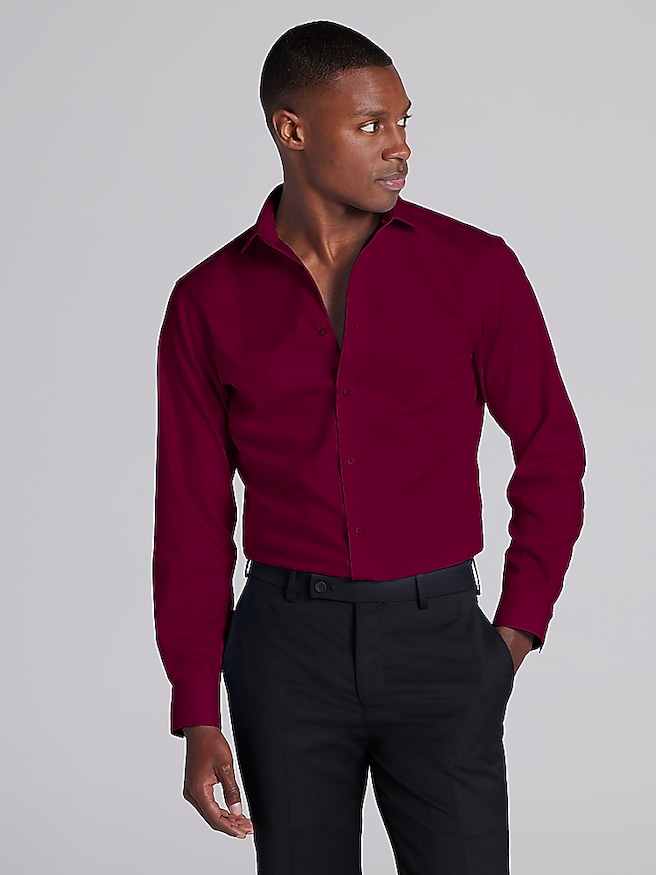
Men's burgundy dress shirts bring a rich, wine-red tone to tailored outfits, offering a distinctive alternative to white, light blue, and brighter red. The color has enough depth to feel understated beneath a charcoal suit, yet enough character to stand on its own with gray dress pants. Burgundy generally sits on the darker side of the red family, although the balance of red, purple, and brown varies from fabric to fabric. That variation matters: a muted wine shade creates a softer contrast with navy, while a more saturated burgundy becomes the focal point of an outfit. Fine texture can add dimension without introducing a visible pattern, and a smooth finish keeps the overall impression crisp. In a workplace that allows richer shirt colors, a burgundy dress shirt with a charcoal jacket and dark brown shoes makes a polished combination for a client dinner or an evening presentation. For a wedding reception or anniversary dinner, the same color can bring depth to a dark suit without relying on a bold print. A solid shirt also leaves room for a patterned tie, particularly when the pattern repeats a compatible neutral or a subtle touch of burgundy. Charcoal, navy, and restrained silver-gray accessories keep the palette controlled; a white pocket square adds a clean point of contrast rather than matching every element. An open collar gives the shirt a more relaxed character when a tie is not expected, especially with tailored trousers and a jacket that has a little texture. The occasion's dress code still comes first, since a dark-colored shirt is not a substitute for prescribed formal attire. For comparison across the wider color family, men's red dress shirts offer another way to explore how muted and brighter reds affect an outfit. Burgundy's appeal is its balance: noticeable color, grounded by depth that works naturally with familiar tailoring.
Fabric and fit determine how a burgundy dress shirt feels through a full day and how neatly it sits beneath a jacket. Cotton has a familiar soft hand and breathability, with the finished feel influenced by the weave and fabric weight. A smooth poplin can look clean and precise, while twill's subtle diagonal texture adds visual depth and often has a supple drape. Cotton blends may offer easier maintenance or improved wrinkle resistance, depending on their construction and finish. A small amount of stretch can make reaching for a briefcase or sitting through a long dinner more comfortable, but stretch works best alongside the right size rather than compensating for a shirt that is too tight. Performance-oriented fabrics can have features such as moisture management or added flexibility; those qualities depend on the individual garment and should be checked in its description. Fit names such as slim, modern, and classic describe general silhouettes, not universal measurements. A slim cut usually follows the torso more closely, while a classic cut typically provides more room through the chest and waist. The shoulder seam should sit near the edge of the shoulder, and the front placket should lie flat without pulling between buttons. Enough room at the neck allows the collar to close comfortably with a tie, while sleeves should reach the wrist without covering the hand. For a tucked-in look, shirt length matters as much as chest size: sufficient length helps the hem stay in place when sitting, standing, or lifting an arm. Collar shape changes the shirt's character, too. A spread collar leaves space for a fuller tie knot, while a point collar creates a narrower frame. Button cuffs suit many everyday dress outfits; French cuffs create a more dressed-up finish and require cufflinks. These details let the same burgundy color read as businesslike, understated, or celebratory, with the final effect shaped by the wearer's proportions and the rest of the outfit.
Care helps preserve the depth of burgundy fabric and the clean lines that make a dress shirt look polished. The care label is the starting point because cotton, blends, stretch fabrics, and special finishes can require distinct treatment. When machine washing is permitted, washing with similar dark colors and using the recommended water temperature can help limit unwanted color transfer and fading. Turning the shirt inside out may reduce surface abrasion, while prompt attention to collar and cuff marks helps keep everyday buildup from becoming harder to remove. Stain treatments should be suitable for colored fabric and tested in an inconspicuous area before broader use. High heat can be tough on both color and elastic fibers, so drying and pressing temperatures should follow the garment's instructions rather than a single routine for every shirt. Removing a shirt promptly after an approved drying cycle can reduce deep creases; smoothing the placket, collar, and cuffs before hanging also makes the next wear easier. Wrinkle-resistant finishes can simplify upkeep, but they do not necessarily eliminate every crease or replace proper care. Durability also comes from construction: even stitching, secure buttons, neatly finished seams, and a collar that holds its shape are useful details to consider. A shirt that fits comfortably is less likely to strain at the elbows, chest, and buttonholes during ordinary movement. Between wears, a supportive hanger and enough closet space help prevent crushing around the shoulders and collar. Burgundy dress shirts can also make thoughtful gifts for someone building a professional wardrobe, celebrating a graduation, or enjoying occasions that call for tailored clothing. Knowing the recipient's neck and sleeve measurements, preferred silhouette, and care habits makes the choice more personal and practical. For someone who already wears navy or charcoal tailoring, burgundy introduces color without requiring a completely new set of shoes, ties, and trousers. That compatibility gives the shirt a useful place in a wardrobe built around repeat wear rather than a single occasion.