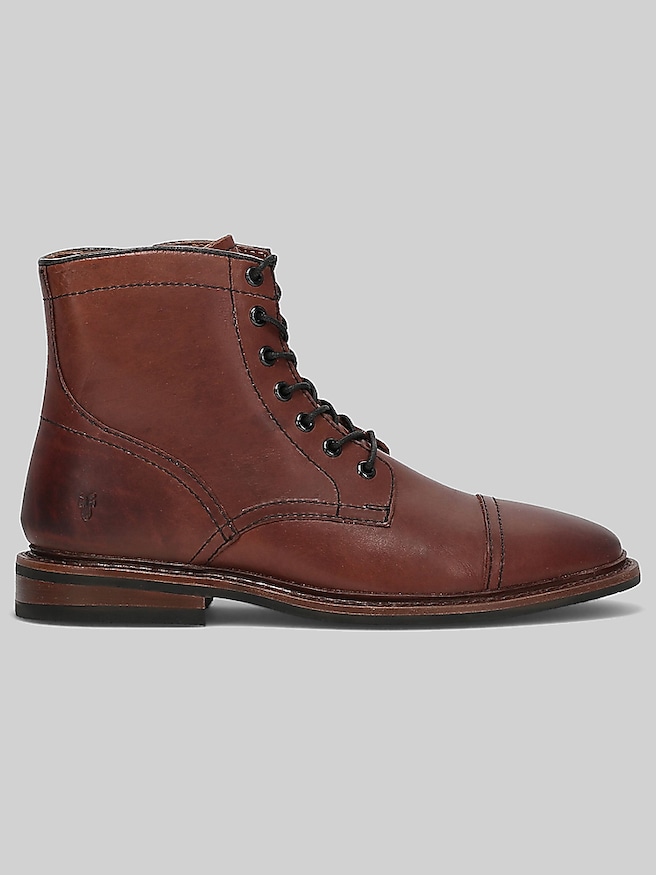
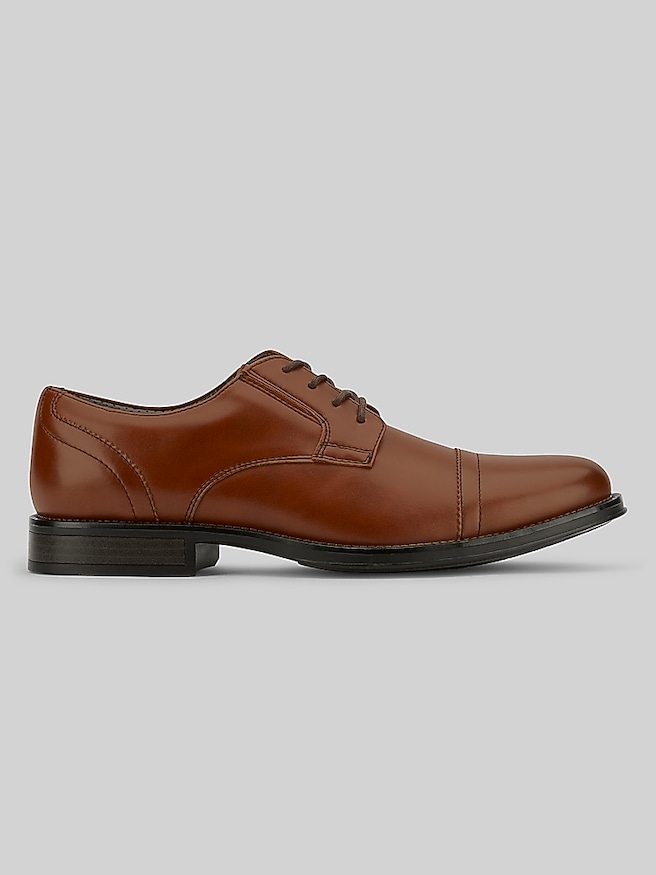
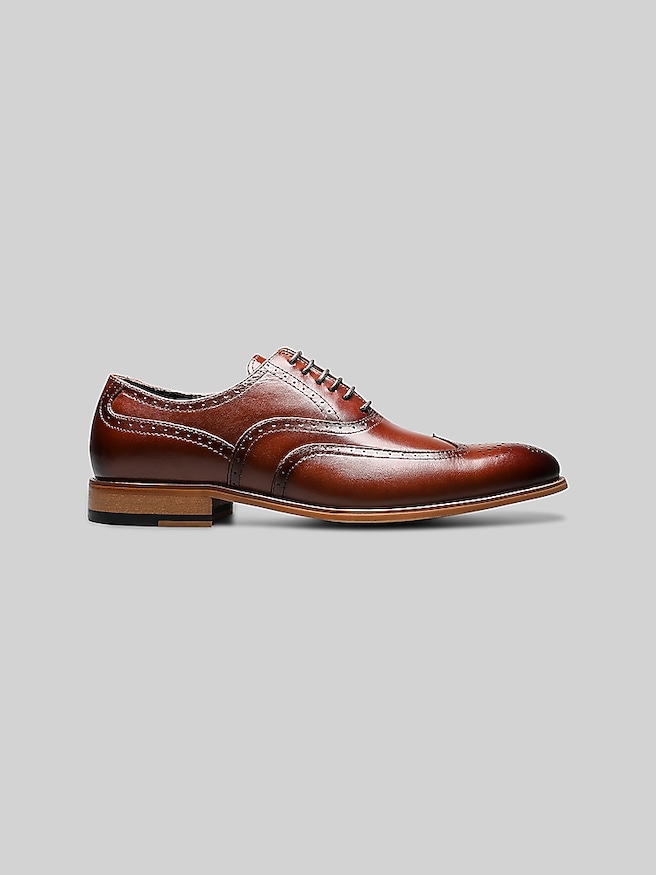
Men’s brown wingtips are dress shoes defined by a wing-shaped toe cap, with a central point and two sweeping edges that extend back along the sides of the foot. Most feature brogue detailing: decorative perforations, often paired with serrated edges, that trace the leather seams and give the shoes their distinctive texture. The wingtip describes the shape of the toe cap, while broguing describes the punched decoration; together, they create a familiar style that brings character to tailored clothing without relying on bold color. Brown adds warmth, whether the shade is pale tan, reddish chestnut, medium walnut, or deep espresso. Lighter tones make the detailing more noticeable and feel at home with chinos and textured jackets, while darker browns create a quieter transition from suit trousers to shoes. A navy suit with dark brown wingtips is a dependable combination for business meetings, daytime weddings, and dressier dinners. Medium brown works especially well with gray flannel, olive trousers, and earth-toned sport coats, where the leather’s warmth complements the fabric rather than competing with it. For a more relaxed setting, dark, clean-finished denim and a soft-shouldered blazer give wingtip shoes a useful role beyond the office. The shape and construction matter as much as the color. Oxford wingtips have closed lacing, with the lace tabs stitched beneath the front section of the upper, creating a neat, compact appearance. Derby wingtips use open lacing, with tabs attached on top, which can provide more adjustment across the instep. Neither construction guarantees a particular fit, but each changes the shoe’s appearance and feel. A streamlined dark brown Oxford generally looks dressier than a broad-toed Derby with a substantial sole. Brown wingtips suit many polished occasions, though traditional black-tie dress usually calls for black formal footwear instead. Their strength lies in that space between understated business dressing and smart casual clothing, where a little texture makes an outfit feel considered.
Materials, proportions, and fit determine how brown wingtip shoes perform once the day gets moving. Smooth leather provides a crisp surface for brogue detailing and can develop a mellow patina with repeated wear and appropriate care. Full-grain leather retains its natural grain, while corrected-grain leather has been treated for a more uniform surface; either description tells only part of the story, since tanning, finishing, stitching, and overall construction also influence longevity. Suede offers a softer, matte appearance that pairs naturally with corduroy, wool trousers, and knitwear during the cooler months, although it needs its own cleaning methods. For a closer focus on this classic material and silhouette, Leather Wingtip Shoes bring together the visual appeal of shaped toe caps and decorative seams. Underfoot, leather soles can create a slim, traditional profile, while rubber soles may offer useful traction and cushioning, depending on their tread and composition. A discreet rubber outsole can be practical for someone walking from a parking garage to an office or spending much of a reception standing on hard flooring. Fit should feel secure at the heel and supportive through the midfoot without squeezing the toes. The widest part of the foot should sit near the widest part of the shoe, and a pointed or elongated toe should leave space beyond the toes rather than push them together. Try dress shoes with the socks intended for regular wear, preferably later in the day when feet may be slightly fuller. Walk, turn, and pause long enough to notice pressure over the instep or rubbing at the heel. Leather may soften, but a shoe that pinches or compresses the toes should not be treated as a break-in project. Anyone using an orthotic should also consider interior depth and whether the footbed is removable. For long workdays, the right width and stable footing matter more than a sleek silhouette alone.
The most useful pair of brown wingtips is one that fits naturally into an existing wardrobe and receives consistent care. A professional who wears navy and gray tailoring several days a week may get the most use from a deeper brown with restrained burnishing and a moderately shaped toe. Someone whose routine centers on chinos, button-down shirts, and occasional jackets may prefer a warmer shade and a slightly sturdier sole. Matching a brown belt reasonably closely to the shoes helps create continuity, but an exact color match is not necessary; similar depth and undertone usually look more natural than forcing every leather accessory to be identical. Trouser length also affects the result. A clean hem with little excess fabric lets the wingtip pattern show, while heavy bunching can obscure the shoe’s shape. As a gift for a graduate, a new professional, or someone refreshing a dress wardrobe, brown wingtips can mark a meaningful milestone, provided the recipient’s size, width, and style preferences are known. Their lasting appeal depends partly on what happens after each wear. Brush away surface dust with a soft horsehair brush, paying attention to the seams and perforations where debris can collect. For smooth leather, use a suitable conditioner sparingly when needed, then apply compatible cream or polish according to the leather finish and care directions. Avoid packing product into the decorative holes, and test any treatment in an inconspicuous area first. Suede should be brushed with an appropriate suede brush rather than treated with smooth-leather polish. If shoes become damp, let them dry at room temperature away from radiators and other direct heat. Cedar shoe trees can help maintain shape and absorb residual moisture between wears, while rotating pairs gives linings time to dry. During wet or wintry weather, remove road-salt residue promptly using a method suited to the material. Check heel edges and soles periodically, since timely attention to wear can protect the shoe’s structure. With a comfortable fit, thoughtful outfit pairings, and straightforward upkeep, brown wingtips can remain a dependable part of everyday dress.