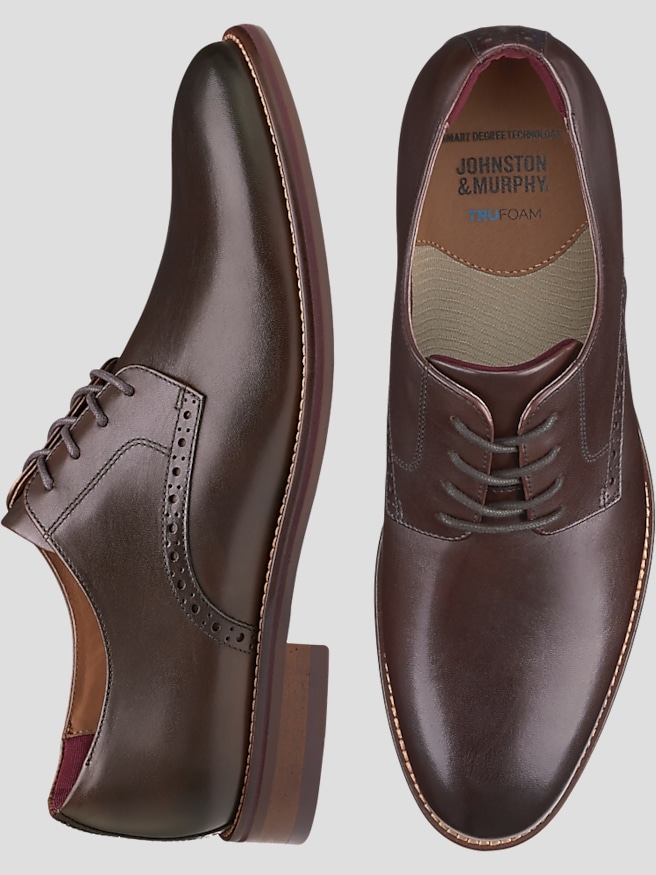
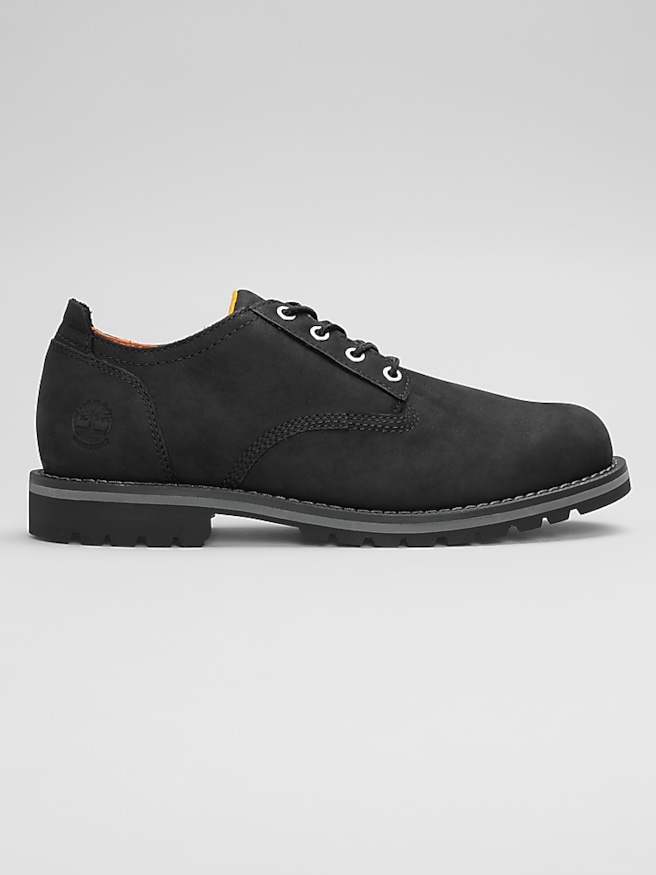
Men's brown oxford shoes bring a clean, tailored finish to an outfit without the stark contrast of black footwear. Their defining detail is closed lacing, with the eyelet sections stitched beneath the vamp to create a neat profile across the top of the foot. That construction gives the oxford its dressier character, whether the design has a smooth plain toe, a defined cap toe, or decorative perforations. Brown adds another layer of choice: deep chocolate shades feel understated with a charcoal suit, medium brown complements navy, and lighter cognac tones stand out against blue or stone-colored trousers. The effect depends as much on the finish as the shade. Smooth, polished leather has a crisp appearance suited to client meetings, wedding ceremonies, and dinners where a jacket feels appropriate. Suede offers a softer texture that works especially well with tailored separates and less formal dress codes. A simple toe keeps attention on the shape of the shoe, while brogue detailing adds visual interest along the seams and toe. Neither approach needs an elaborate outfit to look considered. Navy trousers, a light blue shirt, and a brown belt in a similar color family can give the shoes enough context without matching every accessory exactly. With a suit, the trouser hem should leave the shoe's shape visible rather than gathering heavily over the laces. With chinos, a tapered leg helps preserve the oxford's clean proportions. Brown oxfords can also complement dark, un distressed denim when the rest of the outfit is equally tidy, though their closed-lacing silhouette remains more formal than many casual shoes. For men who move between office attire and dressed-up social occasions, that balance makes them useful beyond a single event. They offer a polished finishing touch for a presentation, a family celebration, or an evening reservation, while leaving room for individual preferences in color, texture, and detailing. The best choice is often the one that looks at home with the trousers and jackets already worn most often.
Fit matters as much as appearance, particularly with an oxford's relatively close-fitting lacing system. A comfortable pair should hold the heel securely, support the foot through the midsection, and leave enough room for the toes to rest naturally without pressing against the front or sides. The laces should secure the shoe without creating uncomfortable pressure across the instep. Because closed lacing offers less adjustment than an open-laced design, foot width and instep height deserve attention alongside the size marked inside the shoe. A longer size is not necessarily a solution for a shoe that feels too narrow; it can introduce heel movement while leaving the original pressure unresolved. Trying on dress shoes with the type of socks normally worn with them gives a more realistic sense of fit. Walking a few steps can reveal whether the heel slips, the forefoot feels cramped, or a seam presses against the foot. Leather may soften with wear, but a good fit should not depend on enduring pain while the shoe changes shape. Materials and construction also influence how the shoes feel over a full day. Leather uppers can develop creases and a patina that reflect regular use, while suede has a softer surface that requires its own care routine. Non-leather materials have different cleaning needs and should be treated according to their care instructions. Inside, smooth linings, comfortable footbeds, and well-finished seams can make a noticeable difference during a long meeting or a wedding reception spent standing and walking. Sole choice affects the experience, too. Leather soles contribute to a traditional dress-shoe profile, while rubber soles can provide additional grip and cushioning, depending on their design. Some stitched constructions may allow resoling, although repair options depend on the shoe and should be confirmed with a qualified cobbler. For frequent use, sturdy construction and a comfortable shape often matter more than decorative details that only catch the eye at first glance.
Regular care helps brown oxfords maintain the finish that makes them look sharp with tailored clothing. Dust and surface grit are best removed before polishing, using a soft cloth or an appropriate brush so particles are not worked into the upper. Smooth leather benefits from compatible conditioning and polishing products, applied sparingly and tested in an inconspicuous area first. Brown finishes vary, and a polish that is noticeably darker than the upper can change the appearance of the shoe, especially along seams and creases. A suitable neutral product may be an option when preserving the original shade is the priority, provided it is recommended for that leather. Suede needs a different approach: a suede brush and a cleaner intended for the material help maintain its nap without coating it in conventional shoe polish. Care instructions should always take precedence, particularly for coated finishes and non-leather uppers. After cleaning, shoes should dry naturally away from direct heat. Shoe trees can help preserve their shape between wears, and using a shoehorn reduces unnecessary stress on the heel counter when putting them on. Rotating footwear also gives the lining time to air out rather than putting the same pair through continuous use. Small repairs deserve attention before they become larger problems; worn heel edges or damaged soles can affect both appearance and how the shoe feels underfoot. These practical details are especially valuable for someone who wears dress shoes several days a week. Brown oxfords can also make a thoughtful gift for a father, partner, brother, or graduate building a professional wardrobe, with the recipient's usual shoe size, width, and style preferences providing a useful starting point. Someone who favors quiet tailoring may appreciate a dark, minimally detailed look, while a wearer drawn to more expressive footwear might also consider Brown and White Oxford Shoes for a distinct two-tone interpretation. Whether chosen for everyday business attire or meaningful celebrations, brown oxfords work best when their fit, finish, and construction support the way they will actually be worn.