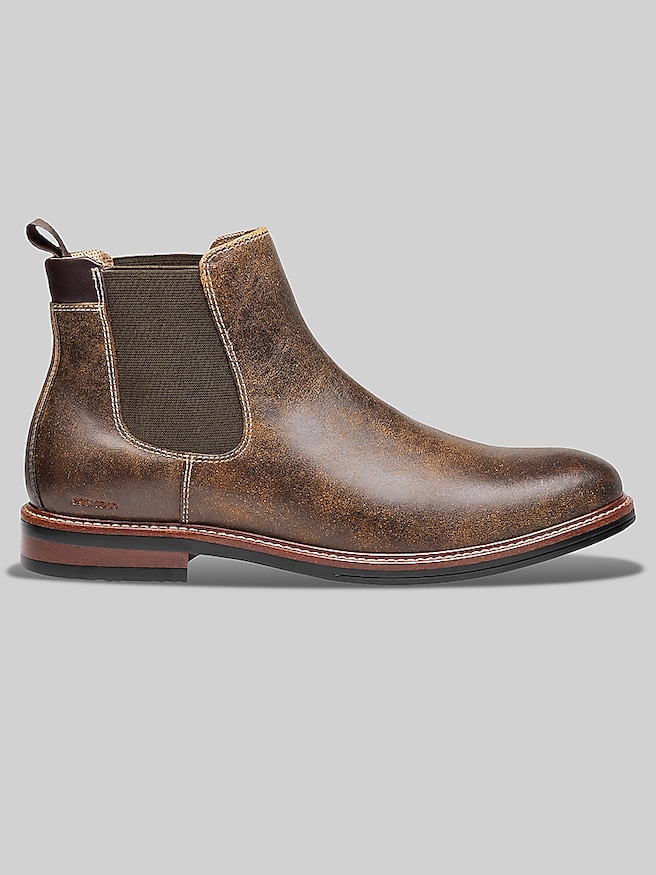
Men's brown Chelsea boots are ankle-high, pull-on boots with elastic side panels and a clean, lace-free profile. Their appeal comes from that combination of simplicity and versatility: the same understated shape can complement dark denim, cotton chinos, or tailored trousers without looking overly rugged or overly formal. Brown adds depth to the silhouette, with shades ranging from golden tan and reddish chestnut to deep chocolate. Lighter tones create a more noticeable contrast against navy or charcoal pants, while darker browns tend to blend more quietly into a dressed-up outfit. A smooth leather finish and a tapered toe generally look more refined; a rounder toe, textured upper, or substantial outsole gives the boot a more casual presence. These details matter more than the category name alone when choosing a pair for the office, dinner, or a relaxed weekend outing. With jeans, a straight or gently tapered leg lets the hem sit over the shaft without bunching around the ankle. With chinos, a clean break keeps the elastic panels mostly covered and preserves the uninterrupted line from pants to boots. Tailored trousers work particularly well with a sleek profile and a sole that does not extend far beyond the upper. Navy, olive, gray, and cream all give brown footwear a natural place in an everyday wardrobe. Matching a belt to the general depth and undertone of the boots helps an outfit feel coordinated without requiring an exact color match. A dark brown belt can sit comfortably beside chocolate leather, for example, even if the finishes are not identical. For occasions with a strict formal dress code, follow the requested footwear standard rather than assuming every Chelsea boot will suit the setting. For business-casual offices, restaurant reservations, and gatherings with friends, the silhouette offers an easy middle ground between a dress shoe and a more substantial casual boot. Its uncluttered shape also leaves room for patterned shirts, textured knitwear, or a tailored jacket to carry the rest of the outfit.
Materials and construction influence how brown Chelsea boots look, feel, and hold up over time. Smooth leather can develop creases and subtle changes in color with wear, giving the upper character rather than leaving it perfectly uniform. Natural variation is part of leather's appearance, although the finish and care routine affect how noticeably it changes. Suede has a soft, brushed surface that makes brown tones look rich and slightly muted, especially beside denim, corduroy, or wool trousers. Neither surface tells the whole story about durability; the quality of the upper, stitching, sole attachment, and elastic panels all deserve attention. Look for even seams, securely attached pull tabs, and side panels that recover their shape after stretching. The outsole also changes the boot's personality. A slim leather sole creates a traditional dress-shoe appearance, while rubber can provide flexibility, cushioning, and traction, depending on its compound and tread. A pronounced lug sole looks more substantial but may feel heavier underfoot and less natural with narrow dress trousers. No sole should be assumed to prevent slipping on every surface. Some stitched constructions can support future resoling, though repair options depend on the specific construction and the condition of the boot. Routine care helps preserve both appearance and usefulness. Brush away loose dirt before applying any treatment, and use a soft cloth and a leather-appropriate conditioner for smooth uppers when the manufacturer's directions call for it. Test conditioners and creams on an inconspicuous area, since they can deepen brown tones. Suede needs a dedicated brush and products intended for its nap rather than ordinary leather polish. Blot excess moisture gently, let boots dry away from direct heat, and avoid putting them away while damp. Allowing time between wears helps the interior dry, while properly fitted boot trees can support the shape without forcing the upper wider. Small habits like these help keep the toe, heel, and shaft looking considered rather than neglected.
Fit deserves particular attention because Chelsea boots rely on the shape of the upper and the elastic gussets instead of laces to hold the foot in place. The instep should feel secure without pressing painfully across the top of the foot, and the toes need room to lie naturally without contacting the front when walking. A little initial heel movement can occur in a pull-on boot, but pronounced slipping, rubbing, or a foot that slides forward suggests the fit needs another look. Leather may soften with wear, but that is not a reason to accept pinched toes or a boot that is too short. Try boots with the socks intended for regular use, since a thick cushioned sock can change the fit substantially compared with a thin dress sock. Walk on a clean indoor surface, turn, and pause long enough to notice pressure at the ankle opening, heel, and widest part of the foot. Anyone using an orthotic should account for its thickness and confirm that the boot has suitable interior depth; not every footbed is removable. The qualities to consider in Comfortable Brown Chelsea Boots include a stable heel, adequate toe room, a supportive footbed, and flexibility that allows a natural stride. Cushioning can soften the feel underfoot, but it cannot correct the wrong size or an unsuitable shape. Intended use helps put those details in perspective. Someone spending most of the day seated may favor a streamlined profile, while someone moving between meetings or standing at social events may place more emphasis on underfoot support and weight. Brown Chelsea boots can also make a thoughtful gift for someone who regularly wears chinos, dark jeans, or tailored separates. Knowing the recipient's usual boot size, preferred width, and preference for smooth leather or suede makes the choice more personal. The most useful pair fits comfortably, works with clothes already in rotation, and feels appropriate for the places its wearer actually goes.