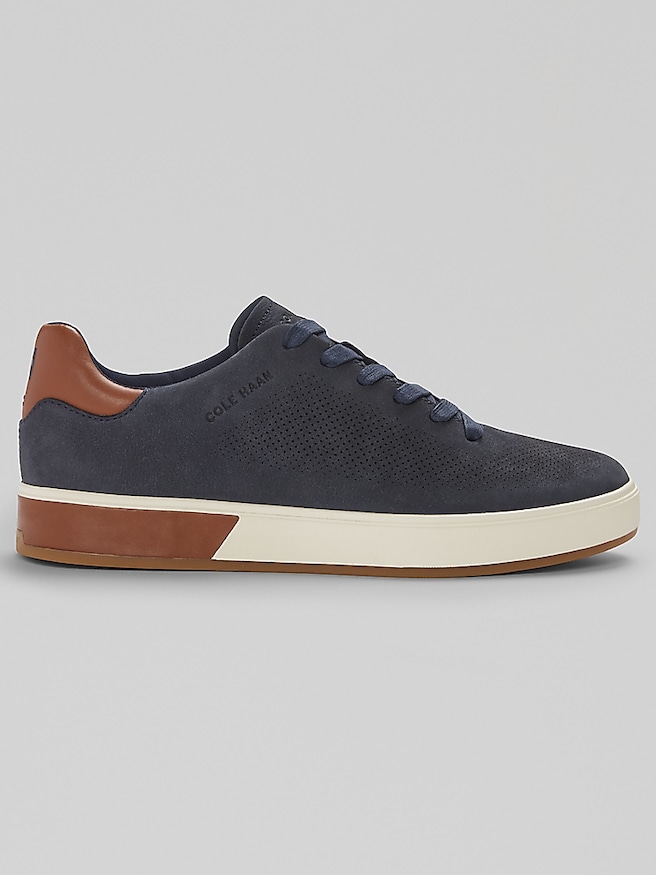
Men’s blue mesh sneakers bring together an airy textile upper, an athletic shape, and a color that fits easily into an everyday wardrobe. Mesh is defined by its open structure, which allows air to circulate around the foot; depending on the construction, it can feel flexible and contribute to a lighter overall shoe. Cushioning, support, and traction come from the complete design, not from mesh alone, so sneakers with similar uppers can serve very different purposes. Some are built for casual walking and daily wear, while others are designed specifically for running or training. Blue offers just as much variety. Deep navy has a quiet, understated appearance that works well with khaki chinos, gray trousers, and dark denim, while brighter blue shades give simple outfits a more athletic edge. A white sole creates a crisp contrast, and a tonal blue sole keeps the silhouette visually continuous. Small details matter here: the shape of the toe, the thickness of the sole, and the placement of overlays can make a sneaker look sleek or substantial. For a relaxed office dress code, a streamlined pair can sit comfortably alongside chinos and an untucked button-down shirt. For a day of errands or a casual lunch, jeans and a knit polo provide an easy combination without making the footwear feel like an afterthought. The understated side of this category also shares styling territory with Mens Blue Designer Sneakers, particularly when subtle detailing and balanced proportions take priority over bold athletic accents. Mesh itself can range from a fine, nearly uniform texture to a more visible pattern of openings, giving even a single-color upper depth. Choosing between those looks is largely a matter of how much texture the rest of an outfit already has. Smooth chinos let a textured sneaker stand out, while a simple mesh pattern keeps patterned shirts or richly textured denim from looking too busy.
Fit deserves as much attention as color, especially for sneakers intended to handle a full day of walking or standing. A comfortable fit generally leaves enough space for the toes to move without allowing the foot to slide forward or the heel to lift repeatedly. Try sneakers with the type of socks they will be worn with, and assess both feet while standing and walking rather than judging comfort from a seated position. Mesh may flex across the top of the foot, but that flexibility does not correct a toe box that is too narrow or a shoe that is too short. Pressure along the sides, rubbing at the heel, or a tongue that bunches beneath the laces can become more noticeable with repeated wear. Lacing can help secure the midfoot, though pulling the laces excessively tight usually signals that the overall shape deserves another look. Underfoot, a soft initial feel is only one part of comfort. The midsole should cushion without making the shoe feel unstable, and the heel and forefoot should bend and support movement in ways suited to the intended activity. For sightseeing, commuting on foot, or moving between appointments, look for a balance of cushioning, secure fit, and dependable outsole contact. Running places different demands on footwear, so a sneaker intended for jogging should be designed for running rather than chosen solely for its sporty appearance. Training that includes side-to-side movement calls for appropriate lateral support and a stable base; a flexible casual sneaker is not automatically suited to that work. Outsole construction also affects everyday use. Rubber coverage in high-contact areas can help resist abrasion, while tread shape influences how the shoe engages with the walking surface. No tread pattern guarantees grip everywhere. For travel, a versatile blue mesh sneaker can simplify outfit planning, but comfort should be established before a day built around long walks, transit connections, and extended time on the feet.
Materials and construction help explain how blue mesh sneakers feel over time and how much attention they need. Textile mesh is often paired with synthetic overlays, reinforced lace openings, or a structured heel section to add support where the open fabric needs it. Fine mesh can look sleek, while a more substantial textile may feel sturdier; neither appearance alone establishes durability. Look closely at stitching, bonded edges, and reinforcement around areas that flex or rub during normal wear. Friction at the toe and heel, repeated bending across the forefoot, and dragging an outsole can all affect how a pair holds up. Consistent care helps preserve both the blue color and the texture of the upper. Follow the shoe’s care label first, since mesh sneakers may combine materials that respond differently to moisture and cleaners. For routine cleaning, remove loose dirt with a soft brush, then use a lightly dampened cloth and a mild cleaning solution when the care instructions allow it. Gentle blotting is preferable to aggressive scrubbing, which can roughen fibers or spread a stain. Clean laces separately if permitted, and let shoes dry naturally with good air circulation, away from direct heat. Machine washing should never be assumed safe simply because the upper is fabric. Allowing the interior to dry fully between wears and rotating footwear can also help manage odor and reduce continuous stress on the same pair. For someone receiving sneakers as a gift, familiar color preferences and actual routines are more useful clues than appearance alone. Navy may suit someone who favors understated clothing, while a brighter blue can appeal to someone who enjoys a visible accent. Confirming size and width matters, particularly when the recipient uses an orthotic or prefers a roomier toe box. The strongest choice is a pair whose construction matches its daily role, whether that means casual outings, regular walks, or an activity requiring purpose-built footwear. Blue supplies the visual character; fit, materials, and thoughtful use make the sneakers worth reaching for repeatedly.