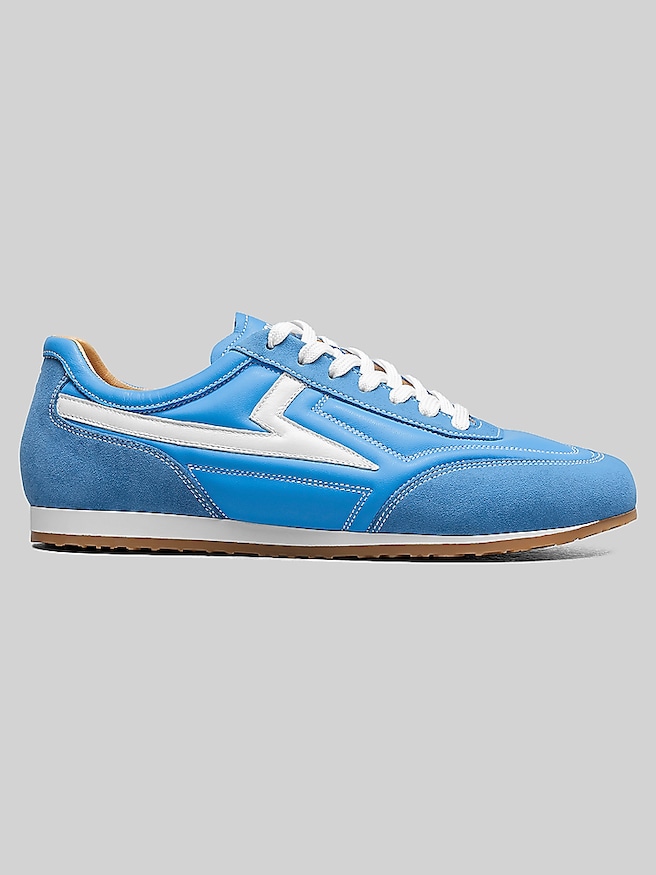
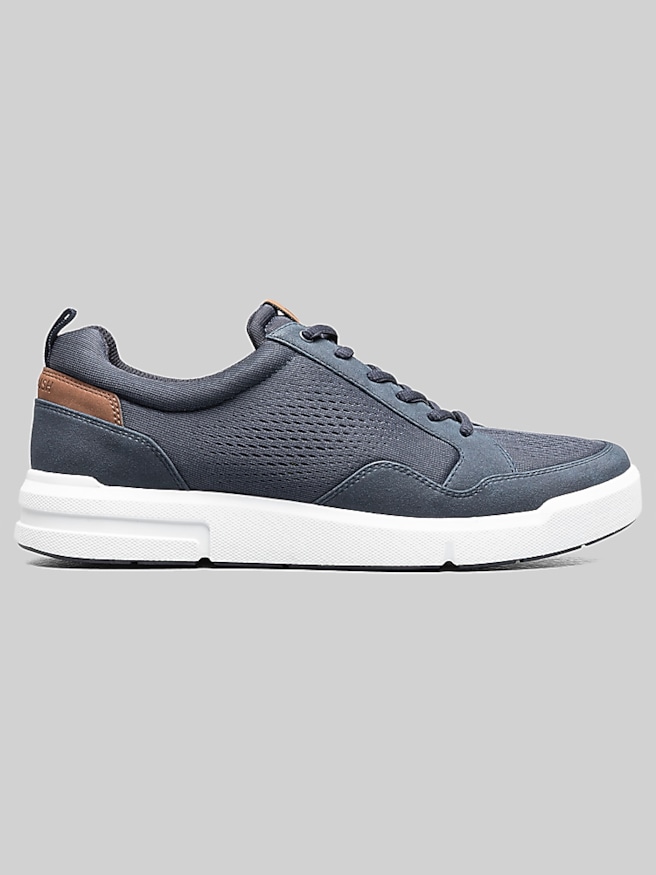
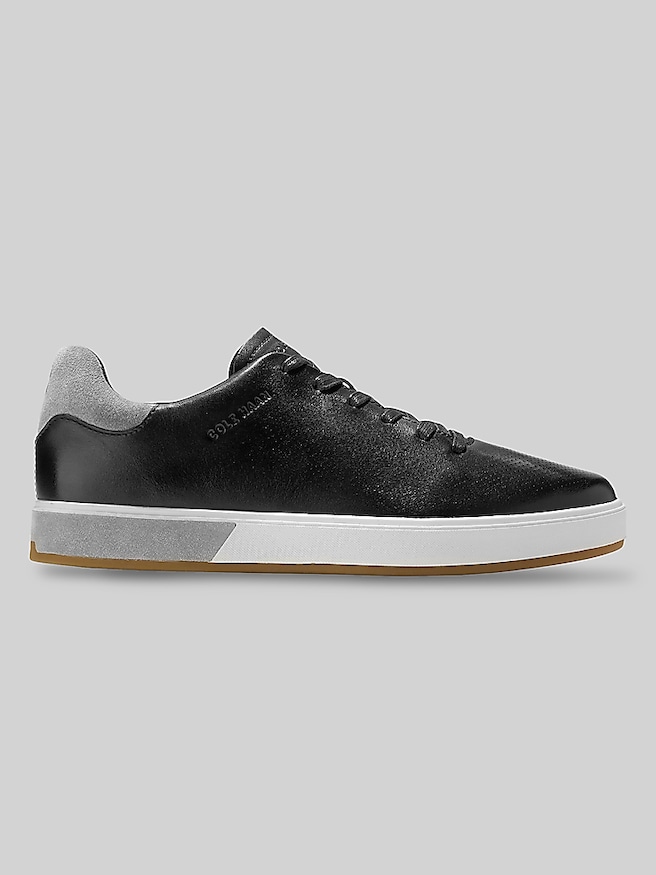
Men’s blue designer sneakers bring together a familiar everyday shape and a more considered approach to color, materials, and proportion. The category spans streamlined leather low-tops, soft suede styles, denim constructions, and layered designs that combine mesh with leather or synthetic overlays. Blue gives these sneakers a distinctive character without making them difficult to wear: deep navy feels understated, cobalt creates a stronger focal point, and washed or muted shades have an easy, lived-in quality. The material changes how each shade looks. Smooth leather tends to give blue a clean, even finish, while suede adds depth as its nap catches the light. Mesh creates a textured surface, and contrasting panels can make the same color appear lighter or darker across the shoe. Designer styling may show up in subtle stitching, sculpted soles, carefully placed panels, or distinctive details rather than prominent decoration. A slim silhouette with a restrained sole usually works well with tapered pants, while a broader, layered sneaker has enough visual weight to balance straight-leg denim. White or cream soles create a clear contrast against a blue upper; tonal soles keep the overall look quieter. With dark jeans and a textured polo, navy sneakers can feel relaxed but deliberate. Alongside stone-colored chinos and an unstructured jacket, a cleaner low-top can bring a casual finish to an outfit for dinner or a workplace that permits sneakers. Brighter blue shades work particularly well when the rest of the outfit stays simple, allowing the shoes to carry the color. Trouser length matters, too: a hem that sits near the top of the shoe keeps the silhouette visible instead of gathering around it. The appeal of men’s blue designer sneakers lies in that range, from discreet finishing touches to more expressive shapes, with color providing a connection between casual clothing and smarter separates.
Comfort depends on the construction beneath the design as much as on the appearance of the upper. Leather can feel structured at first and may soften with wear, while suede often has a more flexible feel; neither should require putting up with pinching or pressure to achieve a good fit. Mesh panels can allow more airflow, although linings, overlays, and padding also influence how breathable a sneaker feels. For a closer focus on that material, Mens Blue Mesh Sneakers centers on blue footwear with mesh construction. Across materials, a comfortable fit leaves room for the toes to move without letting the foot slide forward, and the heel should feel secure without rubbing. Width through the forefoot, space over the instep, and the shape of the toe box can matter as much as the size printed inside. Trying sneakers with the socks intended for everyday wear gives a more useful sense of fit, particularly when comparing a sleek low-top with a padded, sport-inspired shape. Laces allow adjustments across the upper, but tightening them cannot fully correct a shoe that is too wide or too long. Cushioning, flexibility, and weight also shape the experience of wearing sneakers through a commute, a casual workday, or an afternoon spent visiting shops and meeting friends. A thick sole does not automatically mean softer cushioning, and a running-inspired appearance does not establish that a shoe is intended for training. Everyday designer sneakers are best considered for the activities their construction supports, with dedicated athletic footwear serving sport-specific needs. For a gift, familiar sizing, preferred silhouettes, and the recipient’s usual clothing offer better direction than color alone. Someone who wears dark denim and simple knits may appreciate an understated navy profile, while someone drawn to expressive accessories may enjoy bolder blue panels or a sculpted sole. A pair that fits both the foot and the wearer’s routine is more likely to become a regular part of getting dressed.
Materials and construction also determine how blue designer sneakers hold up and how much attention they need between wears. Smooth leather generally responds to gentle cleaning with a soft cloth and a cleaner appropriate for its finish, followed by conditioning only when the care directions recommend it. Suede needs a different approach: a suitable brush can lift the nap and loosen surface dirt, while soaking or aggressive scrubbing can leave marks and change its texture. Mesh can trap dust around the weave, seams, and overlays, so light cleaning with a soft brush is often more controlled than saturating the entire shoe. Mixed-material designs deserve particular care because a treatment suited to one panel may affect the color or finish of another. Testing any cleaner on an inconspicuous area and following the maker’s care instructions helps protect the original appearance. Machine washing should not be assumed safe, especially when sneakers include leather, suede, glued components, or structured details. After cleaning, air-drying away from direct heat helps limit damage to uppers and adhesives. Removing loose dirt before it settles into seams, cleaning laces separately when appropriate, and wiping the edges of light-colored soles can make a noticeable difference without requiring an elaborate routine. Allowing shoes to air out between wears also helps the interior dry, while suitable shoe trees or light paper stuffing can help preserve shape. Durability is not defined by the designer label alone; intended use, material quality, secure stitching, sole attachment, and fit all play a role. High-contact areas such as the heel lining, toe, and outsole tend to show wear first, especially when a pair is worn frequently. Blue finishes may gradually develop subtle variations, particularly in suede or denim, adding character without necessarily indicating damage. With care suited to their materials and use suited to their construction, men’s blue designer sneakers can remain a versatile part of a wardrobe, bringing texture and personality to everyday outfits without demanding an entirely new way of dressing.