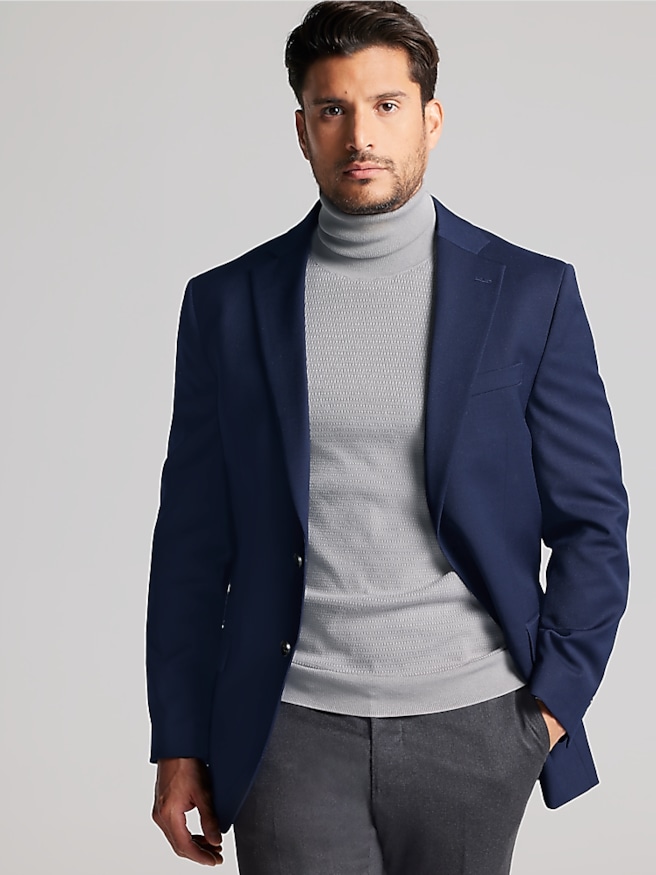
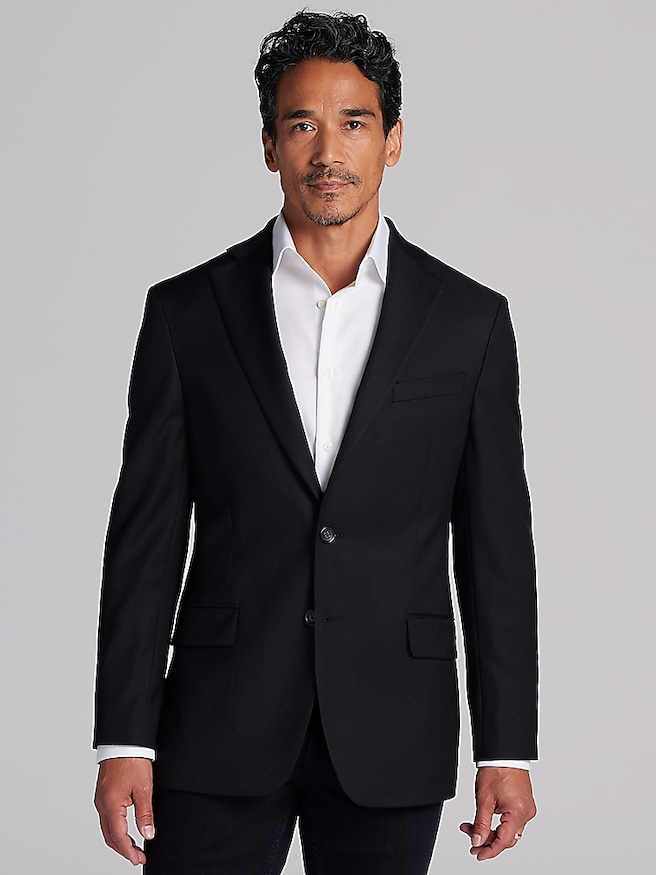
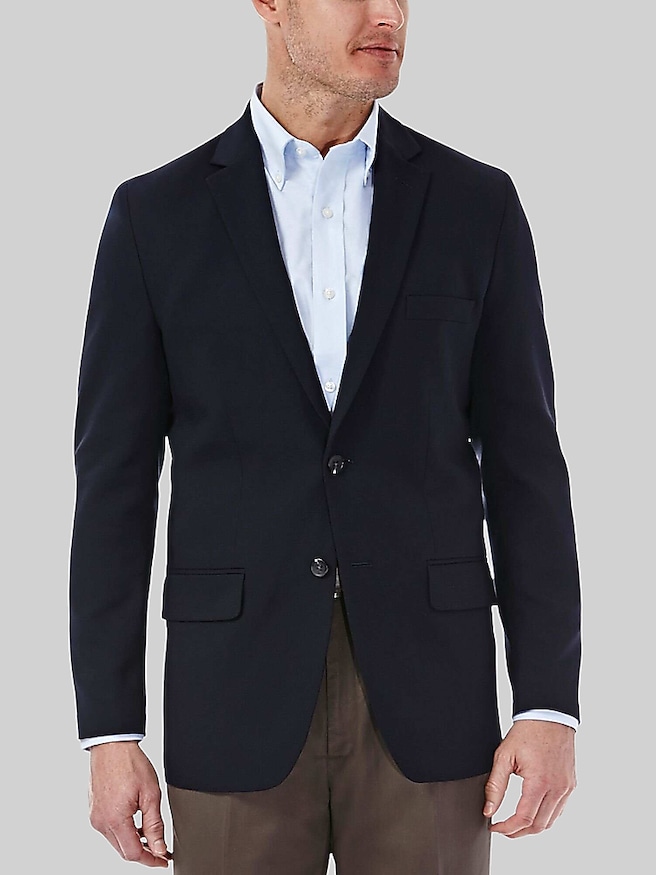
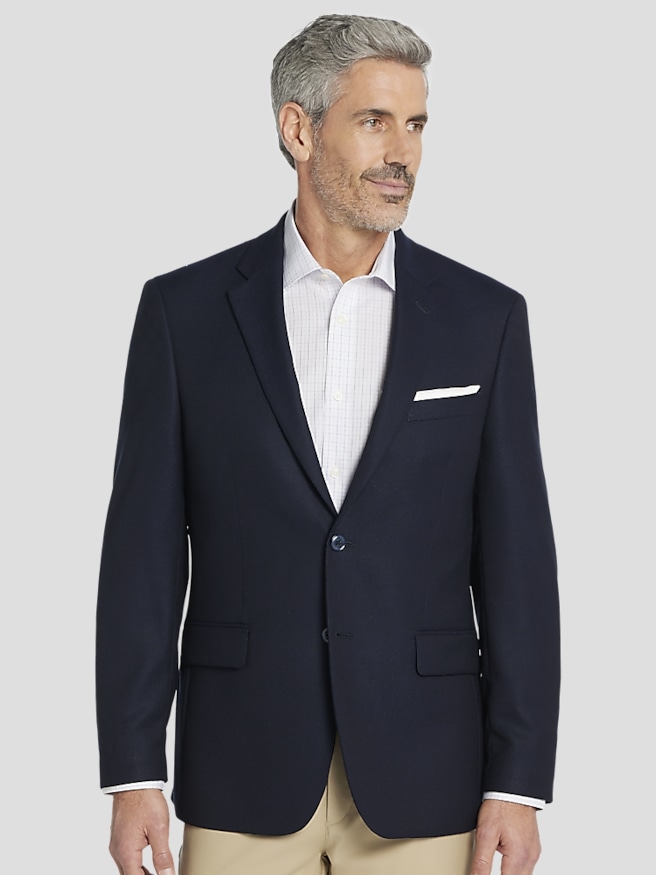
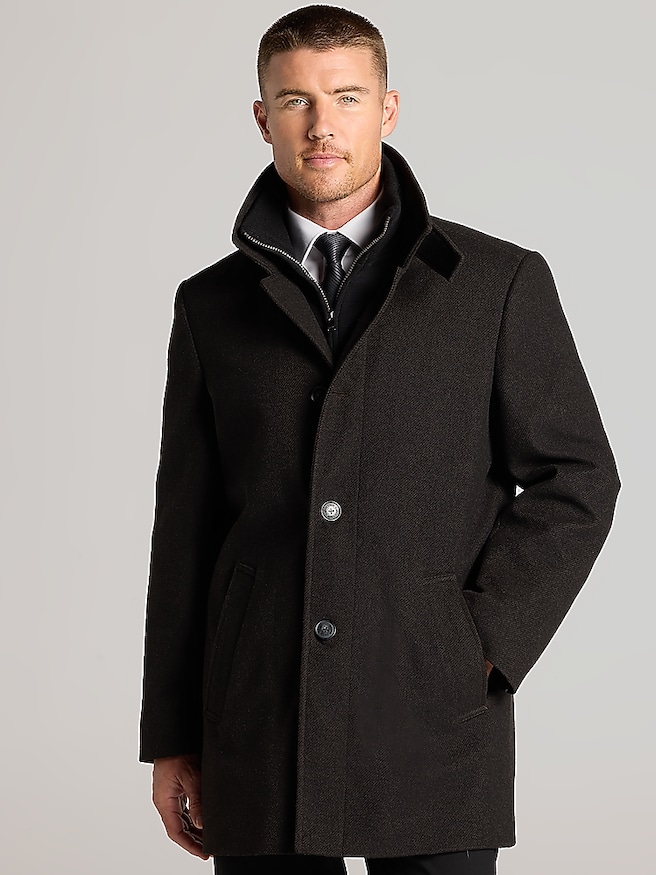
Men’s blue coats bring a familiar, versatile color to outerwear that ranges from tailored topcoats and overcoats to shorter, more casual designs. Navy offers a deep, understated look that works easily with business clothing, while medium blue, slate, and brighter shades give everyday outfits a more noticeable point of distinction. The appeal is practical as much as visual: blue pairs naturally with gray trousers, tan chinos, dark denim, and many of the shirts and sweaters already in a well-used wardrobe. Over a charcoal suit, a clean-lined navy coat creates a composed look for the trip to the office or an evening performance. With an oatmeal sweater and jeans, that same color feels relaxed without looking out of place at a dinner reservation. The shape of the coat helps establish its character. A single-breasted front generally creates a streamlined profile, while a double-breasted design adds visual structure through its overlapping front and button arrangement. Notched lapels connect a coat to traditional tailoring; a stand collar or a simpler zip-front design can lean more casual. Length matters, too. A longer coat provides more coverage and can conceal the hem of a suit jacket, while a shorter coat may feel less restrictive when getting in and out of a car. Blue also has useful depth: a textured navy cloth can appear nearly solid from a distance, then reveal its weave up close. Smooth fabrics tend to look sharper, while brushed surfaces and visible texture soften the impression. For everyday wear, these distinctions often matter more than an elaborate detail. A coat that looks equally comfortable over office clothes and a knit polo has a clear place in a regular rotation, whether its wearer prefers classic tailoring or an understated casual wardrobe. Dark blue can also serve as a less severe alternative to black, particularly alongside brown leather footwear and accessories.
Fabric and construction determine much of how a blue coat feels, hangs, and holds up to repeated use. Wool is valued for its insulating properties and the way it drapes, especially in tailored outerwear. A dense wool fabric can give a coat a substantial shape, while a softer blend may create a more fluid silhouette. Cashmere can contribute softness, although softness alone does not establish how durable a fabric will be. Fiber quality, weave, weight, and construction all play a role. Wool blended with synthetic fibers may offer a balance of structure and resilience, with the exact performance depending on the composition. Cotton-based fabrics can provide a firmer, more casual surface, while technical materials may emphasize low weight or protection from wind and light moisture. Water resistance should come from the garment’s stated features rather than an assumption based on appearance; a wool coat and a waterproof shell serve distinct purposes. Lining also affects the experience of wearing a coat. A smooth lining helps it slide over a blazer or sweater, and adequate room through the sleeves prevents layers from bunching at the elbows. Insulation, when present, changes both warmth and bulk. Fit needs to account for those layers without making the coat look oversized. The shoulders should sit comfortably, the chest should close without pulling, and the sleeves should allow an easy bend of the arm. Reaching for a steering wheel or lifting a bag offers a more realistic sense of mobility than standing still. Over a suit, the coat needs enough space through the upper back and armholes to preserve the jacket’s shape underneath. Pocket placement, a back vent, and the height of the collar can make equally noticeable differences in daily wear. Reinforced pocket openings, securely attached buttons, and even seams are useful construction details, especially on a coat that gets frequent use. A well-balanced hem and a front that hangs smoothly help the overall silhouette look intentional rather than strained or bulky.
A blue coat earns its place through the ordinary details of wearing and caring for it. Deep pockets offer somewhere for gloves, but carrying heavy objects in them can stretch the openings or distort the front. A broad, supportive hanger helps a structured coat maintain its shoulders between outings, and enough space in the closet keeps the fabric from being crushed. Care should always follow the garment’s label, since wool, cotton, technical fabrics, and mixed-material construction can require very different treatment. A soft clothing brush can lift surface dust from suitable wool fabrics, while prompt attention to a small mark may help prevent it from becoming harder to remove. Vigorous rubbing, high heat, and an unsuitable cleaning method can affect texture or shape. A coat that becomes damp generally benefits from air-drying away from direct heat before being put away. Occasional checks for loose buttons, worn lining seams, or friction at the cuffs can catch small repairs before they become larger problems. These habits are particularly useful for someone who wears the same coat to work, appointments, and weekend plans. For gifting, blue is a versatile choice for a partner, father, brother, or graduate whose wardrobe includes neutral trousers and classic shirts. The most helpful details are practical ones: the recipient’s usual jacket size, whether the coat will go over tailoring, and whether a longer or shorter silhouette suits daily routines. Someone who travels frequently may value comfortable movement and manageable bulk, while someone attending business functions may place more importance on a clean drape over a suit. Color preferences can help narrow the direction as well. Navy complements cool grays and crisp white, while men’s brown coats offer an earthy alternative alongside tan, cream, and olive. Within blue outerwear, the strongest choice is one whose fabric, proportions, and finish make sense for the clothes beneath it and the way it will actually be worn.