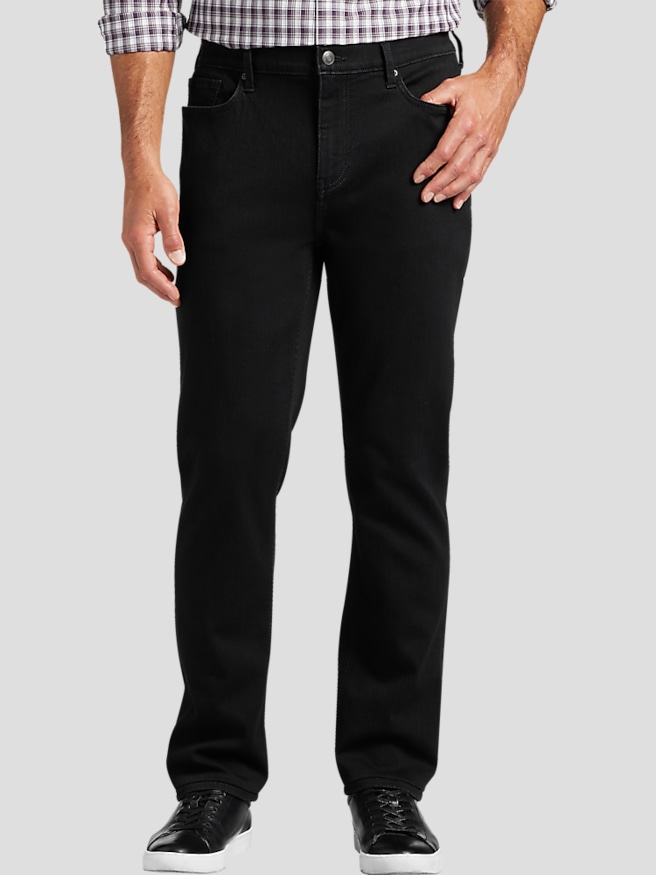
Men’s black stretch jeans combine the familiar structure of denim with added flexibility for sitting, walking, and moving through a full day. Their dark color makes them easy to pair with casual staples and more polished separates, while the stretch component helps the fabric move with the body rather than resist it. Most stretch denim starts with cotton blended with a small amount of elastane, also called spandex; some blends include polyester or other fibers to influence strength, softness, and shape retention. The fiber percentages tell part of the story, but fabric weight, weave, and finishing also affect how jeans feel. A substantial denim can have a firm, structured hand even with stretch, while a lighter or more thoroughly softened fabric may feel flexible from the first wear. Stretch and recovery are related but distinct: stretch describes how much the fabric gives, while recovery describes how well it returns toward its original shape. Good recovery helps limit bagging at the knees and seat, though performance depends on the fabric construction and care. Black finishes also vary. A deep, even black creates a sharper outline that pairs naturally with a button-down shirt, while a washed black or charcoal-toned finish has a more lived-in character suited to casual combinations. Subtle fading at seams can emphasize denim’s texture without the pronounced contrast of a blue wash. Traditional five-pocket construction keeps the look recognizable, with pocket placement, stitching, and hardware contributing to the overall impression. Low-contrast stitching tends to blend into the fabric, whereas brighter metal details make the jeans feel more distinctly casual. For shoppers who place particular importance on a soft fabric feel, Mens Soft Stretch Jeans offers a related category to explore. Softness, flexibility, and structure each matter, and the most comfortable balance depends on how the jeans will be worn.
Fit determines whether black stretch jeans feel streamlined, easygoing, or somewhere between the two. Slim fits generally follow the hip and thigh more closely, with a narrower leg opening that works well with low-profile sneakers or loafers. Straight fits maintain a more consistent line through the leg, creating room without the pronounced narrowing of a taper. An athletic taper typically allows additional space through the seat and thighs before narrowing toward the ankle, a useful proportion for someone whose thighs feel restricted in a conventional slim cut. Relaxed fits provide more room overall, although the exact measurements vary by maker and style. Stretch adds flexibility within those shapes; it does not replace the need for enough room at the waist, seat, and thigh. A waistband that sits comfortably without a belt doing all the work is a better starting point than a smaller size that depends on constant tension. Pockets that pull open, a fly that strains, or strong horizontal pulling across the hips can indicate that the fit is too close. Rise matters as well: a mid-rise often sits comfortably near the natural contour of the hips, while a higher rise provides more coverage when seated or bending. Inseam and leg opening work together to shape the finish at the shoe. A narrow hem with little excess length creates a crisp line over loafers, while a straight leg can accommodate a slightly fuller break over boots. Too much fabric collecting at the ankle can obscure the intended shape. For a casual office that permits denim, an even black wash works with an Oxford shirt, an unstructured jacket, and leather shoes. For dinner or a concert, a knit polo or plain T-shirt keeps the outfit simple without looking unfinished. Black jeans can support a more polished casual outfit, but they remain denim rather than a substitute for dress trousers when an invitation or workplace calls for formal clothing.
Everyday usefulness also depends on construction and care, particularly when keeping a dark finish is a priority. Even stitching, secure belt loops, neatly finished seams, and reinforcement around pocket openings are practical details because those areas take repeated stress. A smooth zipper and a securely attached waistband button contribute to comfort as much as appearance. Denim thickness alone is not a reliable measure of durability: yarn quality, weave, fit, and repeated friction all influence wear. Jeans stretched tightly across the thighs or seat place more stress on those areas, while a comfortable fit allows movement without keeping the fabric under strain. Black denim gradually changes with washing and use, and some fading is part of its character. The care label remains the best source for the correct washing and drying method. When the label permits, turning jeans inside out, washing with similar dark colors in cold water, and using a mild detergent can help reduce unnecessary surface abrasion and color loss. Bleach and harsh stain treatments may leave visible light patches, so any spot treatment should follow the garment’s instructions. High dryer heat can affect stretch fibers and contribute to shrinkage; air drying or a lower-heat setting may be appropriate when allowed by the label. Deeply dyed denim can also transfer color, especially early on, making care around light upholstery and pale footwear worthwhile. Between washes, allowing jeans to air out and treating small marks promptly can reduce the need for a full wash after every brief wear. For someone who spends hours seated at a desk, travels frequently, or prefers denim for everyday outings, the combination of comfortable movement and an adaptable black finish has practical appeal. Black stretch jeans can also make a useful gift when the recipient’s preferred fit and measurements are known. The waist, inseam, rise, and cut of a pair already worn regularly provide better reference points than waist size alone. Those details help distinguish jeans that merely fasten from jeans that feel comfortable through a full day and work naturally with an existing wardrobe.