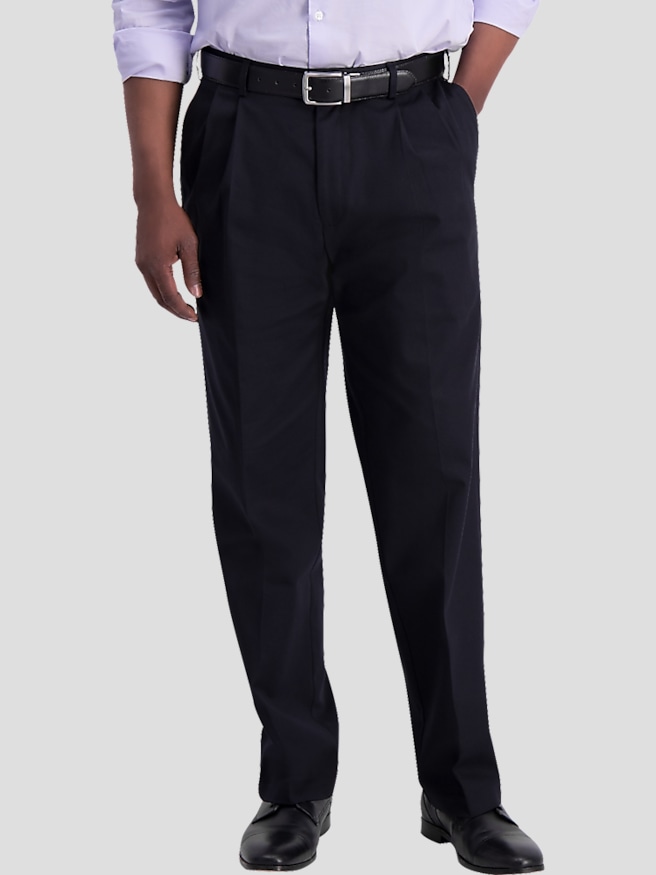
Men's black pants for work combine a professional appearance with the comfort and practicality needed for a full workday. Black dress trousers suit offices, client meetings, and presentations, while black chinos and sturdier casual pants can work well in business-casual settings, hospitality, and customer-facing roles. The right choice depends on the dress code, the amount of movement involved, and how much wear the fabric needs to handle. A pair worn mostly at a desk has different demands than one worn while walking a showroom floor, carrying supplies, or moving between service stations. Smooth woven fabrics create a refined silhouette beneath a dress shirt and jacket, while cotton twill offers a more casual surface that pairs naturally with polos and button-down shirts. Wool and wool-blend trousers are valued for their drape and polished appearance; depending on the weave and construction, they can also hold their shape well through repeated wear. Cotton provides a familiar, comfortable feel, though its tendency to wrinkle varies with the fabric and finish. Polyester blends can contribute wrinkle resistance and durability, while a small amount of spandex or elastane adds stretch for sitting, bending, and reaching. Stretch content alone does not determine comfort, since the cut and waistband construction matter just as much. Canvas and ripstop are associated with more utility-focused work pants, where a substantial fabric or reinforced weave may be useful for demanding tasks. Those materials generally create a more casual look than dress trousers, making the workplace dress code an important consideration. Fabric weight, texture, and structure also influence how black pants look after several hours of wear. A matte finish feels understated, while a smoother surface can appear dressier under office lighting. Black provides an easy foundation for a working wardrobe, but it does not make every fabric equally practical. Lint, pale dust, and fabric wear can show clearly against a dark surface, so a fabric suited to the job is more useful than color alone.
Fit shapes both the appearance and everyday usefulness of black work pants. Slim-fit pants follow the leg more closely and create a streamlined outline, but they still need enough room through the seat and thighs for comfortable movement. Straight-fit pants offer a balanced silhouette with a more consistent line from the knee toward the hem. Relaxed cuts provide additional room and can be useful for jobs that involve frequent bending or extended periods on foot. These fit descriptions vary across designs, so waist, rise, thigh room, and leg opening are more informative than the fit name by itself. A waistband should sit securely without digging in when seated, and the front pockets should lie reasonably flat rather than pulling open. For someone who spends hours at a workstation, comfort at the waist and behind the knees becomes especially noticeable by the end of the day. For someone who regularly crouches to reach a low shelf, adequate room through the hips and thighs matters more than a narrowly tapered silhouette. The rise affects where the waistband rests and how comfortably a shirt stays tucked. Hem length also changes the overall impression: a slight break over a dress shoe looks traditional, while a cleaner hem with little break creates a sharper line. Excess fabric pooling around the shoes can look untidy and may interfere with movement. Durability comes from a combination of fabric, stitching, and construction rather than thickness alone. Secure seams, well-finished pocket openings, and a dependable closure are useful details in pants worn repeatedly throughout the workweek. Pocket layout should suit the role without adding unnecessary bulk; a phone, keys, and a wallet can distort the line of otherwise well-fitting trousers. More utility-focused designs may include reinforcement or dedicated storage, but those features serve a different purpose from streamlined office styling. Everyday work pants are not a substitute for protective clothing when a job requires certified equipment or specialized safety features.
For an everyday professional wardrobe, Black Work Pants offer a versatile starting point for outfits that move between routine responsibilities and more formal moments. A white or light blue dress shirt creates clear contrast for a meeting, while a knit polo gives the same black foundation a more relaxed character where the dress code allows it. Gray, burgundy, and muted green tops also pair well with black without making the outfit feel busy. Texture helps separate dark pieces: a softly textured shirt can stand out against smooth trousers even when the colors are close. A jacket adds structure for presentations or appointments, although separate black trousers and a black jacket should not automatically be treated as a matching suit. Differences in fabric, finish, and shade can become noticeable when the pieces are worn together. Shoes and belts help establish the level of formality, with clean, understated choices keeping attention on the overall fit. Care is equally important to maintaining that finished appearance. The garment's care label determines whether washing, professional cleaning, or another treatment is appropriate. For washable pants, turning them inside out and using the recommended settings can help limit surface wear and preserve the dark color. Excessive heat may affect some stretch fabrics, and harsh treatment can leave black cloth looking faded before the garment is otherwise worn out. Prompt attention to spills, gentle lint removal, and storage that supports the garment's shape all contribute to a neater result. Hanging trousers neatly after wear helps prevent avoidable creasing, while checking hems, pockets, and seams makes small repairs easier to address early. Black pants can also be a practical gift for a recent graduate starting an office role, someone preparing for interviews, or a partner refreshing a work wardrobe, provided the size and preferred fit are known. Their lasting value comes from being suited to the person's actual routine: comfortable at a desk, presentable across a counter, and polished enough for the next important conversation.