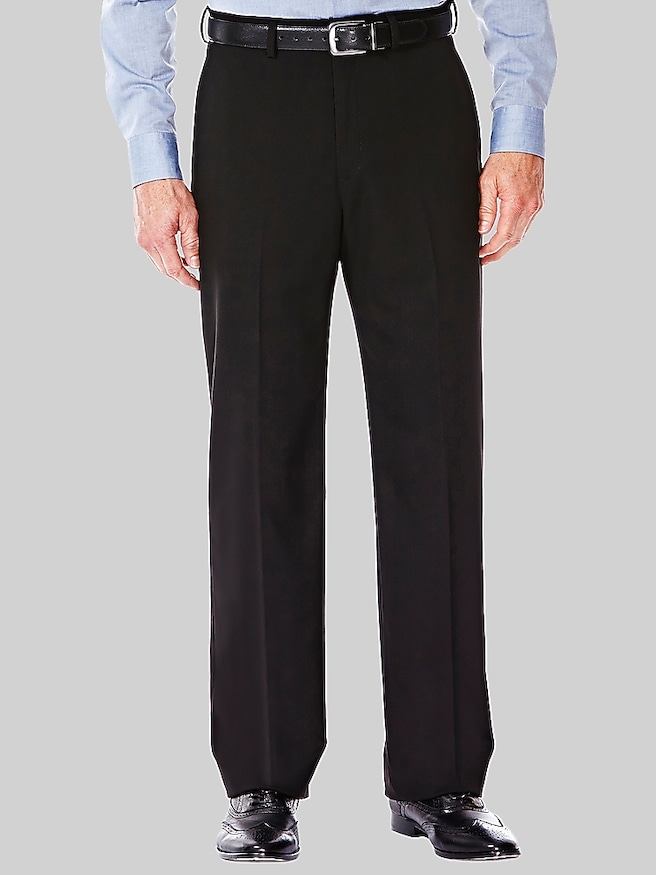
Black work pants are everyday trousers that range from tailored office styles to casual chinos and sturdier designs for active jobs. Their defining advantage is versatility: a black pair can look polished with a dress shirt, understated with a polo, or relaxed with a neatly fitted knit. The right construction depends on the workday. Someone spending most of the day at a desk may value a smooth drape and a clean crease, while a restaurant manager moving between the dining room and office may prefer easy movement and straightforward care. For customer-facing roles, the dark color creates a consistent foundation for a uniform without competing with a name badge, patterned shirt, or jacket. Black dress pants generally have a refined appearance, with details such as discreet pockets and a tailored waistband; black chinos often have a less formal texture that suits business-casual settings. Utility-oriented trousers put more emphasis on practical pocket placement and substantial fabric, though dark color alone does not make any pair suitable for hazardous work or a substitute for required protective clothing. Within an office wardrobe, black offers an alternative to navy, gray, and khaki, especially when a dress code calls for dark trousers. A straight silhouette creates a balanced line from hip to shoe, while a tapered leg narrows toward the ankle for a closer profile. A fuller cut leaves additional room through the seat and thigh, which may feel more comfortable during frequent sitting or walking. Flat-front styling keeps the front visually simple; pleats provide another option for someone who prefers extra room through the upper leg. These distinctions matter more than color alone, making black work pants useful across a range of professions, body types, and personal styles rather than a single workplace look.
Fabric influences how black work pants feel, move, and hold their shape over a full day. Cotton twill has a recognizable diagonal weave and a comparatively casual appearance, making it a natural fit for chinos and less formal workplace outfits. Wool and wool-blend trousers often provide a smoother drape suited to dress shirts and tailored jackets. Polyester blends may offer useful shape retention and easier maintenance, while a small amount of stretch fiber can add flexibility when sitting, bending, or taking the stairs. Stretch does not replace a proper fit, however; a comfortable waistband should stay in place without digging in, and the front pockets should lie reasonably flat rather than pulling open. Through the seat and thighs, enough ease allows movement without creating excessive folds of fabric. Rise matters, too: trousers that sit comfortably at the intended waist position are less likely to need repeated adjustment when moving between a desk and a meeting room. Fabric weight and surface texture also affect the finished appearance. A fine, smooth weave tends to read as dressier, while a more pronounced twill texture feels more casual. For jobs involving repeated movement, durability depends on the combination of fabric, seam construction, and fit rather than thickness alone. Secure pocket openings, neatly finished seams, and a firmly attached waistband are useful construction details to consider. A fit that strains across the thighs or seat can place unnecessary stress on those areas. Pocket needs deserve equal attention: a phone or key ring should sit comfortably without distorting the silhouette or pressing against the leg when seated. Hem length completes the fit, whether the preference is a slight break over dress shoes or a cleaner line above a low-profile shoe. Trying trousers with the footwear normally worn to work gives a clearer picture of how the leg opening and hem will look throughout the day.
A wardrobe built around Work Pants benefits from the range of combinations black makes possible. A white or light blue button-down creates a crisp contrast for interviews, presentations, and everyday office wear, while a gray polo gives the same trousers a quieter, more casual character. Small checks, subtle stripes, and textured knits add interest without requiring a bold color combination. Black shoes offer a cohesive finish; dark brown footwear can also work when its tone and level of formality suit the rest of the outfit. A belt that coordinates with the shoes helps the pieces feel connected, particularly when a shirt is tucked in. With a separate jacket, a distinct texture or contrasting color looks more intentional than two almost-matching black fabrics, which can reveal differences in shade under office lighting. Care is another practical consideration, especially for trousers worn repeatedly. Black fabric may make some marks less noticeable, but lint, pale dust, and dried residue can stand out against the dark surface. A lint brush is useful for a quick touch-up before a meeting, and prompt attention to small spots helps keep the fabric looking neat. The care label should determine whether trousers are machine washable, suitable for professional cleaning, or subject to special instructions. For washable pairs, turning them inside out, washing with similar dark colors, and avoiding unnecessary heat can help preserve their appearance when consistent with the label. Hanging trousers neatly after wear reduces bunching, while pressing or steaming should follow the fabric’s recommended settings. Alternating between pairs gives each one time to air out and makes routine care easier to manage. For someone starting a new job, building an office wardrobe, or replacing well-worn basics, black work pants offer a practical foundation. They can also make a thoughtful gift when the recipient’s measurements, preferred fit, and workplace dress requirements are known. The most useful pair is one that feels comfortable through ordinary tasks, fits the setting, and works naturally with clothing already worn throughout the week.