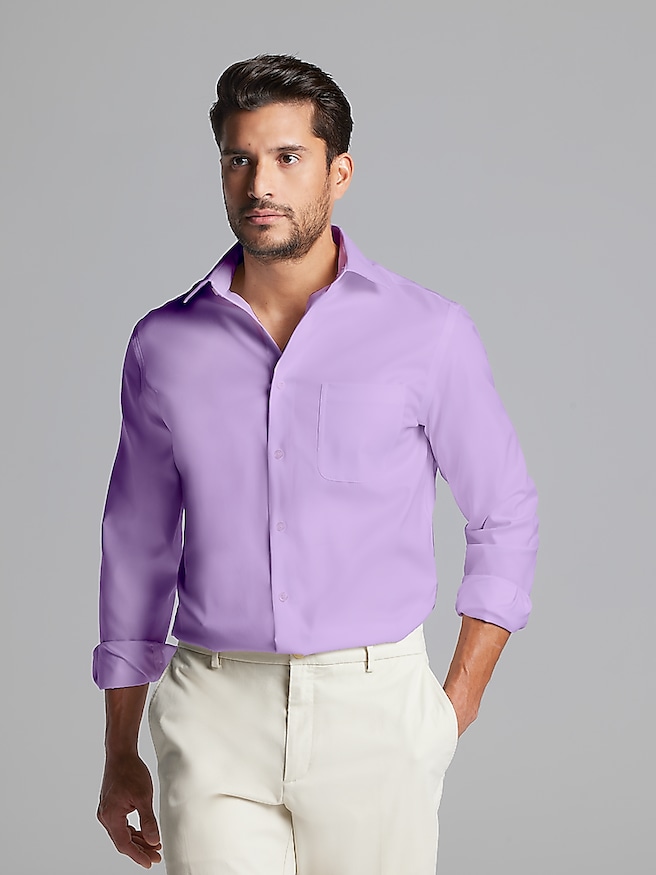
Men’s black cotton shirts combine a rich, understated color with the familiar comfort of a natural fiber, making them useful across everyday, business-casual, and dressed-up wardrobes. The appeal goes beyond matching almost anything: black gives a shirt a clear outline, while cotton adds texture that keeps the look from feeling flat or overly glossy. A smooth woven shirt can sit neatly beneath a blazer, a textured oxford can bring depth to a simple outfit, and a cotton knit can soften the lines of tailored trousers. Those distinctions matter because fabric construction influences how a shirt feels and falls on the body. Poplin generally has a fine, closely woven surface with a crisp appearance; oxford cloth has a more noticeable basket-weave texture; jersey has the flexible feel associated with everyday T-shirts. Fabric weight makes a difference, too. A lighter cloth may drape closer to the body, while a more substantial fabric often holds a stronger silhouette. Neither weight alone nor a 100% cotton label establishes quality. The smoothness of the yarn, consistency of the weave, strength of the seams, and finish around the collar and cuffs all contribute to how well a shirt wears. Cotton-rich blends can introduce stretch or alter wrinkle resistance, depending on the other fibers and finishing treatments, so fabric composition deserves attention alongside appearance. Black also changes character with texture: a matte cotton surface feels relaxed, while a tightly woven, carefully pressed shirt looks more refined. For someone moving between a desk, a dinner reservation, and a weekend gathering, that range makes the category especially practical. The same dark foundation can support a restrained outfit with charcoal trousers or create a stronger contrast against stone chinos. Small details, such as a chest pocket, visible stitching, or a clean front without extra decoration, help determine whether the overall impression leans casual or polished.
Fit gives men’s black cotton shirts much of their character, especially because a dark color can make the silhouette more noticeable than the individual construction details. A well-fitting shoulder seam generally sits near the edge of the shoulder without drooping down the upper arm, and a button-front shirt should close smoothly across the chest without pulling into small gaps. Slim fits follow the torso more closely, while regular and relaxed fits leave additional space through the chest and waist. The most useful choice depends on body proportions and intended wear rather than the fit name alone. Someone who spends much of the day seated may appreciate room through the midsection; someone wearing a shirt beneath a closely cut jacket may prefer less excess fabric at the sides and sleeves. Cotton woven without stretch needs enough ease for reaching forward, bending an elbow, and sitting comfortably. Shirt length matters just as much. Longer tails help a tucked shirt stay anchored, while a shorter, balanced hem can look cleaner worn loose with jeans or chinos. At the neck, a collar should feel comfortable when fastened, and cuffs should rest near the wrist without covering the hand. These details make the difference between an outfit that merely fits and one that feels settled from the start. For business-casual settings, a black cotton button-front with gray trousers offers a restrained combination, particularly when the shirt is pressed and the shoes are well kept. With dark denim, the effect is more relaxed; a difference in texture helps separate the shirt from the jeans even when both are dark. A tan or subtly patterned jacket adds contrast without competing with the shirt. For an evening gathering, an open collar can feel considered without appearing ceremonial, though a black shirt is not a substitute for the attire specified by a formal dress code. As a gift for a partner, father, brother, or friend, this category is most personal when the recipient’s usual fit, collar preference, and everyday routine guide the choice.
Care helps preserve the depth of black cotton shirts as well as their shape, and the sewn-in care label remains the best starting point. Cotton fabrics and finishes do not all respond identically to washing, drying, or pressing. When the label permits machine washing, cold water, similar dark colors, and a suitable detergent can help limit unnecessary color loss. Turning a shirt inside out reduces direct abrasion on the visible surface, while avoiding an overloaded washer gives garments room to move without excessive rubbing. Washing only when needed, rather than automatically after brief wear, can also reduce cumulative wear, provided the shirt is clean and fresh. Stains are best addressed promptly with a treatment appropriate to the fabric; harsh scrubbing or an unsuitable bleaching product can leave a lighter patch that is particularly noticeable against black. Drying deserves equal attention because excessive heat can contribute to shrinkage and affect the finish. Low heat or air-drying may be appropriate when specified on the label, and reshaping collars, plackets, and hems while slightly damp can make the final result neater. A hanger that supports the shoulders helps a woven shirt keep its form, while folding can suit cotton knits that might stretch when hung. For pressing, the recommended heat setting and a clean pressing cloth can help reduce the risk of shine on dark fabric. Long-term durability also comes from thoughtful construction: secure buttons, evenly sewn seams, and neatly finished edges are useful signs to examine, although no single detail guarantees longevity. Cotton may soften with repeated wear, and some gradual fading is normal, particularly along frequently handled edges. That lived-in character can suit casual shirts, while careful laundering helps dressier styles retain a more consistent appearance. For a broader look at cotton-focused shirt options, Mens Premium Cotton Shirts provides a related category to explore. The lasting value of a black cotton shirt lies in how naturally its fabric, fit, and finish work with the rest of a wardrobe, from an easy untucked outfit to a neatly pressed layer beneath a jacket.