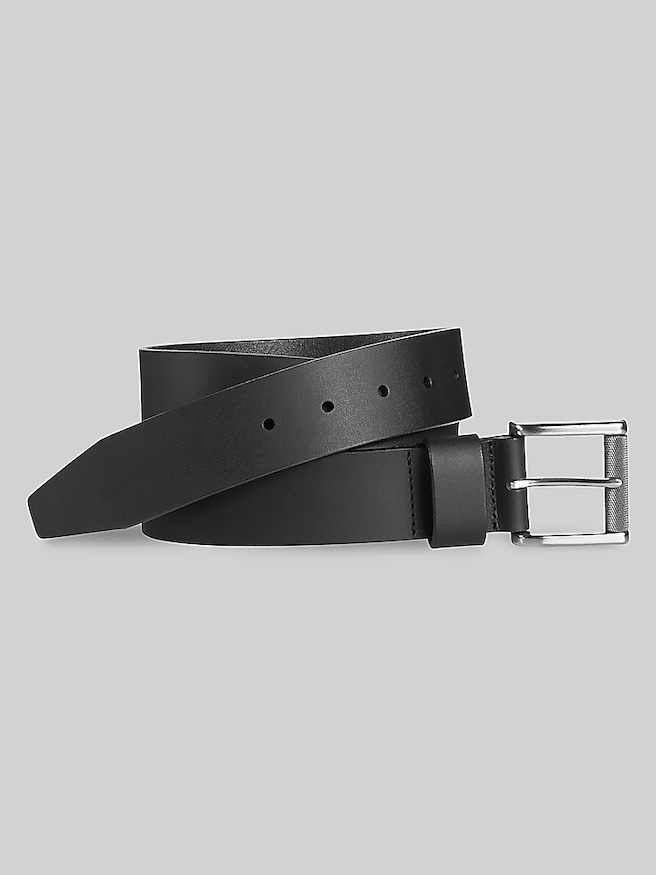
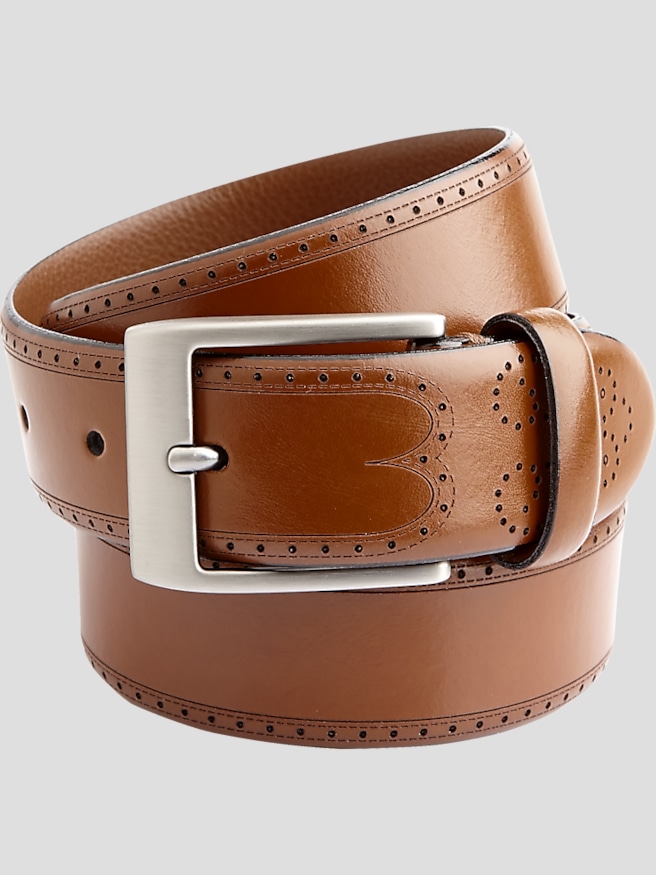
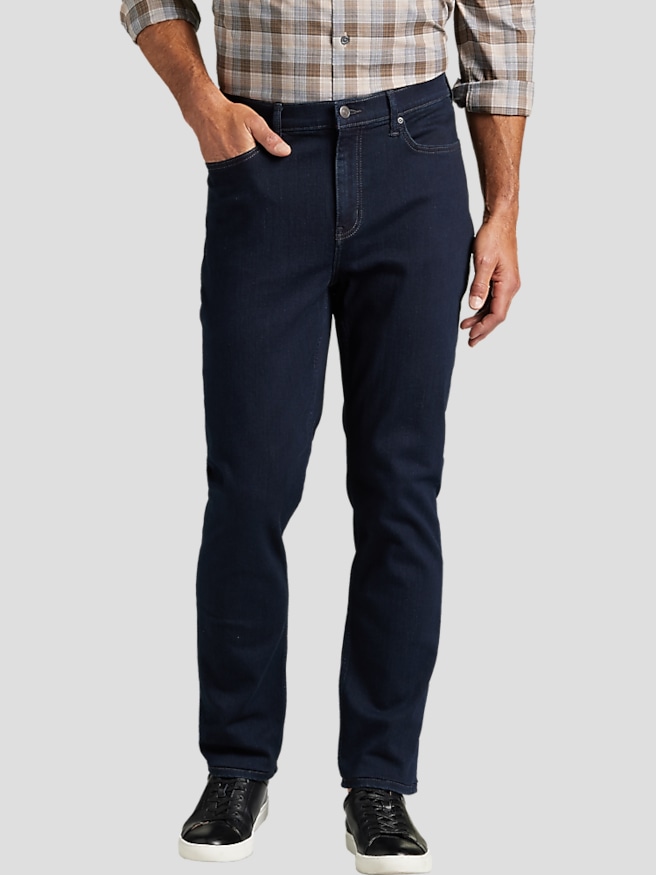
Men’s black belts for jeans bring a clean, grounded finish to denim, whether the rest of the outfit is a tucked-in Oxford shirt and boots or a simple T-shirt and sneakers. Black works especially well with dark indigo, charcoal, and black jeans, creating a subtle connection between the waistband and black footwear. With faded blue denim, the contrast is more noticeable, giving even a relaxed outfit a defined finishing touch. The proportions matter as much as the color: a belt approximately 35 to 40 millimeters wide, or about 1⅜ to 1½ inches, generally has enough presence for jeans without looking oversized. Denim belt loops vary, though, so the strap needs to pass through comfortably without bunching or pulling at the stitching. A moderately substantial strap and a straightforward buckle often feel more at home with denim than a very narrow, glossy dress belt. Smooth leather offers a restrained look for casual office settings and dinner plans, while pebbled grain or a softly worn finish complements the texture of heavier denim. A brushed silver-tone buckle keeps the effect understated; a polished finish adds a brighter accent against black leather. Dark hardware creates a quieter, more uniform appearance, particularly with black jeans. Buckle shape also changes the overall impression. A rounded rectangular frame feels familiar and easygoing, while a squared frame can give the same outfit a sharper edge. For someone who regularly wears a watch or other metal accessories, coordinating the hardware finishes can make the outfit feel cohesive without requiring an exact match. The strongest combinations usually have a similar level of formality throughout: a simple black leather belt with black leather boots, for example, or a matte strap with low-profile casual sneakers. Beyond appearance, a useful everyday belt should hold the waistband comfortably, lie reasonably flat, and stay out of the way when sitting, walking, or getting in and out of a car.
Material and construction shape how a black belt feels from the first wear and how it handles repeated use. Full-grain leather retains the hide’s natural surface and can develop character through creasing and wear, while top-grain leather has a refined surface that can provide a smoother, more uniform appearance. Neither label alone tells the whole story; leather quality, thickness, finishing, and construction all influence durability. The term genuine leather is broad rather than a precise quality grade, making details such as the backing, edge finish, and buckle attachment worth considering. A substantial single-piece leather strap has fewer layers that might separate, while a well-made lined strap can offer a finished underside and comfortable feel. On stitched belts, even stitching without loose threads contributes to a tidy appearance, and neatly finished edges help the strap move through denim loops without catching. Alternatives to leather can provide a consistent surface and straightforward upkeep, although their flexibility and resistance to cracking depend on the material and construction. Fit deserves equal attention. For many traditionally sized belts, choosing a belt about two inches larger than the labeled pants waist is a useful starting point: someone wearing size 36 pants might begin with a size 38 belt. Sizing conventions vary, however, and jeans labels do not always reflect the measurement where the waistband actually sits. The applicable size chart and a measurement from a comfortable existing belt are more reliable than the pants label alone. For a typical buckle-and-hole style, that measurement runs from where the strap meets the buckle to the hole used most often, unless the sizing instructions specify otherwise. A comfortable fit usually fastens near the middle hole, leaving room for small adjustments and enough tail to pass through the keeper without extending awkwardly around the hip. The belt should support jeans that already fit reasonably well, not cinch an oversized waistband into folds. A flatter buckle may also be more comfortable for someone who spends much of the day seated.
The appeal of a black belt for jeans is its usefulness across familiar routines. It can add structure to a casual workplace outfit, finish denim worn with an unstructured jacket, or keep a tucked-in polo looking neat on a weekend outing. Someone whose closet centers on black shoes and dark denim may find a smooth, minimally decorated strap especially easy to repeat, while someone who favors washed jeans and substantial boots may prefer visible grain and a sturdier buckle. A broader look at men’s casual belts for jeans can help put those preferences in context, particularly when comparing textures and buckle proportions that suit everyday denim. A black belt can also make a practical birthday, graduation, or Father’s Day gift for someone who wears jeans often. The most useful gift choice reflects the recipient’s actual routine, including preferred footwear, typical waistband fit, and comfort with bold or understated hardware. Over time, care helps preserve both appearance and function. Surface dust can usually be removed from finished leather with a soft, dry cloth; more involved cleaning should follow the care instructions for the particular material. When leather conditioning is recommended, a small amount of a compatible conditioner, tested first on an inconspicuous area, can help maintain suppleness without leaving a heavy residue. Suede, coated surfaces, and synthetic materials need their own care methods rather than an all-purpose leather treatment. A damp belt should dry naturally away from direct heat, and storage should avoid sharp folds that leave persistent creases. Hanging the belt straight or loosely coiling it gives the strap room to rest between wears. Occasional inspection around the most-used hole, buckle attachment, and edges can reveal stretching, loosened stitching, or separating layers before they become more disruptive. Gentle creasing is normal for leather, but deep cracks and distorted holes can affect function. With suitable proportions, a comfortable fit, and material-appropriate care, a black belt becomes a dependable part of getting dressed: substantial enough for denim, restrained enough for repeat wear, and easy to coordinate with the shoes and shirts already in regular rotation.