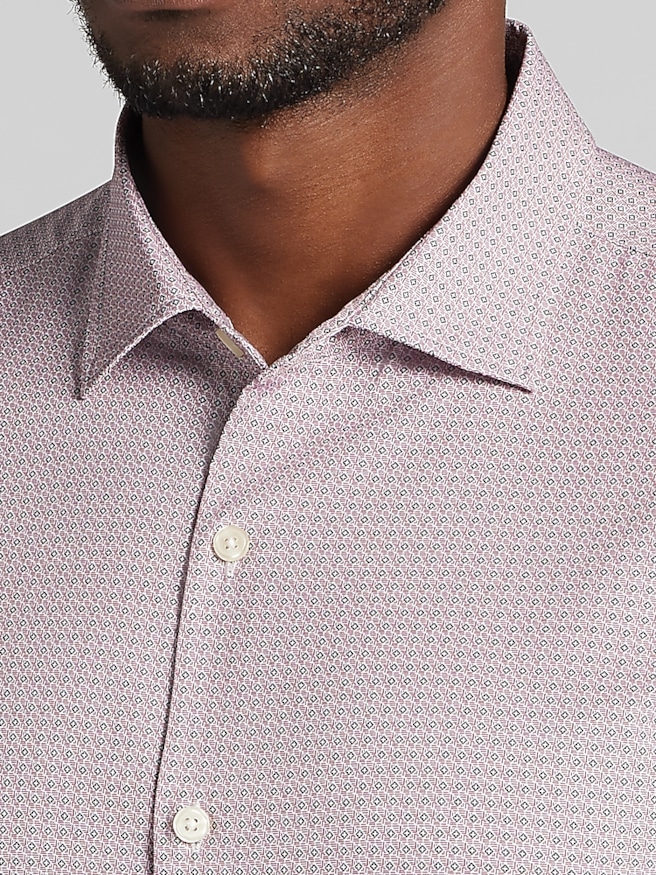
Men's big and tall stretch button-up shirts combine proportions designed for larger or taller builds with fabric that flexes during everyday movement. That combination matters when a shirt needs to stay comfortable through a seated meeting, a drive across town, or an evening spent catching up over dinner. Big and tall are related size categories, but they address different fit needs. Big sizing generally adds room through the chest, waist, shoulders, and upper arms, while tall sizing generally adds body and sleeve length. A taller man may need a longer torso without extra width, while someone with a broader build may need more room without a longer hem. Some men benefit from both. Stretch complements those proportions rather than replacing them: a well-fitting shirt should lie smoothly across the chest, with a button placket that stays flat instead of pulling open when the wearer sits down. Shoulder seams positioned near the natural shoulder help sleeves hang cleanly, and comfortable upper-arm room makes reaching across a desk feel less restricted. For long sleeves, cuffs should settle near the wrist without disappearing up the forearm when the elbows bend. Body length also affects how the shirt works throughout the day. A longer shirttail can help a tucked shirt stay anchored when reaching overhead, while an untucked cut needs enough coverage without extending so far that it overwhelms the outfit. Collar measurements deserve the same attention, especially for a shirt worn buttoned with a tie. Stretch in the body does not automatically mean the collar stretches, too. Size charts and garment measurements provide a more useful reference than a familiar size label alone, since proportions vary by cut. The goal is room to move with a defined shape, not excess fabric gathered at the waist or tension across the back. For men who spend much of the day switching between sitting, standing, and walking, that balance can make a noticeable difference.
Fabric composition shapes how a stretch button-up shirt feels, drapes, and holds its appearance. Cotton blends often retain the familiar softness and texture of cotton while incorporating spandex, also called elastane, for flexibility. Polyester or nylon blends can offer a smoother hand and may support easier care, depending on the weave and finishing treatment. A small percentage of stretch fiber can make movement more comfortable, but the percentage alone does not tell the whole story; fabric weight, construction, and the direction of stretch also influence how a shirt responds. Woven stretch shirts still have structure, making them useful when a crisp collar and clean front are part of the outfit. Knit constructions can feel more relaxed and flexible, with a different drape against the body. Moisture-wicking or wrinkle-resistant properties are separate features, not automatic benefits of every stretch fabric, so those descriptions matter when comparing shirt details. A wrinkle-resistant finish may reduce the amount of pressing needed, though it does not make a shirt immune to creases. Surface texture contributes to the overall impression as well. A smooth, finely woven fabric tends to look dressier under a suit jacket, while an oxford texture or a visible weave can feel more at home with chinos or dark denim. Solid colors offer an uncomplicated foundation for patterned ties and textured jackets; checks and stripes bring interest to an outfit without requiring extra accessories. Collar construction helps define the look. A button-down collar has points secured by small buttons, whereas button-up refers to the front closure, so not every button-up shirt has a button-down collar. An open collar works well for a relaxed office or dinner setting, while a collar designed to accommodate a tie offers flexibility for presentations, ceremonies, and wedding guest attire. Long sleeves provide cuff coverage beneath a jacket, and short sleeves create a more casual outline. The right choice depends on how the shirt will be worn, not simply how it looks on a hanger.
Durability in big and tall stretch shirts comes from the relationship between fabric, construction, fit, and care. Even stitching, securely attached buttons, and neatly finished buttonholes contribute to a shirt that stands up to repeated wear. Enough ease through the torso also reduces constant strain on seams and closures; stretch should accommodate motion rather than keep an undersized shirt under tension. Elbows, cuffs, and the collar experience frequent contact, making careful laundering especially useful in preserving their appearance. The care label remains the best reference because cotton-rich blends, synthetic blends, and knit fabrics can require different treatment. Appropriate wash settings, avoiding unnecessary heat, and removing a shirt promptly after the cycle can help maintain its shape and limit stubborn creases. High heat can affect stretch fibers, and any ironing should follow the fabric's recommended setting. Hanging a clean shirt on a supportive hanger gives the shoulders room to rest without bunching, while allowing enough closet space helps prevent the sleeves and front from becoming compressed. These practical details are worthwhile for a shirt expected to move between the office, business travel, restaurant dinners, and family celebrations. Men whose main fit concern is extra torso or sleeve length can also explore Men's Tall Button Up Shirts for a related category focused on taller proportions. As a gift for a father, partner, brother, or son, a stretch button-up is most personal when its proportions and styling reflect what he actually wears. An existing shirt with a comfortable collar and sleeve length can provide a useful sizing reference, while familiar colors and patterns make the gift easier to work into his wardrobe. Whether worn beneath a blazer, tucked into dress pants, or paired with jeans, a well-proportioned stretch shirt offers a polished appearance without asking the wearer to stay still to keep it comfortable.