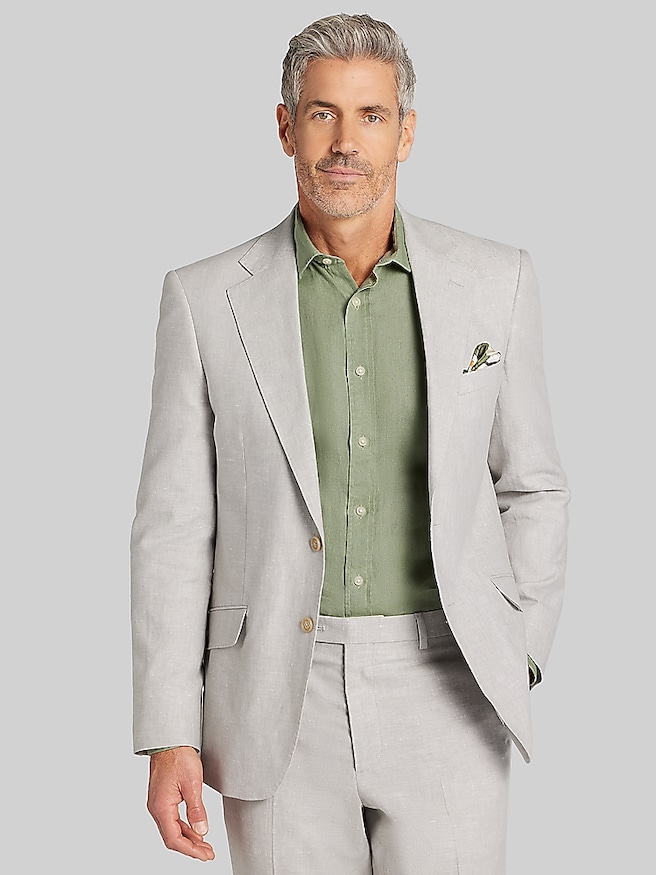
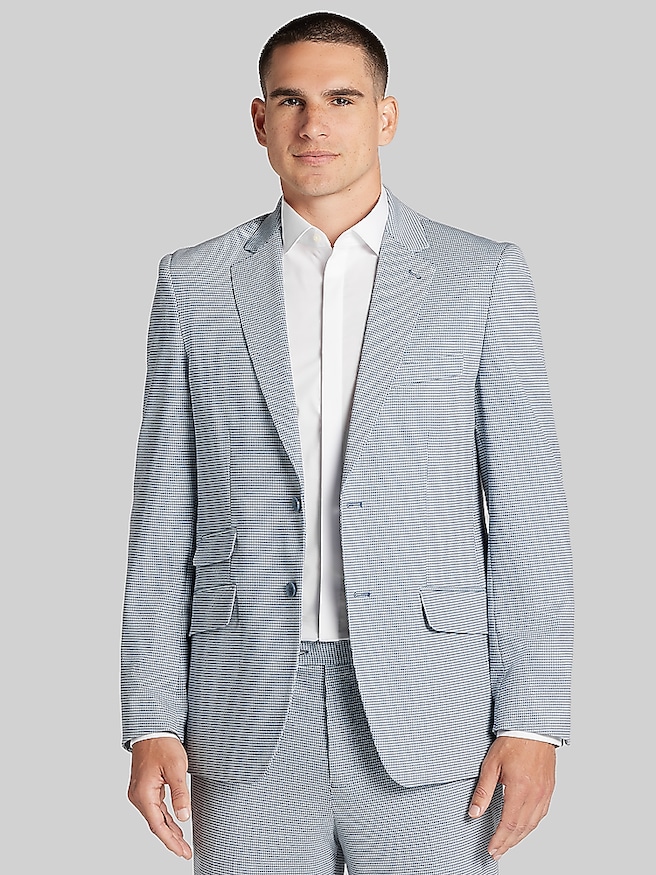
A men's two-piece set brings a coordinated look to dressing without requiring every part of an outfit to be planned from scratch. In tailored clothing, that usually means a jacket and trousers made to work together, with matching fabric, color, and pattern creating a continuous line from shoulder to shoe. More relaxed sets apply the same principle to a coordinated top and bottom, offering a cohesive appearance with less structure. The appeal is straightforward: two complementary pieces can form the foundation of an outfit for a wedding, an important presentation, a graduation celebration, or a dinner that calls for something more polished than everyday clothes. A suit-based set has particular versatility because the shirt, shoes, and accessories can change its character while the underlying silhouette stays consistent. A crisp dress shirt and restrained tie convey a businesslike look; an open collar creates a less formal impression when the setting allows it. The coordinated approach represented by a contemporary matching suit set for men puts the emphasis on proportion, clean lines, and pieces that look intentional together. Fit is central to that effect. Jacket shoulders should sit close to the natural shoulder line without extending noticeably beyond it, and the collar should rest neatly against the shirt rather than leaving a visible gap. Across the chest, a comfortable fit allows the jacket to close without strong pulling around the button. Trousers need enough room through the seat and thighs for sitting, walking, and climbing stairs, even when the overall cut is trim. Slim and more relaxed silhouettes can both look polished when they suit the wearer's build and preferences. A trouser hem with little or no break gives a clean finish, while a slight break offers a more traditional appearance. The most useful fit is one that looks balanced standing up and remains comfortable through the ordinary movements of a full day, from a commute to a long meeting or a seated celebration.
Fabric determines much of how a two-piece set feels, hangs, and holds its appearance over repeated wear. Wool is valued in tailoring for its drape, breathability, and natural resilience, which can help fabric recover from light creasing after it has rested on a hanger. Wool blends vary considerably, with each fiber contributing to the finished cloth's texture, weight, and handling. Cotton often has a more matte surface and an approachable feel, though visible creasing can be part of its character. Linen has a distinctive texture and relaxed appearance, with wrinkles that belong to the fabric rather than necessarily signaling poor care. Synthetic fibers can contribute strength or wrinkle resistance, and a small amount of stretch may make movement easier, depending on the construction. Fiber content alone does not tell the whole story: weave, fabric weight, lining, and the shape of the garment all influence comfort. A set intended for frequent office wear has to accommodate hours at a desk as well as time on foot, while one chosen for an extended reception needs to feel comfortable through dinner and conversation. Lining can help a jacket slide smoothly over a shirt, and structure through the chest and shoulders affects whether its appearance is sharply defined or more relaxed. Well-finished seams, secure buttons, and smooth pocket openings are useful details to notice when assessing construction. Color and pattern also shape the set's range. Navy, charcoal, and medium gray provide versatile foundations for tailored dressing, while lighter neutrals and textured fabrics create a softer visual impression. A solid fabric leaves more room for pattern in a shirt or tie; a patterned set generally looks more balanced with quieter accompanying pieces. Matching should extend beyond a similar color name. Fabric texture, pattern scale, and dye tone all contribute to a unified appearance, which is why pieces designed as a set often look more cohesive than independently chosen garments that are only approximately alike.
A well-chosen men's two-piece set also needs to fit the wearer's routine, including how much care the garments require and how often they will be worn. Care labels provide the starting point because similar-looking fabrics may need distinct cleaning methods. Some tailored garments require professional cleaning, while certain relaxed sets may permit washing under specified conditions. For a matching jacket and trousers, consistent care helps preserve their shared appearance; repeatedly cleaning one piece while leaving the other untouched can contribute to uneven wear or changes in color over time. Between cleanings, a shaped hanger supports a jacket's shoulders, and trousers hung neatly by their crease or on an appropriate trouser hanger are less likely to develop unnecessary folds. Giving garments space in a closet helps prevent crushing, while emptying pockets before storage protects the silhouette from stretching around keys, a phone, or a wallet. A fabric brush may remove surface dust from suitable cloth, and pressing or steaming should follow the garment's care requirements rather than relying on high heat. Small habits matter during wear, too. Unbuttoning a suit jacket before sitting reduces strain across the front, and keeping trouser hems from dragging helps limit abrasion. Styling can remain uncomplicated: clean shoes, a shirt that sits smoothly beneath the jacket, and a belt or other waist treatment appropriate to the trousers are often enough to complete the outfit. For someone building a work wardrobe, preparing for milestone events, or replacing a set that no longer fits comfortably, coordinated pieces can make dressing feel more settled and consistent. They can also be a thoughtful gift for a father, partner, son, or friend when measurements, preferred fit, and intended use are known. Jacket size alone is not always sufficient, since trouser waist, inseam, and the wearer's proportions also affect the result. Room for appropriate alterations can be valuable, particularly at the sleeves and trouser hems. Whether worn regularly or reserved for meaningful occasions, the strongest choice combines a cohesive appearance with comfortable movement and care requirements that suit everyday life.